Skip to content
You can now search across every topic, entity and event.What's new
European Energy Markets
15JUN

CENTCOM blockade hits 44 vessels, 69m barrels

3 min read
12:23UTC

Adm Brad Cooper told reporters on 30 April 2026 that CENTCOM has redirected 44 commercial vessels, 41 of them tankers, carrying 69 million barrels of crude under the US blockade since 28 February.

EconomicDeveloping
Key takeaway

CENTCOM has redirected 44 vessels and 69 million barrels of crude, six more than Day 60.

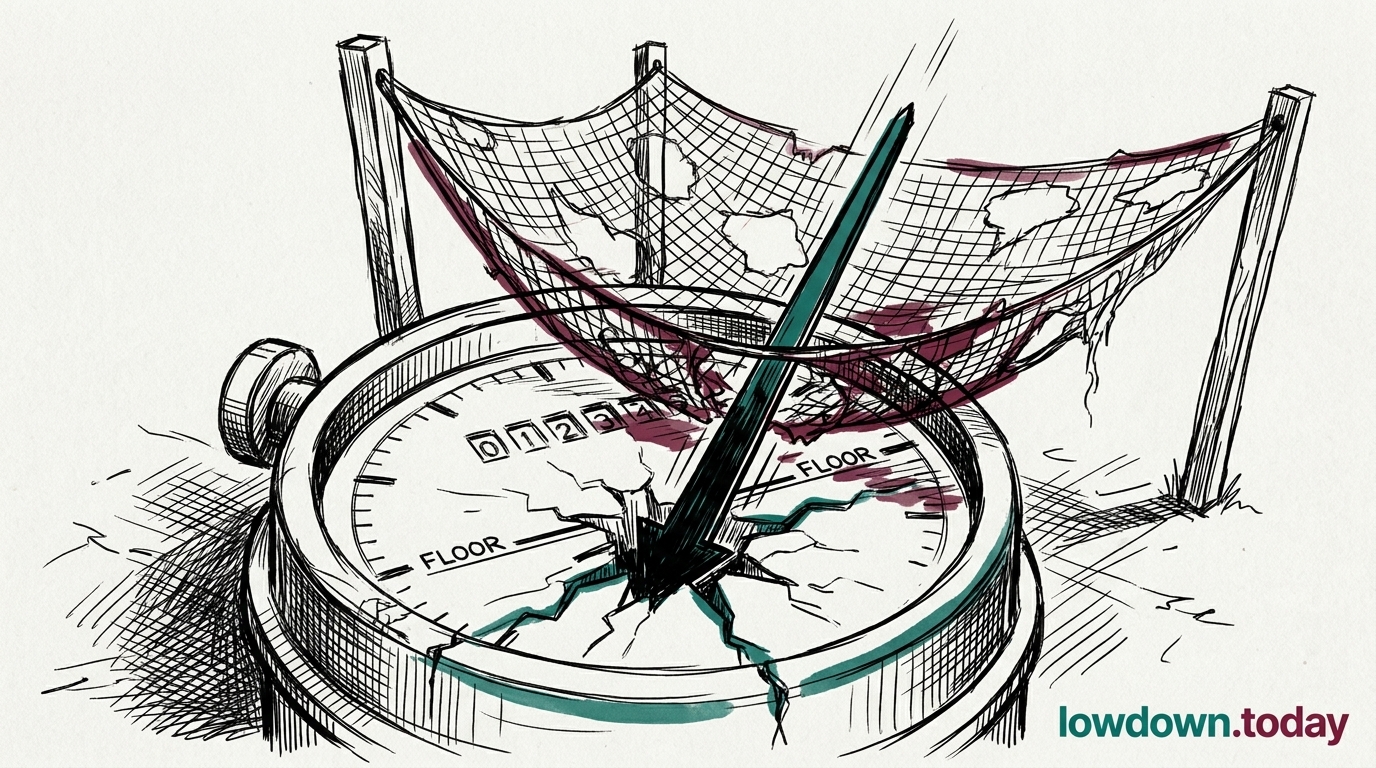
Admiral Brad Cooper, commander of US CENTCOM (Central Command), stated on 30 April 2026 that 44 commercial vessels, 41 of them tankers, carrying 69 million barrels of crude have been turned around at sea under the US blockade since the start of the conflict 1. CENTCOM is the US joint command responsible for Middle East operations and the operational owner of the Hormuz blockade; Cooper's tally is the first public economic accounting of the redirections.

Cooper had logged 38 vessels on Day 60 , and six further redirections have entered the count since. The pace is unchanged from the prior week despite the simultaneous WPR political theatre on Capitol Hill. Six of the additional vessels carried cargo Cooper described as bound for Iran; the rest carried Iranian crude outbound. The 69 million barrels translates to roughly one week of global Brent demand removed from the spot market by US naval action alone.

Cooper's figure landed on the same afternoon the State Department launched the Maritime Freedom Construct to coordinate the rerouting that CENTCOM has been performing for 64 days without it. Cooper's tally is the instrument that the diplomatic hub announcement is layered over rather than the basis for a new arrangement.


Deep Analysis

In plain English

The US Navy has been physically stopping oil tankers at the entrance to the Strait of Hormuz and forcing them to turn back since the Iran conflict began on 28 February 2026. On 30 April, the US military's top commander for the Middle East, Admiral Brad Cooper, gave the first public count of how many ships have been stopped: 44 vessels, of which 41 were tankers carrying oil. Those 41 tankers were collectively carrying 69 million barrels of crude oil. At current prices, that is roughly $8.5 billion worth of oil that never reached its buyers. For context: the world uses about 100 million barrels of oil per day in normal times. The 69 million barrels stopped over 64 days is less than one day's global supply. The bigger economic effect comes from ships choosing to go the long way around Africa rather than risk being stopped, a detour that adds weeks to the journey and millions in fuel costs per voyage.

What could happen next?
  • Consequence

    The 69-million-barrel figure establishes a public baseline against which future blockade economics will be measured; any acceleration or deceleration will now be visible in Cooper's cumulative count updates.

  • Risk

    The 44-vessel tally, if maintained at 0.7 redirections per day, would reach approximately 100 vessels by Day 120, a milestone at which aggregate supply disruption could force Asian buyers to seek alternative long-term supply arrangements outside the Persian Gulf.

First Reported In

Update #85 · "Not at war": three claims, no treaty

ROGTEC Magazine· 1 May 2026
Read original
Different Perspectives
Spain's LNG terminal operators
Spain's 9,145 GWh terminal inventory is the largest single stock in the EU LNG network, an option value that can reroute cargoes wherever the winter strip pays best rather than a cavern gas obligation tied to a fixed date. That flexibility matters more as Germany's cavern shortfall pushes more of the winter security question onto import infrastructure.
European Commission
European Commission
Brussels holds the bloc to 90% on a flexible window while Germany, holding roughly a quarter of EU storage capacity, tracks toward missing its own lower 80% figure by 21 points. A national shortfall this size in the anchor market matters more to bloc security than the flexible timetable alone can absorb.
French power exporters and CRE
French day-ahead rose in step with Germany but by less, reopening a EUR 7-17 premium that makes northward export flows commercially attractive again after the EUR 43.09 discount evaporated in days. CRE separately authorised RTE and Enedis to buy flexibility locally, betting the coming winter's binding constraint is grid congestion rather than a shortage of firm capacity.
TTF trading desk
TTF trading desk
A visible national shortfall like Germany's 21-point gap is a directional signal, not noise, for a desk holding the summer-winter spread. TTF's flat EUR 58-60 range through this week's German price swings says the market has not yet chosen to reprice refill risk into the front of the curve.
German cavern and CCGT operators
German caverns kept buying prompt gas at TTF near EUR 58-60 through the inversion; the wind collapse to 2.4 GW then flipped the spark spread to plus EUR 29 and put turbines back in the same queue. Every day turbines win that bid, injection at a third of the 877 GWh/day pace needed falls further behind.
Slovakia
Slovakia
Slovakia says it dropped its hold-out on the 21st sanctions package only after Ursula von der Leyen personally signed written gas-price and supply guarantees. The Council of the European Union's own 17,238-character release on the package names neither Slovakia nor any guarantee, leaving Bratislava's account unconfirmed by the institutional record.



