Skip to content
Briefings are running a touch slower this week while we rebuild the foundations.See roadmap
European Energy Markets
26MAY

EU storage 32%, refill pace below target

5 min read
12:01UTC

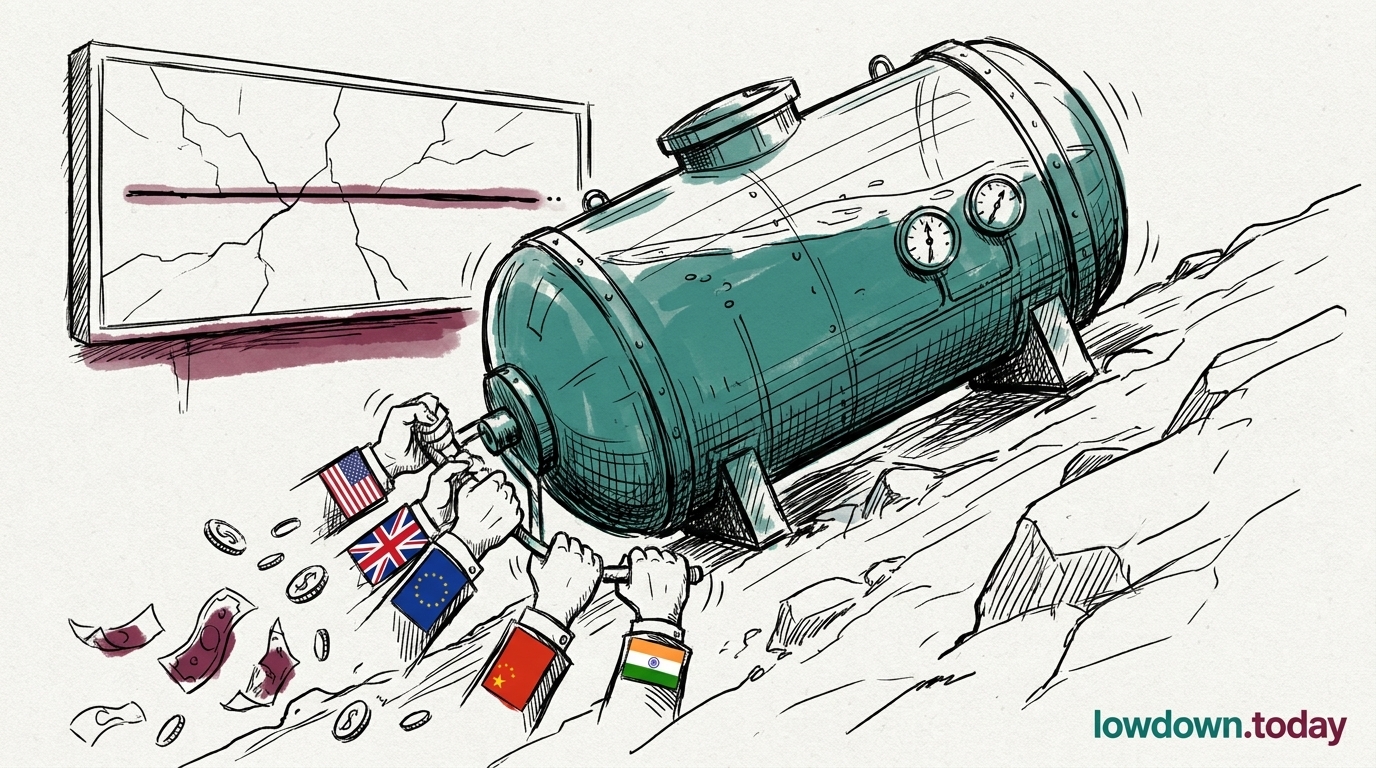
Bruegel's Week 17 dataset put EU aggregate storage at 32% on 28 April, but the required injection rate to hit 80% by 1 November is roughly 0.25 percentage points per day, and the post-ban week tracked below that pace.

EconomicAssessed
Key takeaway

Refill cost is on track at current TTF; the daily volume pace is not.

Bruegel's Week 17 European Natural Gas Imports dataset, published Tuesday 28 April, put EU aggregate gas storage at 32% of capacity, up from 31.47% on 25 April 1. The Brussels think tank's calculation puts the required injection pace to reach the 80% target by 1 November at roughly 0.25 percentage points per day. The post-ban week has tracked below that rate.

For the November target, the deficit compounds. At 0.25 pp/day, the bloc needs to add about 1.75 percentage points per week; the late-April rate has been adding closer to 1.2. The half-percentage-point weekly shortfall is small in any single week and hardens by mid-summer if the pace does not lift. Germany's season-high 745 GWh/day injection on 25 April helped move the aggregate from 31.47% toward 32%, but the bloc-wide pace remains below the trajectory. Three deterministic supply removals (the EU short-term ban on Russian LNG contracts, the Arc7 maintenance ban now stacked on it, and Equinor's Hammerfest LNG outage at and are the supply-side context against which the daily injection rate has to perform.

Within the EU figure, the Netherlands sits at 8.95% as of 25 April , more than fifteen percentage points below any other major market. GTS, the Dutch gas TSO, published the 2026/2027 security-of-supply overview confirming the 115 TWh cold-year target and the EBN (Energie Beheer Nederland, the Dutch state energy holding) state-backstop mandate of up to 80 TWh, against 25 TWh the prior summer 2. The bulk of that mandate runs through Bergermeer, the Netherlands' largest storage facility, which held only 15 TWh of its 46 TWh capacity at end-January 2026. GTS has confirmed Bergermeer, Grijpskerk and Norg as required strategic assets through 2031.

Bruegel separately flagged that European reverse gas flows to Ukraine "dropped sharply" in the same dataset, a directional signal absent from wire reporting. Through 2024-25, reverse flows had been a persistent feature of EU-Ukraine balancing under the trans-Balkan corridor and Slovak interconnector arrangements. A sharp drop in late April could reflect Ukraine's domestic injection priority taking over export commitments, or shippers preferring European storage over Ukrainian. The OIES has not yet weighed in. Against Bruegel's three-scenario refill model showing EUR 26 billion of refill cost at EUR 45/MWh TTF , the bill arithmetic holds. The volume arithmetic is the bind, and the GTS Q2-Q3 Bergermeer injection schedule against the 80 TWh EBN mandate is the next operational test.


Deep Analysis

In plain English

Europe needs to fill its underground gas storage to 80 percent capacity by 1 November to have a safe buffer for next winter. As of late April it stands at 32 percent. To get from 32 to 80 in time, the EU needs to inject gas at a rate of about 0.25 percentage points per day. In the week after the Russian LNG ban took effect, the actual rate was running below that target. The Netherlands is the biggest concern: its main storage site, Bergermeer, held only a third of its maximum capacity in January. The Dutch state has committed to filling it, but the shortfall is large and the injection season has only just begun.

Deep Analysis
Root Causes

The EU storage regulation revised the mandatory filling target downward from 90% to 80% by 1 November in April 2026, citing the supply disruption from the Hormuz closure. The revised target implies a daily injection requirement of approximately 0.25 pp/day from the late-April baseline.

Three independent supply removals are compressing the injection rate simultaneously: Hammerfest LNG offline since 22 April with extension risk ; Hormuz carrying only fractional LNG volumes versus the pre-war baseline of three loaded carriers per day; and the Russian LNG spot ban removing 2.8-3.5 million tonnes per year of short-term supply.

The Netherlands' 8.95% fill rate on 25 April, more than 15pp below any other major EU market , is the system-level liability. Bergermeer's 46 TWh design capacity with only 15 TWh held at end-January means EBN must inject 65-80 TWh through Bergermeer over summer; a rate that makes Dutch injection price-insensitive and a structural tightening force on TTF spot.

What could happen next?
  • Risk

    An injection pace sustained below 0.25 pp/day through May widens the storage gap by roughly 1-1.5 pp per fortnight, adding material cost to the Bruegel EUR 26 billion refill estimate and pushing autumn TTF forwards higher.

  • Consequence

    Bergermeer's EBN state-backstop mandate; price-insensitive injection of up to 80 TWh; acts as a structural demand floor on TTF during the injection season, preventing the spot market from clearing at the levels that would normally attract maximum commercial injection.

First Reported In

Update #6 · REMIT II live; storage instrument absent

Bruegel· 29 Apr 2026
Read original
Causes and effects
This Event
EU storage 32%, refill pace below target
The storage volume arithmetic, not the cost arithmetic, is now the bind, with the Netherlands deepest in deficit and reverse flows to Ukraine dropping in the same dataset.
Different Perspectives
Cefic and European industrial gas offtakers
Chemical manufacturers running at 62-68% utilisation face mandate-funded storage that secures volume at above-commercial prices without reducing gas costs. A EUR 35bn refill bill, if confirmed, flows back through regulated network tariffs, adding directly to industrial energy costs already named by BASF and INEOS as structural.
OIES and energy research institutions
Bruegel and OIES have not published a revised refill cost model at EUR 47-51 TTF with sub-0.4 pp/day pace. The EUR 35bn mid-range is drifting into use as the operative sub-80% November consensus, and the 11 June ACER workshop is the next venue where EU-level storage instrument advocacy can surface.
Equinor upstream gas
The Troll A compressor fault removed 34.6 mcm/day, stacked on Hammerfest, yet TTF fell 8.1% on Iran news the same day. Norwegian supply disruptions carry no price premium while Hormuz dominates; Equinor's 31 May Troll restart is a first estimate and the 2025 Hammerfest compressor fault of the same class slipped 24 days.
German Economy Ministry and Bundesnetzagentur
Berlin confirmed on 20 May it will not introduce a summer injection-incentive scheme, leaving Germany as the EU's only major unincentivised market after the storage levy lapsed on 1 January 2026. Commercial injectors apparently used the 18 May EUR 50 spike to lock winter supply cost rather than book against a structurally negative strip.
CRE and French gas operators
CRE's 100% mandatory booking order funds French injection regardless of the inverted strip, providing the EU aggregate cover that masks Germany's gap. The French position is insulated from TTF price moves but exposed to CRE's annual renewal cycle, a political risk rather than a commercial one.
Amsterdam-Rotterdam gas trading desks
TTF's 8.1% crash on a deal headline despite 50-plus mcm/day of verified Norwegian outages settled the EUR 50 question: it is a diplomatic ceiling, not a floor, and the short EUR 50-strike summer position keeps paying until Iran resolves. EBN's price-insensitive mandate buying tightens the prompt but the EUR 233m budget cap is a known position risk.
