Skip to content
Briefings are running a touch slower this week while we rebuild the foundations.See roadmap
European Energy Markets
26MAY

Netherlands at 8.95%, with state-backed buyer behind it

4 min read
12:01UTC

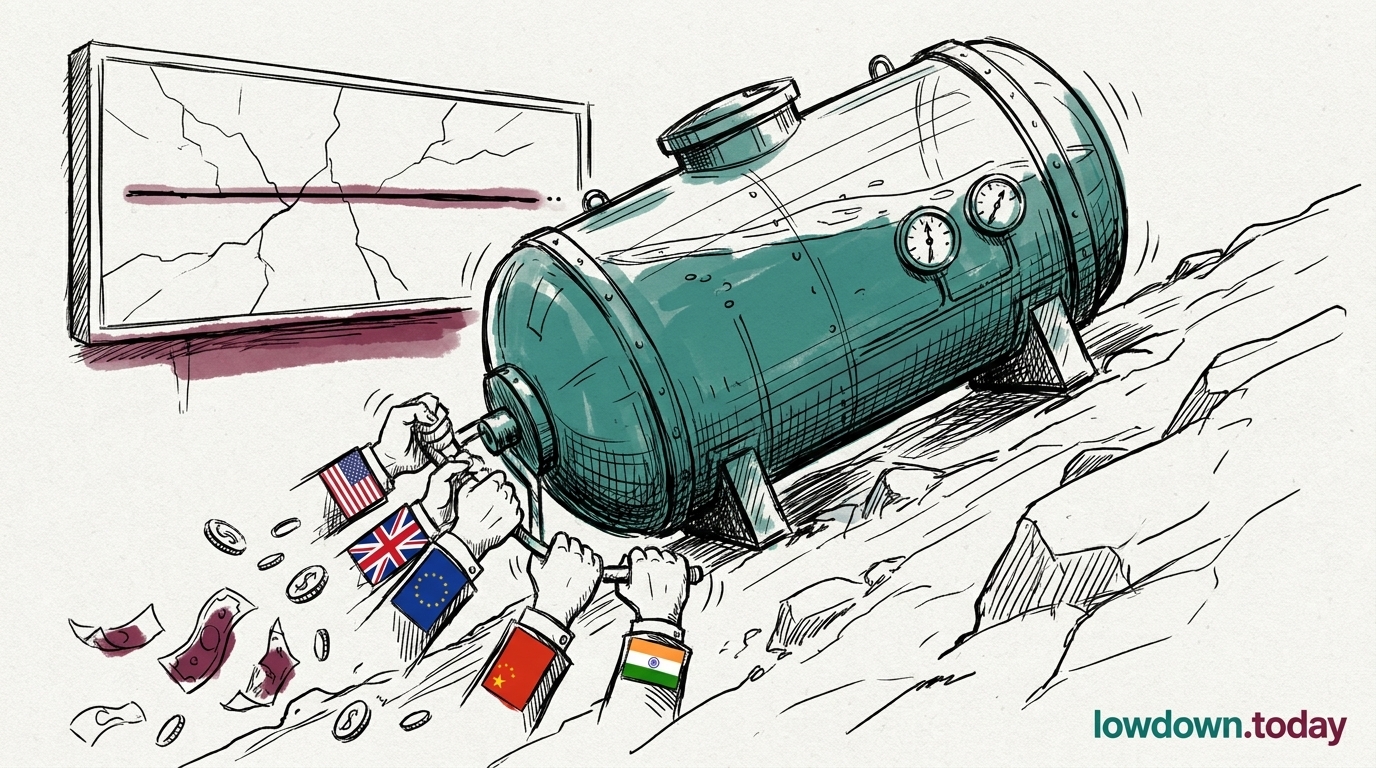
GIE AGSI+ put Dutch storage at 8.95% fill on Saturday 25 April, the lowest of any major EU storage market by 15 percentage points. EZK has earmarked EUR 233 million for 2026 Bergermeer stockbuilding.

EconomicDeveloping
Key takeaway

Dutch storage sits at 8.95% with a price-insensitive state buyer pushing into the same physical points that set TTF.

GIE AGSI+ (Gas Infrastructure Europe's Aggregated Gas Storage Inventory, the official EU gas storage feed) put the Netherlands at 8.95% fill on Saturday 25 April, the lowest of any major EU storage market by 15 percentage points 1. The bloc averaged 31.47% the same day; every other major market sat above 20%. Dutch storage bottomed at 5.8% on 25 March, a decade low. The same week, the EU still carried a 73 TWh year-on-year storage deficit .

This matters disproportionately because the Netherlands hosts the physical delivery points underlying TTF (Title Transfer Facility), the gas hub whose front-month settle is the European price of record. State policy then complicates the picture. EZK (the Dutch Ministry of Economic Affairs and Climate) has earmarked EUR 233 million for 2026 Bergermeer stockbuilding 2; GTS (Gas Transport Services, the Dutch state transmission operator) raises EUR 146.7 million per year through a transport-tariff levy specifically to recoup state filling costs. GTS injects to a 115 TWh cold-year target whether or not the spot-to-forward spread covers cost.

That makes Bergermeer demand price-insensitive on top of a market that already imports two-thirds of its LNG from a single basin. If GTS volume runs through Q2-Q3 alongside commercial buyers, it tightens the spot market more than the headline fill rate suggests, and the basis between Dutch physical points and the TTF benchmark widens against southern and central European hubs that have no equivalent state buyer. Dutch state policy is competing against itself: the same fiscal mandate that pushes GTS to refill above commercial economics also pushes TTF up against the buyers who price every other contract in the bloc. AccelerateEU's consumer-relief framing leaves Bergermeer as the only price-insensitive volume in the European injection window. The pattern fits the post-2022 European trend of treating storage as a strategic asset rather than commercial inventory; Germany followed the same logic before its storage levy lapsed.


Deep Analysis

In plain English

The Netherlands hosts the TTF hub, Europe's main gas pricing point, and its Bergermeer facility is one of Europe's largest underground gas stores. On 25 April, Dutch storage sat at only 8.95% full, the lowest of any major EU country and more than 15 percentage points below the EU average. The Dutch government has committed EUR 233 million to refill Bergermeer, with the national gas transport operator (GTS) injecting regardless of whether current gas prices make it commercially attractive. This matters because the TTF price is set partly by how much gas the Dutch system is buying: when GTS buys without regard to price, it pushes TTF higher than it would otherwise go.

Deep Analysis
Root Causes

The Netherlands' 8.95% fill on 25 April reflects two compounding structural factors. First, Groningen field production ended in October 2023, removing the Netherlands' domestic buffer supply and making Bergermeer the primary Dutch gas security instrument.

Second, the cessation of Groningen increased the Netherlands' dependence on TTF spot purchases for storage injection, meaning Dutch state injection competes directly with TTF commercial pricing rather than drawing on a captive cheap domestic source.

The GTS tariff levy mechanism (EUR 146.7m/year) transfers the cost of state injection to all TTF market participants via transport charges, effectively creating a socialised subsidy for Dutch state storage security that is not visible in headline EU member state energy budgets.

What could happen next?
  • Risk

    GTS price-insensitive injection running at 10-15% of total EU daily injection demand could prevent TTF from falling below EUR 42-43/MWh even if Atlantic LNG arrivals accelerate in May, keeping the operative refill scenario closer to EUR 30bn than EUR 26bn.

  • Consequence

    If TTF moves above EUR 50/MWh, EZK's EUR 233m allocation covers roughly 80% of the Bergermeer full fill cost, creating a mid-season budget shortfall that would require either reduced injection or supplementary state funding.

First Reported In

Update #5 · Ban day muted; Germany doubles injection rate

Gas Infrastructure Europe· 26 Apr 2026
Read original
Different Perspectives
Cefic and European industrial gas offtakers
Chemical manufacturers running at 62-68% utilisation face mandate-funded storage that secures volume at above-commercial prices without reducing gas costs. A EUR 35bn refill bill, if confirmed, flows back through regulated network tariffs, adding directly to industrial energy costs already named by BASF and INEOS as structural.
OIES and energy research institutions
Bruegel and OIES have not published a revised refill cost model at EUR 47-51 TTF with sub-0.4 pp/day pace. The EUR 35bn mid-range is drifting into use as the operative sub-80% November consensus, and the 11 June ACER workshop is the next venue where EU-level storage instrument advocacy can surface.
Equinor upstream gas
The Troll A compressor fault removed 34.6 mcm/day, stacked on Hammerfest, yet TTF fell 8.1% on Iran news the same day. Norwegian supply disruptions carry no price premium while Hormuz dominates; Equinor's 31 May Troll restart is a first estimate and the 2025 Hammerfest compressor fault of the same class slipped 24 days.
German Economy Ministry and Bundesnetzagentur
Berlin confirmed on 20 May it will not introduce a summer injection-incentive scheme, leaving Germany as the EU's only major unincentivised market after the storage levy lapsed on 1 January 2026. Commercial injectors apparently used the 18 May EUR 50 spike to lock winter supply cost rather than book against a structurally negative strip.
CRE and French gas operators
CRE's 100% mandatory booking order funds French injection regardless of the inverted strip, providing the EU aggregate cover that masks Germany's gap. The French position is insulated from TTF price moves but exposed to CRE's annual renewal cycle, a political risk rather than a commercial one.
Amsterdam-Rotterdam gas trading desks
TTF's 8.1% crash on a deal headline despite 50-plus mcm/day of verified Norwegian outages settled the EUR 50 question: it is a diplomatic ceiling, not a floor, and the short EUR 50-strike summer position keeps paying until Iran resolves. EBN's price-insensitive mandate buying tightens the prompt but the EUR 233m budget cap is a known position risk.
