Skip to content
Briefings are running a touch slower this week while we rebuild the foundations.See roadmap
European Energy Markets
26MAY

Storage at 33.06% trails 80% November floor

4 min read
12:01UTC

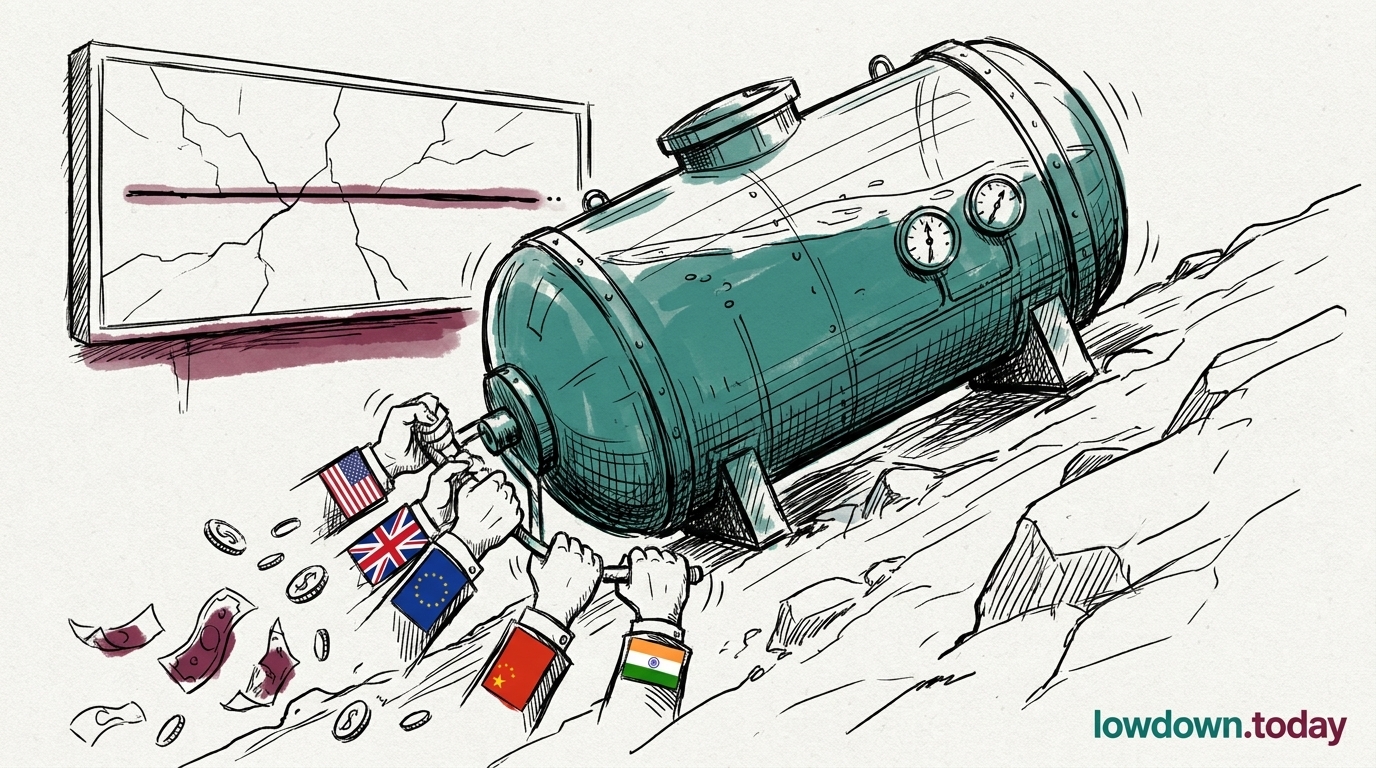
EU aggregate gas storage reached 33.06% on Saturday 2 May, up from 32% on Tuesday 28 April. The five-day gain works out to 0.21 percentage points per day; the floor needed to land 80% by 1 November is 0.257.

EconomicDeveloping
Key takeaway

EU storage pace at 0.21 pp/day sits below the 0.257 pp/day floor needed for 80% fill by 1 November.

EU aggregate gas storage reached 33.06% (374.21 TWh) on Saturday 2 May, up from 32% on Tuesday 28 April , per GIE AGSI+ data 1. The five-day gain works out to roughly 0.21 percentage points per day. The minimum pace required to reach the revised 80% target by 1 November is 0.257 pp/day across the 183 remaining days, a 47-point climb with zero buffer. TTF (Title Transfer Facility, the Dutch gas hub and reference price for European wholesale gas) settled EUR 46.44/MWh on Monday 4 May per ICE data 2.

Project the observed 0.21 pp/day forward across the remaining 183 days and EU storage lands near 72-73% on 1 November, between seven and eight points short of the revised target. Argus Media's 469 TWh injection requirement was scaled to a 0.25 pp/day floor; today's reading sits 0.045 pp/day below that floor. Even Germany's 745 GWh/day season high on 25 April , the loudest data print of the prior week, leaves the bloc tracking under pace.

Late-April wires that flipped from "structural injection failure" to "Germany flipped to net injection, all good" after the 25 April Russian LNG ban have priced the storage trajectory as settled. The Cyprus European Council endorsed storage coordination language on 24 April with no instrument attached ; Brussels chose consumer-relief tools over an injection mechanism through the AccelerateEU package , and that policy choice now sets the November landing. Watch the daily pp gain rather than the absolute storage percentage. Anything below 0.257 pp/day for more than three or four sessions running signals the 1 November target slipping, regardless of where the absolute level sits.


Deep Analysis

In plain English

Think of European gas storage as a shared battery that gets charged up over summer so there is enough energy for winter heating. Right now that battery is at 33%, but to be safe for the coming winter it needs to reach 80% by 1 November. To get there, Europe needs to add roughly 0.257 percentage points of capacity every day. At the moment it is only adding 0.21, a small gap that compounds over six months. At the current rate the battery would only reach around 72-73% by November, leaving a meaningful shortfall going into the coldest months.

Deep Analysis
Root Causes

The 0.045 pp/day gap between observed pace and required floor has three structural drivers.

First, the TTF summer-winter spread inversion. The forward curve prices summer 2026 above winter 2026/27 at several hubs, which removes the commercial incentive for traders to inject speculatively ahead of the mandatory schedule. GTS Bergermeer and state-backstop facilities fill regardless, but merchant storage operators across Germany and Italy do not.

Second, Norwegian field decline. Two consecutive monthly production declines in the Sodir data (event 5), with Hammerfest LNG offline, reduce the baseline pipeline volume against which injection arithmetic is calibrated. Published refill models from Bruegel and ACER implicitly assume Norwegian supply holds at the 2025 average; the March data contradicts that.

Third, the Cyprus European Council's decision to attach no injection instrument to its storage coordination language . Brussels chose consumer-relief tools via the AccelerateEU package rather than a price incentive for accelerated injection, which means merchant operators face no policy upside for exceeding the minimum schedule.

What could happen next?
  • Risk

    If the daily injection pace stays at 0.21 pp/day through June, the November landing drops to 72-73%, below the EU-mandated 80% floor and consistent with winter supply tightening.

    Medium term · 0.72
  • Consequence

    Merchant storage operators facing inverted summer-winter spreads have reduced incentive to inject beyond regulatory minima; the gap between the mandate pace and observed pace is likely to persist unless the TTF curve reflates.

    Short term · 0.68
  • Risk

    Any unplanned outage on Norwegian pipelines or a Hammerfest restart slip would widen the pace gap further at a point when TTF is still pricing the trajectory as resolved, creating a potential repricing event.

    Medium term · 0.65
First Reported In

Update #7 · Storage pace 0.21 vs 0.257; floor not yet met

Trading Economics / ICE· 4 May 2026
Read original
Causes and effects
This Event
Storage at 33.06% trails 80% November floor
European industrial offtakers reading the tight TTF range as a settled environment may be mispricing winter 2026/27 if November fill lands at 72-73% rather than 80%.
Different Perspectives
Cefic and European industrial gas offtakers
Chemical manufacturers running at 62-68% utilisation face mandate-funded storage that secures volume at above-commercial prices without reducing gas costs. A EUR 35bn refill bill, if confirmed, flows back through regulated network tariffs, adding directly to industrial energy costs already named by BASF and INEOS as structural.
OIES and energy research institutions
Bruegel and OIES have not published a revised refill cost model at EUR 47-51 TTF with sub-0.4 pp/day pace. The EUR 35bn mid-range is drifting into use as the operative sub-80% November consensus, and the 11 June ACER workshop is the next venue where EU-level storage instrument advocacy can surface.
Equinor upstream gas
The Troll A compressor fault removed 34.6 mcm/day, stacked on Hammerfest, yet TTF fell 8.1% on Iran news the same day. Norwegian supply disruptions carry no price premium while Hormuz dominates; Equinor's 31 May Troll restart is a first estimate and the 2025 Hammerfest compressor fault of the same class slipped 24 days.
German Economy Ministry and Bundesnetzagentur
Berlin confirmed on 20 May it will not introduce a summer injection-incentive scheme, leaving Germany as the EU's only major unincentivised market after the storage levy lapsed on 1 January 2026. Commercial injectors apparently used the 18 May EUR 50 spike to lock winter supply cost rather than book against a structurally negative strip.
CRE and French gas operators
CRE's 100% mandatory booking order funds French injection regardless of the inverted strip, providing the EU aggregate cover that masks Germany's gap. The French position is insulated from TTF price moves but exposed to CRE's annual renewal cycle, a political risk rather than a commercial one.
Amsterdam-Rotterdam gas trading desks
TTF's 8.1% crash on a deal headline despite 50-plus mcm/day of verified Norwegian outages settled the EUR 50 question: it is a diplomatic ceiling, not a floor, and the short EUR 50-strike summer position keeps paying until Iran resolves. EBN's price-insensitive mandate buying tightens the prompt but the EUR 233m budget cap is a known position risk.
