Skip to content
Briefings are running a touch slower this week while we rebuild the foundations.See roadmap
European Energy Markets
26MAY

Bruegel puts refill bill at EUR 35bn

3 min read
12:01UTC

The Brussels think tank's estimate is the most precise public figure for the 2026 injection campaign: 55% above 2025, requiring 180 extra LNG cargoes.

EconomicDeveloping
Key takeaway

Reaching 80% storage requires 180 extra LNG cargoes at an estimated EUR 35 billion, 55% above 2025.

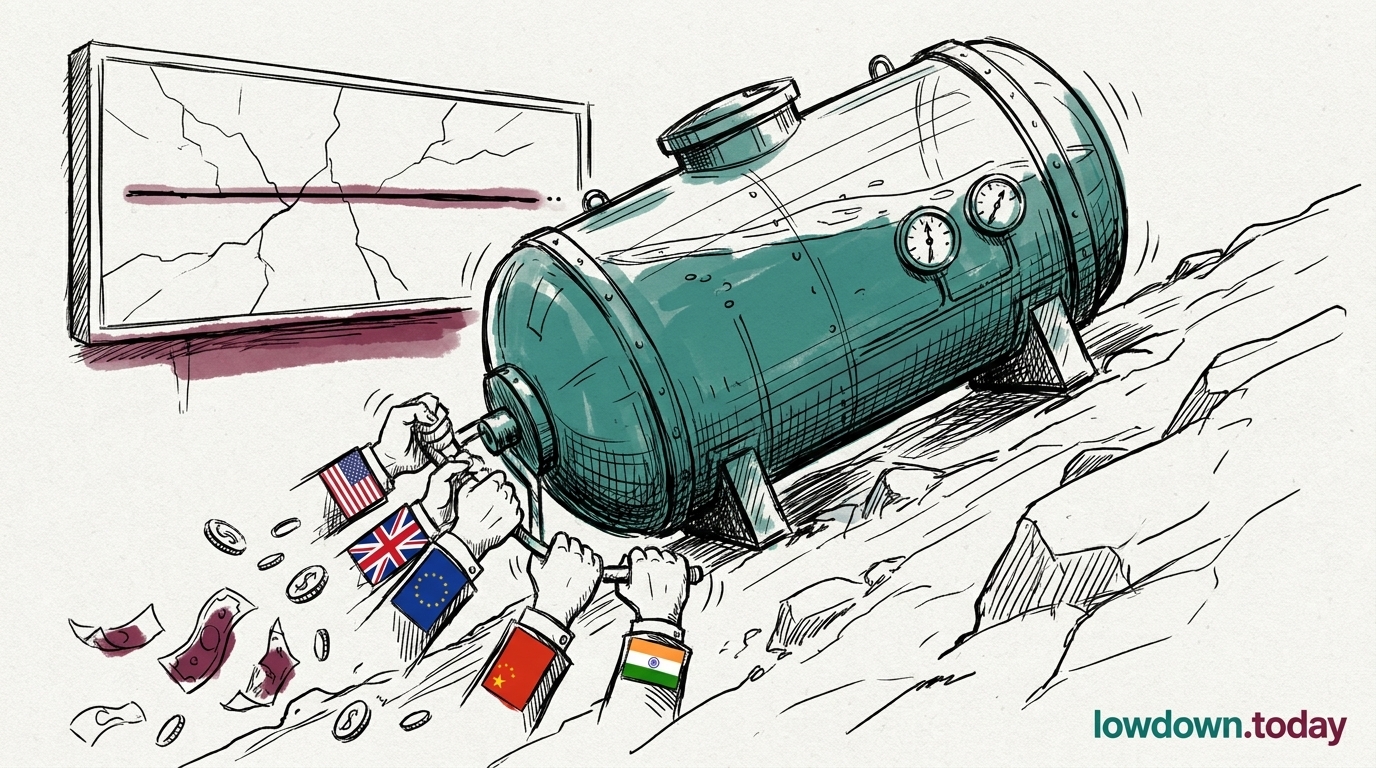
Bruegel, the Brussels-based economic think tank, estimated the cost of refilling EU gas storage to the revised target at EUR 35 billion at EUR 60/MWh, 55% above last year's equivalent costs. Europe needs approximately 180 additional LNG cargoes compared to last summer to reach the revised target by November. A gas price doubling from pre-crisis levels would add EUR 100 billion to the EU's annual import bill, which was EUR 117 billion last year.

Bruegel's policy recommendation includes an untested lever: a buyer coalition with Japan and South Korea, which together with the EU represents 60% of global LNG demand. Coordinated purchasing could counteract the cargo-by-cargo bidding war that currently favours sellers. No such coalition has been attempted at this scale, and the coordination challenges between three blocs with different regulatory frameworks and procurement cycles are substantial.


Deep Analysis

In plain English

A Brussels-based economic research organisation called Bruegel has calculated what it will cost Europe to refill its gas storage this summer. The answer is approximately EUR 35 billion, using current gas prices, and that is just to reach the newly lowered 80% target. Bruegel has also suggested that Europe should try to negotiate as a block with Japan and South Korea, the other major gas importers, to avoid all three bidding against each other for the same limited supply. If they compete separately, prices go up for everyone.

Deep Analysis
Root Causes

The EUR 35 billion refill cost reflects a structural illiquidity in the global LNG spot market. Unlike oil, where OPEC can release swing production within weeks, LNG supply is constrained by liquefaction train capacity that was committed 5-7 years earlier.

The US LNG expansion projects approved in 2019-21 (Sabine Pass Train 6, Calcasieu Pass, Plaquemines LNG) are coming online in 2025-26, but their output is 70-80% pre-committed under long-term contracts. The true spot market available to the EU is therefore a fraction of total Atlantic LNG output.

What could happen next?
  • Opportunity

    A coordinated EU-Japan-South Korea LNG buyer coalition could reduce spot cargo costs by 5-10% through demand aggregation, saving up to EUR 2-3.5 billion on the 180 additional cargo requirement.

  • Risk

    If all 180 additional cargoes must be sourced as spot, uncoordinated member state purchasing will replicate the 2022 competitive premium, pushing actual refill costs above Bruegel's EUR 35bn central estimate.

First Reported In

Update #1 · Europe's thinnest gas cushion since 2018

Bruegel· 13 Apr 2026
Read original
Different Perspectives
Cefic and European industrial gas offtakers
Chemical manufacturers running at 62-68% utilisation face mandate-funded storage that secures volume at above-commercial prices without reducing gas costs. A EUR 35bn refill bill, if confirmed, flows back through regulated network tariffs, adding directly to industrial energy costs already named by BASF and INEOS as structural.
OIES and energy research institutions
Bruegel and OIES have not published a revised refill cost model at EUR 47-51 TTF with sub-0.4 pp/day pace. The EUR 35bn mid-range is drifting into use as the operative sub-80% November consensus, and the 11 June ACER workshop is the next venue where EU-level storage instrument advocacy can surface.
Equinor upstream gas
The Troll A compressor fault removed 34.6 mcm/day, stacked on Hammerfest, yet TTF fell 8.1% on Iran news the same day. Norwegian supply disruptions carry no price premium while Hormuz dominates; Equinor's 31 May Troll restart is a first estimate and the 2025 Hammerfest compressor fault of the same class slipped 24 days.
German Economy Ministry and Bundesnetzagentur
Berlin confirmed on 20 May it will not introduce a summer injection-incentive scheme, leaving Germany as the EU's only major unincentivised market after the storage levy lapsed on 1 January 2026. Commercial injectors apparently used the 18 May EUR 50 spike to lock winter supply cost rather than book against a structurally negative strip.
CRE and French gas operators
CRE's 100% mandatory booking order funds French injection regardless of the inverted strip, providing the EU aggregate cover that masks Germany's gap. The French position is insulated from TTF price moves but exposed to CRE's annual renewal cycle, a political risk rather than a commercial one.
Amsterdam-Rotterdam gas trading desks
TTF's 8.1% crash on a deal headline despite 50-plus mcm/day of verified Norwegian outages settled the EUR 50 question: it is a diplomatic ceiling, not a floor, and the short EUR 50-strike summer position keeps paying until Iran resolves. EBN's price-insensitive mandate buying tightens the prompt but the EUR 233m budget cap is a known position risk.
