Skip to content
Briefings are running a touch slower this week while we rebuild the foundations.See roadmap
European Energy Markets
26MAY

Germany triples injection rate into ban day

3 min read
12:01UTC

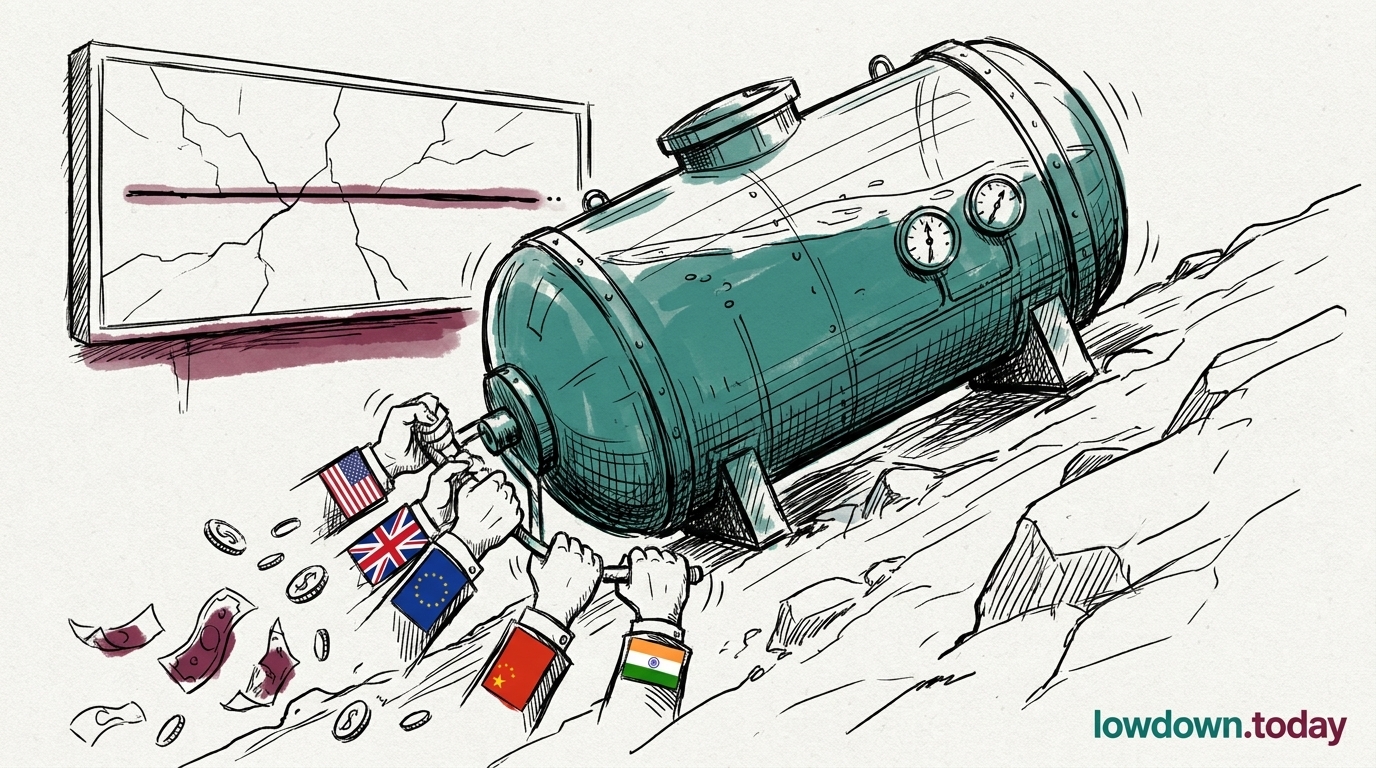
Germany's storage estate flipped to net injection on Wednesday 22 April and accelerated to a season-high 745 GWh on Saturday 25 April, taking national fill to 24.39% from 23.27% on 13 April.

EconomicDeveloping
Key takeaway

Germany's storage flipped without policy intervention; the summer-winter spread did the work.

Germany's gas storage estate flipped to net injection on Wednesday 22 April and accelerated to a season-high 745 GWh on Saturday 25 April, with national fill reaching 24.39%, up from 23.27% on 13 April 1. The four-day acceleration profile ran 57, 93, 482, then 745 GWh, taking the estate from a marginal injector on Wednesday to running flat on the dominant European storage market by the weekend.

Germany is the largest gas storage market in the European Union and the anchor for northwest Europe's summer-winter spread; if the German estate underfills, the rest of the bloc cannot fully rebalance into November. The Bundesnetzagentur (Germany's Federal Network Agency, the gas and electricity regulator) reported a national injection ceiling of 4.3 TWh per day earlier this month , so the 745 GWh print on ban day is roughly 17% of physical capacity. The estate has another 3.5 TWh per day of headroom if commercial spreads support it.

That headroom matters because there was no policy intervention behind the move. AccelerateEU, the European Commission's package published on 22 April, added no storage injection mechanism; the German storage levy was scrapped in January with no replacement instrument; VNG AG's federal-intervention call from earlier this month loses urgency unless the rate slips again in May. The signal for procurement teams is that the summer-winter forward spread finally cleared injection economics for commercial operators on the same week the Russian LNG ban entered force. The remaining question is whether the 24-25 April pace holds through May, when peripheral injectors that carried April need the German anchor to take share back.


Deep Analysis

In plain English

Germany has the largest underground gas storage network in the EU, a series of caverns and depleted gas fields that hold gas during summer, when demand is low, to cover the high-demand winter months. Think of it like filling a tank before a cold snap. Germany started filling its storage again on 22 April after a winter of heavy withdrawals. By 25 April it was injecting 745 gigawatt-hours per day, the highest daily rate of the year so far. The injection ceiling, the maximum the pipes and caverns can physically accept, is about 4,300 GWh per day, so there is plenty of physical room left if commercial conditions support it.

Deep Analysis
Root Causes

Germany's storage estate bottomed at 21% in late March 2026 (the lowest winter-exit since 2018) because two structural factors compounded: first, the cessation of Russian pipeline supply after the TurkStream interdiction attempt forced Germany to consume stored gas faster than pipeline flows could replenish it through Q4 2025; second, the Bundesnetzagentur's early warning status (active since July 2025) did not trigger mandatory injection, it only requires operators to report positions.

The flip to net injection on 22 April came four days into the commercial injection season, which typically opens when April hub forward prices cross above May delivery prices. The acceleration to 745 GWh by 25 April reflects operators responding to spot-to-forward spreads rather than any regulatory mandate.

What could happen next?
  • Opportunity

    If summer-winter TTF spreads hold above EUR 6/MWh through June, German operators have commercial incentive to accelerate injection toward the 2-3 TWh/day range, which would push Germany to 60%+ fill before September.

  • Risk

    The 745 GWh rate uses only 17% of physical capacity, meaning a spread compression event (TTF summer rally closing the contango) could halt injection well short of the 80% November target.

First Reported In

Update #5 · Ban day muted; Germany doubles injection rate

Gas Infrastructure Europe· 26 Apr 2026
Read original
Causes and effects
This Event
Germany triples injection rate into ban day
Procurement desks tracking whether Germany would absorb the Russian LNG ban without state intervention got their answer, and the answer was the spread, not policy.
Different Perspectives
Cefic and European industrial gas offtakers
Chemical manufacturers running at 62-68% utilisation face mandate-funded storage that secures volume at above-commercial prices without reducing gas costs. A EUR 35bn refill bill, if confirmed, flows back through regulated network tariffs, adding directly to industrial energy costs already named by BASF and INEOS as structural.
OIES and energy research institutions
Bruegel and OIES have not published a revised refill cost model at EUR 47-51 TTF with sub-0.4 pp/day pace. The EUR 35bn mid-range is drifting into use as the operative sub-80% November consensus, and the 11 June ACER workshop is the next venue where EU-level storage instrument advocacy can surface.
Equinor upstream gas
The Troll A compressor fault removed 34.6 mcm/day, stacked on Hammerfest, yet TTF fell 8.1% on Iran news the same day. Norwegian supply disruptions carry no price premium while Hormuz dominates; Equinor's 31 May Troll restart is a first estimate and the 2025 Hammerfest compressor fault of the same class slipped 24 days.
German Economy Ministry and Bundesnetzagentur
Berlin confirmed on 20 May it will not introduce a summer injection-incentive scheme, leaving Germany as the EU's only major unincentivised market after the storage levy lapsed on 1 January 2026. Commercial injectors apparently used the 18 May EUR 50 spike to lock winter supply cost rather than book against a structurally negative strip.
CRE and French gas operators
CRE's 100% mandatory booking order funds French injection regardless of the inverted strip, providing the EU aggregate cover that masks Germany's gap. The French position is insulated from TTF price moves but exposed to CRE's annual renewal cycle, a political risk rather than a commercial one.
Amsterdam-Rotterdam gas trading desks
TTF's 8.1% crash on a deal headline despite 50-plus mcm/day of verified Norwegian outages settled the EUR 50 question: it is a diplomatic ceiling, not a floor, and the short EUR 50-strike summer position keeps paying until Iran resolves. EBN's price-insensitive mandate buying tightens the prompt but the EUR 233m budget cap is a known position risk.
