Skip to content
You can now search across every topic, entity and event.What's new
Data Centres: Boom and Backlash
14AUG

Transformer waits stretch to four years

3 min read
10:48UTC

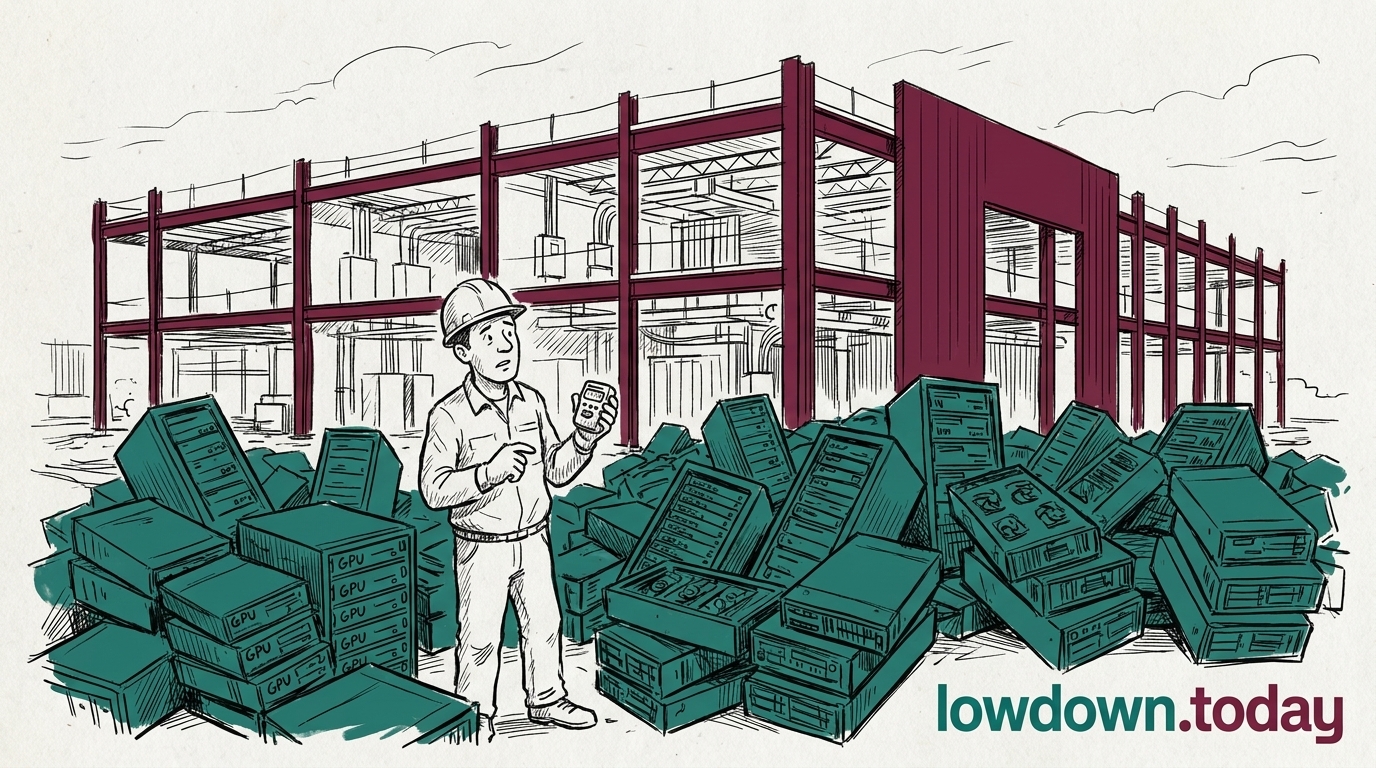
US transformer lead times reached three to four years by May, and only about 5 GW of the 12 GW of data-centre capacity announced for 2026 is under construction. The rest is delayed or cancelled because the hardware cannot be built fast enough.

IndustryDeveloping
Key takeaway

A three-to-four-year wait for transformers has stalled about half the 2026 US data-centre pipeline.

US large-power transformer lead times reached 36 to 48 months, three to four years, as of May, PV Magazine reported, up from a 128-week wait recorded only two months earlier 1. Of the 12 GW of new US data-centre capacity announced for 2026, only about 5 GW is under active construction; the rest is delayed or cancelled on supply-chain grounds, not planning refusals.

Hardware no zoning vote can release has stalled roughly half the 2026 US pipeline. Large power transformers are bespoke builds, and the bottleneck sits in two inputs, grain-oriented electrical steel and high-voltage bushings, rather than in assembly capacity. That is what sets the multi-year clock, and it is why a fully consented, construction-ready site can still sit idle waiting to energise.

The binding constraint has rotated in under two years: capital in 2024, community consent in early 2026, and physical hardware now, each shift arriving faster than regulators can respond. Demand is migrating toward markets with existing transformer stock or captive generation, and a grey market in refurbished units is forming as buyers chase anything that ships sooner.

Deep Analysis

In plain English

A large power transformer is the piece of equipment that connects a new electricity user, like a data centre, to the grid. Transformers step electricity up or down to the right voltage for transmission or use. They are custom-built, and building one takes about a year to 18 months after the order is placed. Data-centre construction has accelerated so quickly in 2025-2026 that US transformer manufacturers cannot keep up. The wait time for a large transformer has grown from about two and a half years to three or four years. This means that of the 12 GW (gigawatts) of data-centre capacity that companies announced they would build in 2026, only about 5 GW is actually under construction. The other 7 GW is waiting for hardware. This is different from the planning fight that attracts public attention: it is a factory bottleneck, not a protest or a government refusal, that is slowing down roughly half the 2026 US data-centre pipeline.

Deep Analysis
Root Causes

Three structural constraints underlie the 36-48 month lead time.

First, each large-power transformer is custom-wound to match a substation's local grid voltage, impedance class, and cooling requirements; a data-centre substation transformer takes 12 to 18 months to produce after the order is placed, and manufacturers will not hold units in inventory against uncertain future demand.

Second, US domestic manufacturing capacity has not kept pace with demand growth because transformer manufacturers face the same grid-connection uncertainty as data-centre developers: a manufacturing plant built to serve a demand wave that arrives two years later than forecast carries stranded-asset risk that privately held manufacturers are unwilling to absorb unilaterally.

Third, the transformer shortage interacts with the grid-connection queue to create a lock: operators cannot get a grid connection quote without knowing transformer availability, and transformer manufacturers will not accept orders without a confirmed grid connection. Operators without a cleared site are therefore stuck in a two-sided bottleneck that neither FERC's docket RM26-4-000 nor ERCOT's Batch Zero process directly resolves.

What could happen next?
  • Consequence

    The 7 GW stall defers approximately $14bn in annual cloud revenue across US hyperscalers, creating earnings risk for the 2027-28 guidance cycles that management has not yet flagged publicly.

    Medium term · Suggested
  • Opportunity

    Domestic transformer manufacturers who can credibly commit to 18-month delivery on a 10-unit minimum order will command premium pricing; GE Vernova and ABB's US operations are positioned to capture that margin if they invest in additional winding capacity in 2026.

    Medium term · Suggested
  • Risk

    The two-sided bottleneck (no grid quote without confirmed transformer, no transformer order without grid quote) may require a federal procurement intermediary, similar to the US Strategic Transformer Reserve proposed under the 2021 Infrastructure Investment and Jobs Act, to break the deadlock.

    Medium term · Suggested
First Reported In

Update #8 · Data centres build their own power plants

PV Magazine USA· 28 Jun 2026
Read original
Causes and effects
This Event
Transformer waits stretch to four years
A multi-year wait for the giant transformers that connect data centres has decoupled planning approval from actual construction.
Different Perspectives
Antel, Uruguay's state telecom
Antel will build a $70m AI data centre in Canelones, announced after an 11-12 August Council of Ministers meeting, with construction from Q1 2027 and roughly 250 direct jobs. Uruguay is putting a sovereign AI facility on the state balance sheet rather than courting a hyperscaler to build one.
Comtel
Comtel
Comtel is building a Figline Valdarno data centre inside the H2-Era Green Valley complex, powered by an 84 MW solar plant and selling waste heat to on-site farming. Co-location with generation and a heat offtaker is the model regulators elsewhere are now writing into connection terms rather than negotiating case by case.
Greg Abbott, Texas Governor
Abbott directed PUCT and ERCOT on 3 August to audit every queued data centre's ownership, incentives and water use, saying projects that fail the state's survey should lose grid access. QTS's co-chief executives welcomed the review; Agriculture Commissioner Sid Miller called it too vague and wants a special legislative session instead.
Government of Gujarat
Gujarat notified a Data Centre Policy on 7 August offering capital, interest, tax and duty subsidies for projects sourcing at least 51% green power, targeting 7.5 GW against a 74 GW installed base. Where other jurisdictions priced or restricted grid access this month, Gujarat is paying developers to come instead.
Taiwan's Legislative Yuan Economics Committee
The committee gave preliminary approval on 5 August to a self-generation mandate for large power users, including data centres, with fines up to NT$750,000. It agreed the obligation in principle while leaving the megawatt threshold that defines its reach to later implementing regulation.
Australian Energy Market Commission
AEMC advised ministers on 5 August that data centres should surrender renewable certificates against actual consumption, prove new demand with new firm capacity, and register as market participants. The advice would turn passive customers into obligated participants inside the market's dispatch and settlement machinery, ahead of an access-standards determination due in late October.

