Skip to content
You can now search across every topic, entity and event.What's new
Cuba Dispatch
12JUN

Trump pulls relatives into Cuba sanctions

3 min read
09:35UTC

Donald Trump signed a Cuba sanctions order on 1 May reaching adult relatives of Cuban officials. OFAC has not yet named a single person.

PoliticsDeveloping
Key takeaway

Treasury can now designate Cuban officials' adult relatives in their own right, but no names have been published yet.

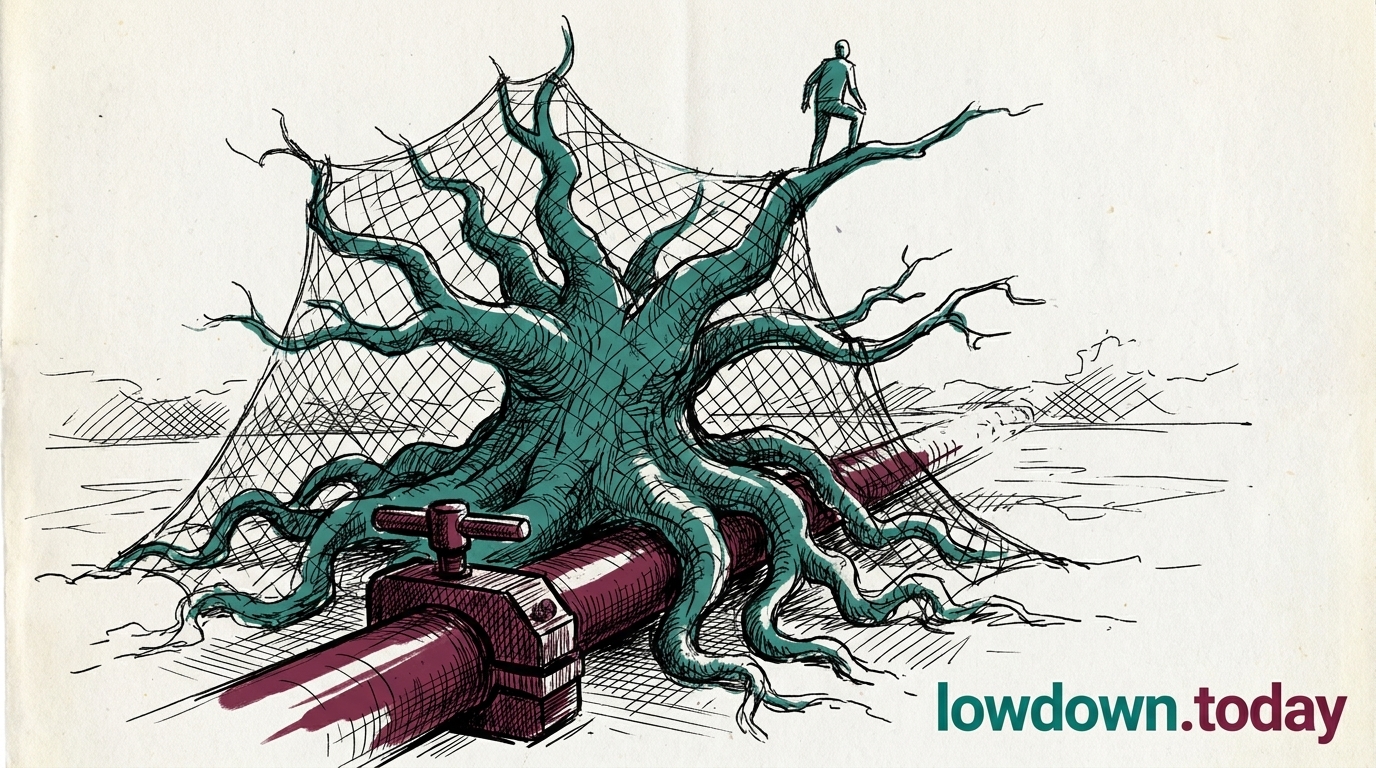
Donald Trump signed a new Cuba sanctions executive order on Friday 1 May 2026, authorising asset-blocking, entry suspension and correspondent-account restrictions against Cuban government officials, security and defence sector personnel, and their adult family members 1 2. The order is structurally distinct from EO 14380 , which Trump signed on 29 January and which targeted oil flows through secondary tariffs. Where the January instrument worked through commodity chains, the 1 May order names categories of natural persons.

OFAC (the US Treasury's Office of Foreign Assets Control) has not yet published any designations under the new framework. The order exists without targets. Once the first SDN (Specially Designated Nationals) list appears, US-held property freezes, US visas suspend, and any foreign bank running correspondent-account business through New York carries an enforcement risk on the named person's transactions.

Most US sanctions programmes reach relatives only through derivative-property findings against the principal: a wife's house gets blocked because the husband paid for it with sanctioned funds. Designating adult sons, daughters and spouses in their own right, by category and without specific conduct, follows the pattern OFAC has used against Russia and Belarus rather than the hemispheric template. The 1 May order is the first time a Cuba-specific instrument has reached relatives that way. Adult children of GAESA officers studying in Madrid or holding bank accounts in Mexico City lose practical access to dollar-denominated channels regardless of their own conduct.

Havana answered same-day rather than waiting for state-media synthesis. President Miguel Díaz-Canel called the order "coercive" and Foreign Minister Bruno Rodríguez Parrilla called it "collective punishment" violating the UN Charter, the same framing the ministry had deployed on 14 April . Beneath the visible escalation, the dual-track diplomatic contacts opened on 10 April have not been disavowed. The 1 May signature timed to Cuba's Labour Day pairs a regulatory instrument with a Cuban political date for the second time in four months: EO 14380 was signed on the eve of the José Martí birthday observances. Trump's signing schedule is now treating Cuban political holidays as the framing surface.


Deep Analysis

In plain English

The US government has a list of foreign individuals it considers threats, it can freeze their money in US banks and ban them from entering the country. Until now, Cuba rules only targeted specific Cuban officials themselves. This new order says their adult children and spouses can be put on that list too, even if those relatives have not personally done anything the US objects to. No names have been added yet, the White House signed the legal authority, but the Treasury Department's enforcement office (called OFAC) has not published a list of specific people. Think of it as loading the weapon without yet pulling the trigger. Cuba's government called it collective punishment; the US says it is about holding accountable a system where power runs through family networks.

Deep Analysis
Root Causes

Trump's IEEPA (International Emergency Economic Powers Act) framework, activated by EO 14380 on 29 January 2026, provides the legal chassis for the 1 May order without requiring new congressional authorisation.

The family-extension mechanism addresses a specific enforcement gap: GAESA-connected officials and security sector personnel have in previous rounds transferred assets to adult relatives outside direct US designation scope. The 2026 order closes that gap by designating the category of adult family members as potentially blocked persons, enabling OFAC to freeze assets and suspend entry without proving the relative's own conduct.

The order's correspondent-account penalty clause targets foreign banks that process transactions for newly designated persons. This is the same architecture used against Venezuelan officials from 2018 onwards. European financial institutions, many already skittish about Cuba-linked transactions, face secondary exposure, which effectively extends US sanctions reach without naming a single European entity.

What could happen next?
  • Risk

    OFAC's first designation round under the new order will determine whether family-member provisions target GAESA commercial figures or remain limited to political figures with minimal US-reachable assets.

    Immediate · 0.8
  • Consequence

    European banks maintaining residual Cuba clearing lines face secondary correspondent-account exposure under the new framework, likely accelerating their exit from Cuba-linked dollar transactions.

    Short term · 0.7
  • Precedent

    Family-designation authority, once established by executive order, does not expire with the current administration, a future administration would need to revoke EO 14380 and its successor instruments to remove the authority.

    Long term · 0.85
First Reported In

Update #3 · Family sanctions land as the grid relapses

White House· 7 May 2026
Read original
Different Perspectives
WOLA (Washington Office on Latin America)
WOLA argues that sanctioning peso-paid Cuban officials has limited coercive bite because their personal holdings are not US-proximate, citing the Maduro Venezuela precedent: the head-of-state listing functions as a signal rather than a seizure, and the real operational weight of the 4 June package sits entirely in FAQ 1258's ownership-tree multiplier.
OCDH / Prisoners Defenders
OCDH (Observatorio Cubano de Derechos Humanos, Madrid-based) documented 332 repressive actions in May and formally demanded an EU reparations fund for Cuban political prisoners. Prisoners Defenders' May census placed the count at a record 1,281 with one death in custody; both organisations argue the EU restrictive-measures track is the remaining lever after the US programme has exhausted institutional designations.
EU / Netherlands Foreign Affairs (Ollongren track)
EU Special Representative Kajsa Ollongren received the OCDH Acuerdo de Liberacion in Brussels on 13 May demanding asset freezes and a victims' compensation fund for political prisoners. Madrid's hotel-sector stake and the Spanish chains' own exit decisions create a structural tension within EU policy between restrictive-measures pressure and commercial-engagement continuity.
China
China
China joined Russia in birthday solidarity to Raul Castro but has not moved a tanker to Cuba since the CUPET designation. Beijing's calculus resembles the post-PDVSA Venezuela calculation: barter or renminbi-denominated crude outside the US legal perimeter is technically available but requires absorbing secondary-sanctions risk Washington is deliberately signalling.
Russia
Russia
Moscow sent birthday solidarity to the indicted Raul Castro on 3 June but despatched no replacement cargo after the Sovcomflot Universal turned back on 26 May. Russia's practical support for Cuba is constrained by its own war economy and secondary-sanctions exposure under the same OFAC architecture it benefits from in the Ukraine context.
Cuban government / MINREX
Foreign Minister Bruno Rodriguez Parrilla condemned the CUPET designation as 'further tightening the economic and energy blockade'; Diaz-Canel's standing public line is willingness for dialogue 'on equal terms' but political prisoners are explicitly off the table. Havana offers no new concessions after the personal listing.