Skip to content
You can now search across every topic, entity and event.What's new
Cuba Dispatch
26JUL

US sanctions hit Cuba's medical missions

3 min read
10:44UTC

OFAC designated CSMC, its parent UCCM and Public Health Minister Jose Angel Portal Miranda on 23 July, the first US sanctions strike at the labour export among Cuba's largest hard-currency earners.

PoliticsAssessed
Key takeaway

The US sanctioned Cuba's medical-missions export and named its Health Minister, hitting the island's last untouched hard-currency stream.

The US Treasury's Office of Foreign Assets Control (OFAC) designated nine Cuban entities and two named individuals under Executive Order 14404 on Thursday 23 July, the first US sanctions strike at Cuba's medical-missions programme 1. OFAC named Comercializadora de Servicios Medicos Cubanos (CSMC), the state company that markets Cuban doctors' labour abroad, and its parent the Unidad Central de Cooperacion Medica (UCCM), which coordinates the island's overseas missions. It designated Public Health Minister Jose Angel Portal Miranda personally, alongside UCCM official Gretza Sanchez Padron 2.

The State Department describes the medical missions as among Cuba's largest sources of foreign currency, and grounded the action in its annual Trafficking in Persons report 3. State says Cuban officials confiscate between 50 and 95 per cent of the wages host countries pay for tens of thousands of workers across more than 50 countries 4. That forced-labour framing, State's characterisation rather than a settled legal finding, gives the designation a footing earlier fuel and finance measures lacked.

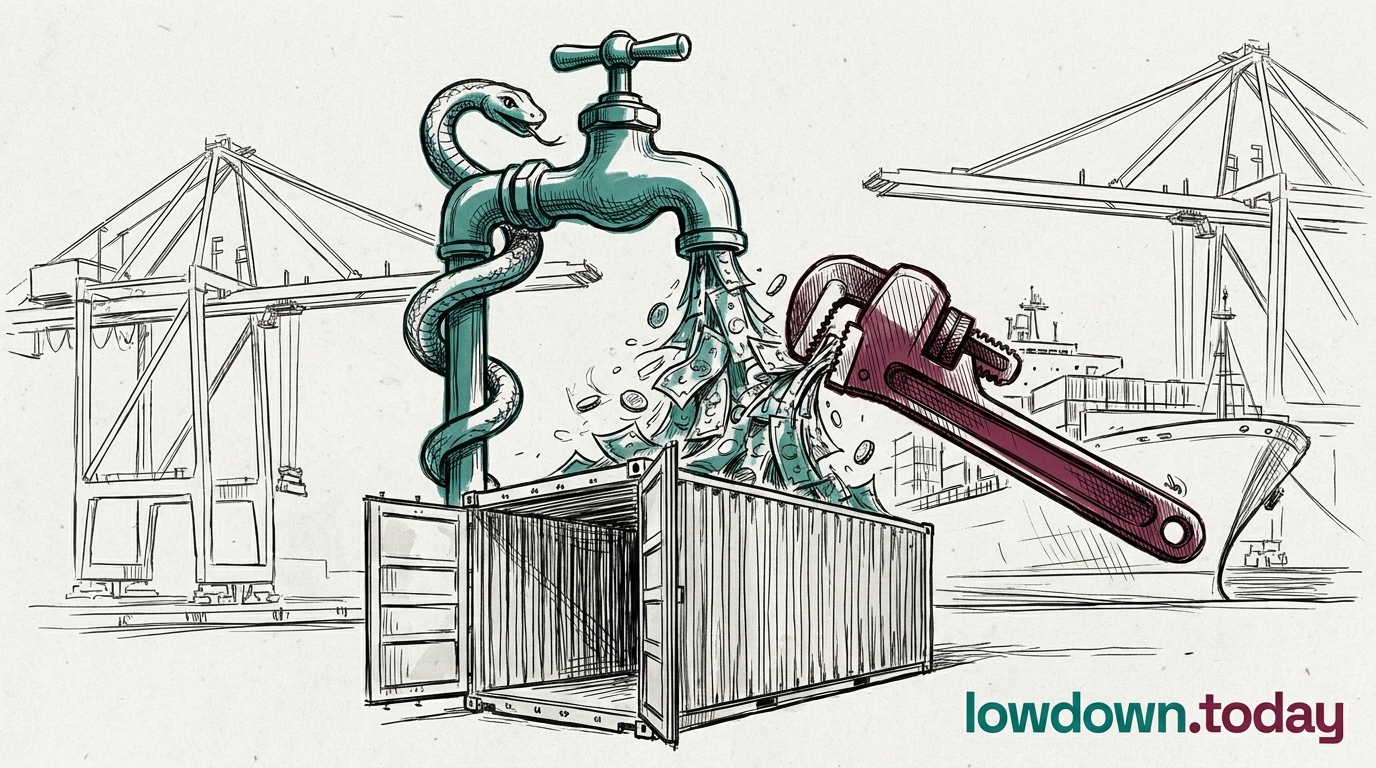
The move answers a 10 July request from four Florida lawmakers to sanction CSMC , thirteen days from letter to designation. Every prior escalation this dispatch logged hit a different pressure point: the oil company CUPET in June , then the banks and GAESA-linked firms, then ten entities on 13 July. Those measures starved the inputs Cuba imports. This one goes after the labour Cuba rents out to pay for them, closing the one hard-currency stream the campaign had left untouched.

Designating a sitting cabinet minister by name, not merely his ministry, sets a template OFAC can repeat across the economic ministries. Host governments in the 50-plus countries running Cuban brigades now weigh secondary-sanctions exposure on those contracts, and the TIP finding hands them a legal, not merely political, reason to renegotiate the terms.

Deep Analysis

In plain English

OFAC is the US Treasury office that punishes people and organisations by freezing any assets they hold in the US financial system and barring Americans from doing business with them. On 23 July it added Cuba's medical-missions operator, CSMC, its parent body UCCM, and Cuba's health minister to that blacklist. Cuba earns hard currency by sending doctors abroad under government-to-government contracts; host countries pay Havana, and Havana pays the doctors a portion of that fee. Washington cites a State Department estimate that Cuba keeps 50 to 95 per cent of what host countries pay for each doctor, and calls the arrangement forced labour. Cuba says the programme delivers healthcare to people who would otherwise go without it. Both descriptions can be true of the same programme, and the sanctions do not settle which one prevails.

Deep Analysis
Root Causes

OFAC's designation targets the wage-routing structure itself, not the fact that Cuba sends doctors abroad. EO 14404's theory treats the state's retention of a share of host-country payments as the sanctionable conduct, which is why Treasury designated CSMC and UCCM as institutions and Portal Miranda and Sanchez Padron personally, rather than issuing a general programme warning.

That theory extends the sanctions campaign into a third hard-currency channel after June's designations of Cuba's fuel importer (CUPET, ) and its main foreign-currency clearing bank (Banco Financiero Internacional, ), following the same institutional-chokepoint approach each time.

What could happen next?
  • Precedent

    This is the first EO 14404 designation aimed at Cuba's labour-export income rather than energy or finance, extending the campaign into a third hard-currency channel after CUPET and Banco Financiero Internacional.

  • Risk

    If host countries renegotiate medical-mission contracts to avoid US secondary-sanctions exposure, Cuba loses a hard-currency channel while remittances and tourism have already contracted sharply.

First Reported In

Update #12 · Cuba's medical missions hit by US sanctions

US Treasury OFAC· 26 Jul 2026
Read original
Different Perspectives
Spain (Foreign Ministry and hotel investors)
Madrid has worked to shield Spanish hotel operators exposed to Cuba, and OFAC's General Licences 2 and 3 winding down the Guernsey-listed CEIBA Investments fund give those investors a defined exit rather than an abrupt block. Spain's stake in managing an orderly wind-down, not confronting the designation itself, keeps it distinct from Havana's collective-punishment framing.
Cuban Ministry of Foreign Affairs (MINREX)
Foreign Minister Bruno Rodriguez Parrilla called the 23 July designations "castigo colectivo" and defended the medical missions as protecting healthcare access for patients in the countries where Cuban doctors serve, without addressing the evasion allegation against Coral Maritima directly.
US Treasury (OFAC) and State Department
OFAC designated Cuba's medical-missions operators and named the Mariel-Coral Maritima transfer as GAESA sanctions evasion on 23 July, characterisations Washington has not independently substantiated in public documents reviewed. The administration frames the wave as closing hard-currency channels sector by sector, following the same pattern applied to tourism and financial clearing in June and July.
Human rights monitors (OCDH and Prisoners Defenders)
OCDH's 14 July dictamen named the specific offices responsible for holding Otero Alcántara past his sentence-expiry date; Prisoners Defenders counted 1,306 political prisoners, including 40 detained minors, on 9 July. Both oppose the Cuban government's account without endorsing Washington's sanctions instrument as a remedy.
US State Department
US State Department
Secretary Rubio said Cuba 'continues to ally itself with America's enemies' and framed the 13 July designations as deploying 'every tool at our disposal', now citing forced-labour export to Angola for the first time. These quotes rest on cached web snippets; state.gov was unreachable this run and could not be directly verified.
Cuban Ministry of Foreign Affairs
Foreign Minister Bruno Rodríguez Parrilla called the 13 July designation package 'criminal and genocidal' and said 'Cuba is not a threat and US intelligence agencies know it'. State media frame the 16 July gas-price rise as a direct consequence of the intensifying blockade, though Havana has not disclosed its own container-import shift dated 3 July.

