Skip to content
Briefings are running a touch slower this week while we rebuild the foundations.See roadmap
Cuba Dispatch
4JUN

Senate Democrats force Cuba war-powers vote

3 min read
11:38UTC

Kaine, Schiff and Gallego introduced a joint resolution requiring congressional authorisation before any US military operation against Cuba; the Senate vote is expected before Friday 1 May.

PoliticsDeveloping
Key takeaway

Senate Democrats are forcing a roll-call on whether the executive can strike Cuba without authorisation.

Senators Tim Kaine (Democrat, Virginia), Adam Schiff (Democrat, California) and Ruben Gallego (Democrat, Arizona) introduced a joint Senate resolution requiring congressional authorisation before any US military operation against Cuba. A Senate vote is expected before Friday 1 May 2026. The trigger for the resolution is the Trump administration's repeated public claim that "Cuba is next" after the Venezuela and Iran operations.

Republican majorities in both chambers make passage unlikely. The Democratic sponsors are forcing a roll-call regardless, which would mark the first formal Senate floor test of The Administration's hemisphere military posture in 2026. Members on the record opposing the resolution would be voting to preserve the executive's claimed latitude to strike Cuba without congressional sign-off.

The same executive that signed OFAC General Licence 134B earlier in April, authorising the next Sovcomflot tanker's cargo, is the one the resolution would constrain on the use of force. Treasury authorising oil-delivery transactions against the country the White House has signalled as a strike candidate cuts both ways: the operational sanctions track has eased while the rhetorical posture has not. Senators voting on Kaine-Schiff-Gallego must now choose between those two tracks on the record.

The Florida congressional delegation, which has demanded comprehensive licence revocations since 11 February and has had no Treasury response for 75 days, has issued no public statement on the resolution. Whether House Republicans from Florida vote against any companion measure is the secondary question; the primary one is whether any Senate Republican breaks ranks before 1 May, and on what grounds.


Deep Analysis

In plain English

Three Democratic senators introduced a measure on 25 April requiring Congress to vote before any US military attack on Cuba. They did this because President Trump had publicly said Cuba was his next military target after actions in Venezuela and Iran. A Senate vote was expected before 1 May. Republicans held a Senate majority of 53-47, making the measure almost certain to fail on the vote. Each senator's vote goes into the permanent public record: a senator who votes no is voting to let Trump act against Cuba without congressional authorisation. Kaine, Schiff and Gallego built a paper trail for future accountability rather than a blocking mechanism.

Deep Analysis
Root Causes

The resolution's proximate cause is Trump's repeated 'Cuba is next' language, which followed the Venezuela and Iran operations without a public enumeration of what 'next' would mean operationally. That ambiguity created an institutional opening for Democrats to force a roll-call: the resolution's failure on a party-line vote would confirm that the Republican majority regards Trump's language as legitimate presidential authority.

The same executive issued GL 134B authorising the next Russian tanker into Cuba on 18 April and simultaneously claimed military strike authority over Cuba through the 'Cuba is next' framing. That juxtaposition is the political material the resolution was designed to surface: can the same administration legalise a Russian oil delivery to Cuba and claim authority to bomb Cuba in the same week?

Escalation

The rhetorical track has not eased despite the operational track's diplomatic activity. Trump's 'Cuba is next' framing is unretracted; the resolution is the Senate's formal acknowledgement that the framing is being taken seriously. If the resolution fails on a near-party-line vote before 1 May, the executive's claimed military latitude over Cuba expands within the political record, even without any operational movement.

What could happen next?
  • Precedent

    A Senate floor vote on Cuba military authority is the first formal congressional test of the administration's hemisphere posture in 2026; the roll-call creates a named political record regardless of outcome.

    Immediate · 0.85
  • Risk

    If Republican defections emerge on the roll-call, it signals that Trump's 'Cuba is next' rhetoric does not carry his full caucus, constraining the administration's rhetorical flexibility on further Cuba escalation.

    Short term · 0.55
  • Consequence

    The juxtaposition of GL 134B issuance on 18 April and the Senate war-powers debate on 25 April makes the administration's simultaneous legalisation of Russian oil to Cuba and claim of Cuba-strike authority the explicit political object of the roll-call.

    Short term · 0.78
First Reported In

Update #2 · Two Cuba policies, one fortnight

Reuters via CiberCuba· 27 Apr 2026
Read original
Different Perspectives
Spanish hotel operators
Meliá and Iberostar exited GAESA-linked Cuban hotels before 5 June to protect their broader Caribbean and global portfolios from secondary-sanctions exposure. Spain's commercial stake in Cuban tourism makes Madrid a structural veto risk if the EU advances Cuba-specific restrictive measures under Ollongren's mandate.
Cuban opposition / OCDH
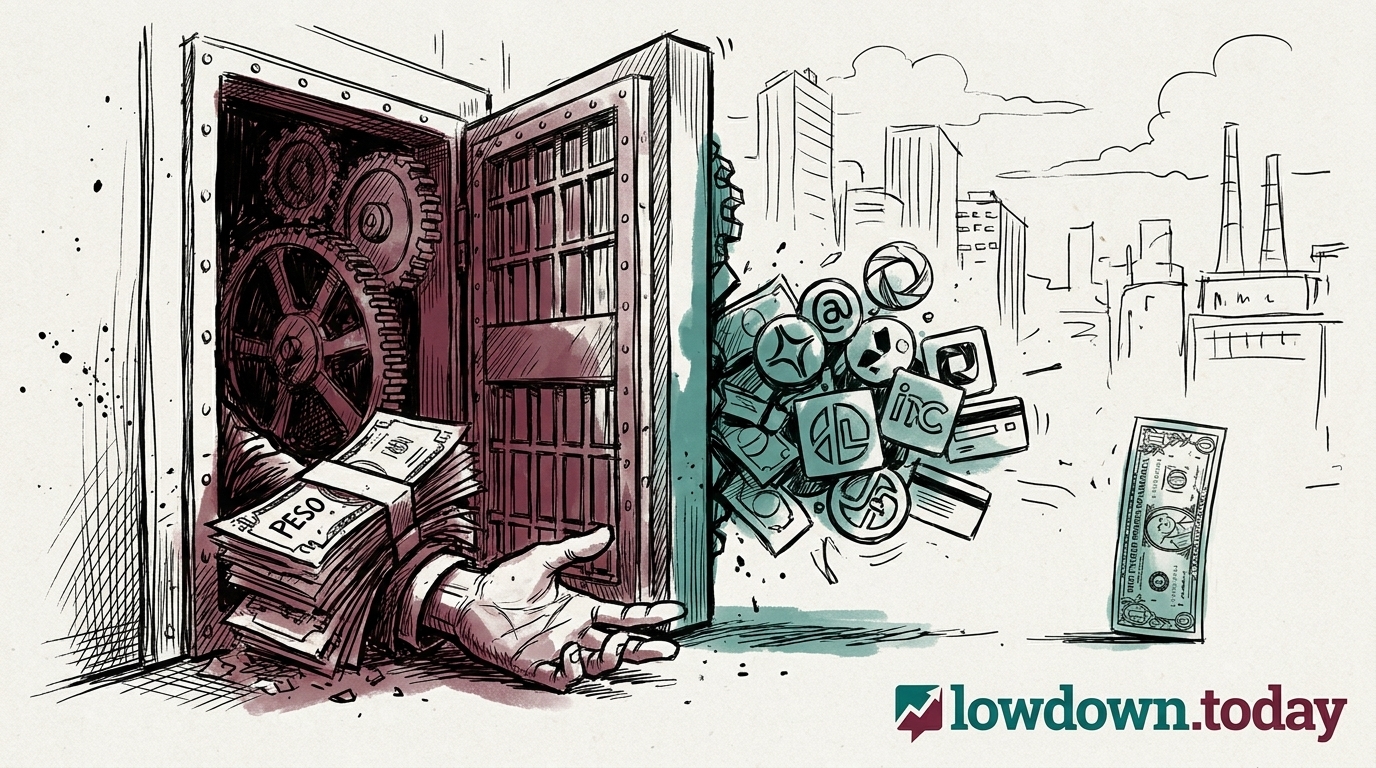
After the US Senate killed a Cuba war-powers check 51-47 on 29 April, the Madrid-based OCDH formally demanded an EU reparations fund for political prisoners on 4 June, routing its pressure campaign to Brussels where the EU's existing restrictive-measures machinery, used previously against Venezuela and Belarus, does not require a Senate majority.
China
China
Beijing paired a birthday telegram to Castro with no operational commitment on fuel or credit, using the occasion to signal non-abandonment ahead of the G20 without incurring the cost of a replacement tanker. China has no military-logistics presence in the Caribbean comparable to Soviet-era capacity.
Russia
Russia
Moscow sent an official birthday message to the indicted Raúl Castro on 3 June, a deliberate legitimacy signal to Global South partners, while Sovcomflot has announced no replacement for the Universal's 270,000-barrel cargo that turned away on 26 May. The pattern mirrors Soviet public solidarity during the 1962 crisis while privately managing exposure.
Trump administration / OFAC
Washington let a calendar date do the work: no new designations were needed after 18 May, and the looming 5 June expiry, which strips foreign firms' legal-exit defence, drove the hotel exodus and card suspension without a second executive action. The administration has not publicly commented on the compound utility failures.
Cuban government and citizens
Havana's only countermeasure this week was a Granma editorial defending GAESA by name, conceding the designation is biting hard enough to require a public answer. Residents of Havana and Guanabacoa banged pots on the nights of 3-4 June, the first confirmed capital protests, after gas, water, and the state milk ration all failed.
