Skip to content
Briefings are running a touch slower this week while we rebuild the foundations.See roadmap
Cuba Dispatch
4JUN

Rubio meets Pope Leo XIV; Vatican track returns

4 min read
11:38UTC

US Secretary of State Marco Rubio held a 45-minute audience with Pope Leo XIV at the Holy See on Saturday 9 May, proposing humanitarian aid to Cuba routed through the Catholic Church rather than GAESA.

PoliticsDeveloping
Key takeaway

Rubio reopened the Vatican track on 9 May, proposing Catholic-Church aid that bypasses GAESA.

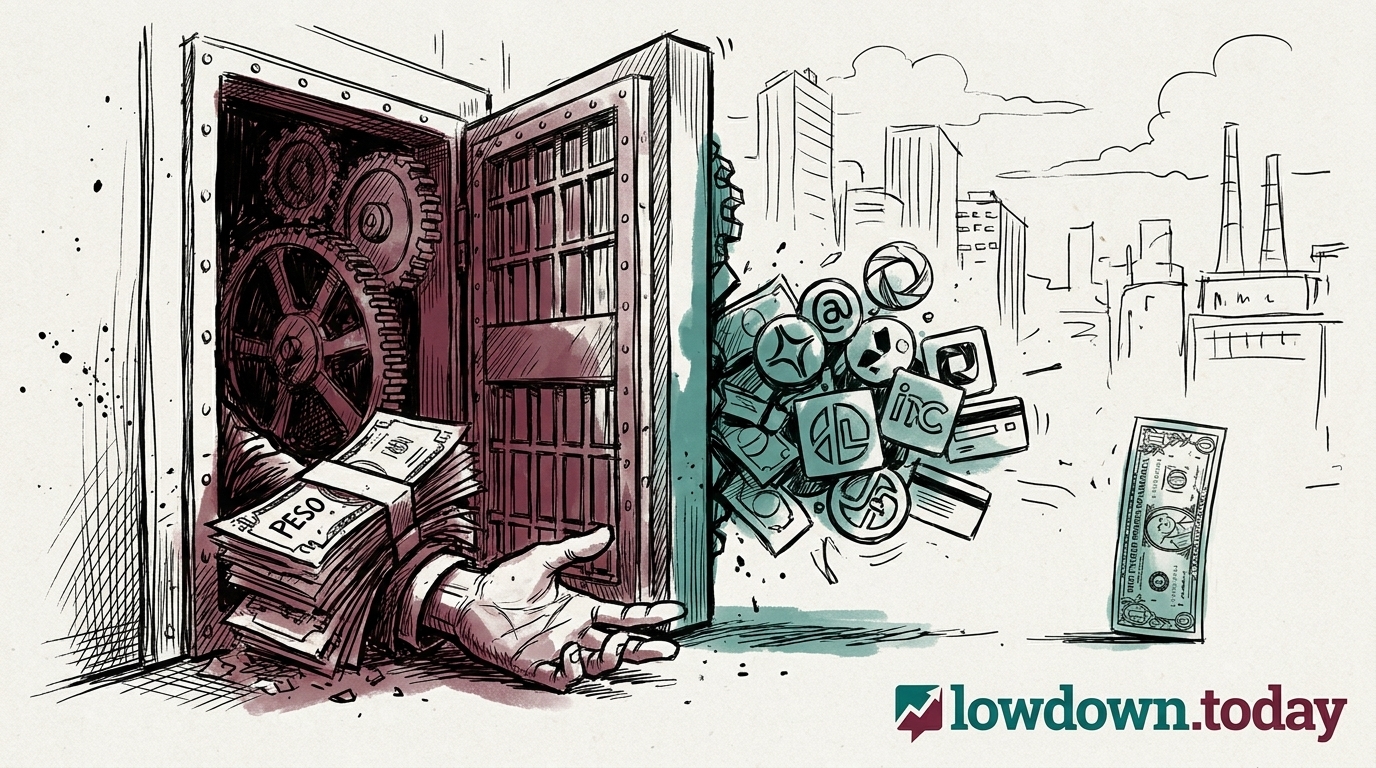
Marco Rubio, US Secretary of State, held a private 45-minute audience with Pope Leo XIV at the Holy See on Saturday 9 May 2026. The agenda covered Cuba and Venezuela. Rubio's central proposal, reported by CubaHeadlines, was to route US humanitarian aid to the island through the Catholic Church rather than through GAESA (Grupo de Administración Empresarial S.A., the Cuban military's economic conglomerate) or any other Cuban state channel.

The same day, Havana Cathedral held a state-level thanksgiving mass marking the first anniversary of Leo XIV's pontificate. Vice President Salvador Valdés Mesa, Foreign Minister Bruno Rodríguez Parrilla and Caridad Diego Bello, head of the Office for Religious Affairs, attended. The Apostolic Nuncio described the relationship as "90 years of unbroken diplomatic relations". Pope Leo XIV, an Augustinian, visited Cuba three times in his pre-pontifical career, in 2008, 2011 and 2019, giving the Holy See institutional standing inside Cuban Catholic infrastructure that the State Department does not have.

The 9 May meeting reverses Lowdown's prior reading. The Vatican channel had been characterised as superseded by the 10 April direct State Department aircraft track ; Rubio's audience layers it back over that track rather than displacing it. The Raúl Castro grandson back-channel remains active alongside. Three formal US tracks now run in parallel: bilateral handled by Cuban Deputy Foreign Minister Carlos Fernández de Cossío García del Toro, OFAC personal sanctions authored by Treasury Secretary Scott Bessent, and The Vatican humanitarian track Rubio is now personally bridging.

The 13 March prisoner-release announcement that Amnesty International later found contained zero prisoners of conscience flowed through the same Vatican channel before its 10 April supersession. Whether the Catholic-Church aid proposal moves from proposal to implementation depends on a public Holy See or State Department readout that has not yet appeared.


Deep Analysis

In plain English

Cuba has been talking to Washington through different channels since the **Trump** administration took office. None of them have produced results. On 9 May, US Secretary of State **Marco Rubio** went to the Vatican and spent 45 minutes with the new Pope, **Leo XIV**. The new Pope used to be a senior American cardinal called **Robert Prevost**. He visited Cuba three times before becoming Pope, more than almost any other cardinal in the Vatican. That gives him operational knowledge of how the Cuban Church works on the ground. Rubio proposed sending US humanitarian aid into Cuba through Catholic Church channels rather than through the Cuban military's logistics arm, **GAESA**. The aim is to feed Cubans without feeding the regime that controls 60% of the country's distribution infrastructure. The same day **Rubio** was at the Vatican, Cuba held a state-level mass at **Havana Cathedral** marking the Pope's first anniversary. **Washington** and **Havana** signalled simultaneously that they want this channel to work.

Deep Analysis
Root Causes

The Vatican channel exists because no other institution clears the trust test on both sides. The 10 April Havana talks demonstrated direct US-Cuban contact is possible but produced no releases by the 24 April deadline. **Bruno Rodríguez Parrilla**'s public posture has been combative since.

The Catholic Church is the only third party Havana will receive without preconditions, and Washington under Rubio is the only US administration since the 1980s with a Secretary of State who is a practicing Catholic of Cuban descent.

**GAESA**'s monopoly drives the second structural cause. The **Grupo de Administración Empresarial SA** military conglomerate controls hard-currency import, hotel revenues, port handling and the **TRD Caribe** retail chain. Any humanitarian aid arriving in Cuba touches GAESA infrastructure unless routed through Church-owned **Cáritas Cuba** warehousing, which has limited bulk-handling capacity. **Rubio**'s Vatican proposal therefore works as a logistics workaround as much as a diplomatic one.

What could happen next?
  • Opportunity

    If Cáritas-routed aid clears Cuban customs without GAESA repackaging, the channel could absorb $90-140 million annual donor flow within 18 months.

    Medium term · 0.5
  • Consequence

    Public US engagement of the Vatican as preferred Cuban interlocutor narrows space for direct State Department diplomacy, locking the administration into a single-channel negotiating posture.

    Short term · 0.65
  • Risk

    Should GAESA insist on last-mile handling, the Vatican channel collapses to symbolic status and Washington has no alternative venue prepared.

    Short term · 0.6
First Reported In

Update #4 · Diesel adrift, grid splits, Rubio at Vatican

CubaHeadlines· 18 May 2026
Read original
Different Perspectives
Spanish hotel operators
Meliá and Iberostar exited GAESA-linked Cuban hotels before 5 June to protect their broader Caribbean and global portfolios from secondary-sanctions exposure. Spain's commercial stake in Cuban tourism makes Madrid a structural veto risk if the EU advances Cuba-specific restrictive measures under Ollongren's mandate.
Cuban opposition / OCDH
After the US Senate killed a Cuba war-powers check 51-47 on 29 April, the Madrid-based OCDH formally demanded an EU reparations fund for political prisoners on 4 June, routing its pressure campaign to Brussels where the EU's existing restrictive-measures machinery, used previously against Venezuela and Belarus, does not require a Senate majority.
China
China
Beijing paired a birthday telegram to Castro with no operational commitment on fuel or credit, using the occasion to signal non-abandonment ahead of the G20 without incurring the cost of a replacement tanker. China has no military-logistics presence in the Caribbean comparable to Soviet-era capacity.
Russia
Russia
Moscow sent an official birthday message to the indicted Raúl Castro on 3 June, a deliberate legitimacy signal to Global South partners, while Sovcomflot has announced no replacement for the Universal's 270,000-barrel cargo that turned away on 26 May. The pattern mirrors Soviet public solidarity during the 1962 crisis while privately managing exposure.
Trump administration / OFAC
Washington let a calendar date do the work: no new designations were needed after 18 May, and the looming 5 June expiry, which strips foreign firms' legal-exit defence, drove the hotel exodus and card suspension without a second executive action. The administration has not publicly commented on the compound utility failures.
Cuban government and citizens
Havana's only countermeasure this week was a Granma editorial defending GAESA by name, conceding the designation is biting hard enough to require a public answer. Residents of Havana and Guanabacoa banged pots on the nights of 3-4 June, the first confirmed capital protests, after gas, water, and the state milk ration all failed.
