Skip to content
Briefings are running a touch slower this week while we rebuild the foundations.See roadmap
Cuba Dispatch
28MAY

Treasury carves Cuba out of Venezuela oil easing

3 min read
08:42UTC

A broad US authorisation on 18 March let Venezuelan crude flow to global markets again, but named Cuba alongside Russia and Iran in the exclusions.

PoliticsDeveloping
Key takeaway

Washington eased Venezuela sanctions for the world and tightened them against Havana in the same stroke.

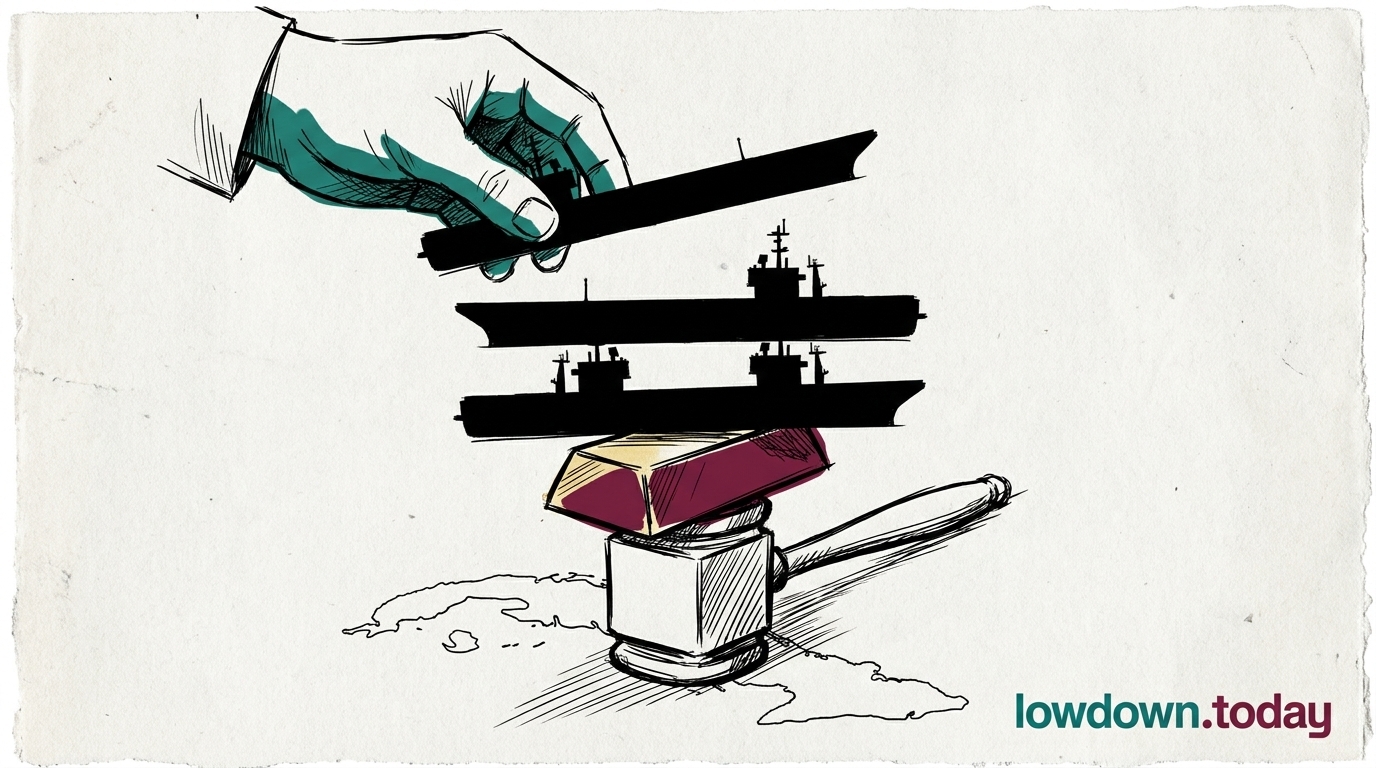
On 18 March 2026 the US Treasury issued a broad authorisation permitting PDVSA (Petróleos de Venezuela, S.A., the Venezuelan state oil firm) to sell crude on world markets, including to US refiners, in response to Iran-war supply pressure 1. The licence carried an explicit carve-out: transactions involving Cuba, Russia, Iran, North Korea and certain Chinese entities remain prohibited.

The practical effect is a two-tier settlement of Venezuela policy. Most of the world regains access to PDVSA crude at a moment when Hormuz disruption has pushed refiners to scramble for non-Iranian supply. The Cuban state, historically PDVSA's single most politically-loaded customer, does not. Cuba is grouped with strategic adversaries rather than with ordinary sanctions targets, which is a structural categorisation rather than a tactical one.

The instruments involved are the Cuban Assets Control Regulations (CACR), the statutory framework Treasury administers through its Office of Foreign Assets Control (OFAC), and the 1996 LIBERTAD Act underpinning them. GAESA (Grupo de Administración Empresarial S.A., the Cuban military's economic conglomerate) is the specific state actor blocked from buying. Payments under the general licence route to a US-controlled account with gold and cryptocurrency settlement prohibited, closing the workaround channels Havana has used in previous tight-fuel episodes. The carve-out is the policy decision around which the remainder of the Cuba dispatch is organised.

Deep Analysis

In plain English

The US eased oil sanctions on Venezuela so most of the world could buy Venezuelan crude again. But it explicitly banned Cuba from that deal. Think of it as the US reopening a petrol station to everyone except one customer. Cuba used to depend on Venezuela for cheap oil to keep its power stations running. That supply is now cut off at the source. The lights that go out each evening in Havana are partly a direct consequence of this decision.

Deep Analysis
Root Causes

GAESA's dominance of Cuban oil imports means any Venezuela-Cuba fuel channel routes through the Cuban military conglomerate. US sanctions logic since 2019 has targeted GAESA specifically, making it structurally impossible to allow Cuban state oil imports without benefiting the entity the sanctions most intend to pressure.

The timing reflects Iran war supply politics: the March 18 authorisation was driven by Hormuz disruption pushing US refiners to seek alternative supply. Cuba's exclusion was the political cost of selling the Venezuela easing to the Miami Republican delegation and the Senate Foreign Relations Committee hardliners.

What could happen next?
  • Consequence

    Cuba's state thermal fleet is deprived of its most commercially-accessible emergency fuel source, extending the grid crisis beyond what Russian tanker cadence alone can offset.

    Short term · 0.85
  • Risk

    If Russia cannot sustain tanker deliveries at fortnightly intervals, Cuba faces rolling grid collapse rather than managed brownouts; with hospital and water-treatment consequences quantified by the UN.

    Medium term · 0.72
  • Precedent

    Grouping Cuba with Russia, Iran and North Korea in a statutory exclusion sets a categorisation that will be difficult to walk back without a formal sanctions redesignation.

    Long term · 0.8
First Reported In

Update #1 · Cuba carve-out survives Venezuela oil easing

Military.com· 15 Apr 2026
Read original
Different Perspectives
Holy See and WOLA engagement-track analysts
Caritas Cuba distributed 82 per cent of a $3M tranche to 8,800 families via the Church channel Rubio proposed at his 9 May Vatican audience. WOLA analysts note that personal sanctions on peso-denominated officeholders carry limited coercive effect; the Church track is the one instrument that reaches ordinary Cubans directly.
Sovcomflot and Russia
Moscow has announced no replacement for the Universal after it diverted on 26 May, and Sovcomflot's failure to activate Russia's National Reinsurance Company cover as a substitute for the expired P&I insurance signals that Russian fuel deliveries to Cuba now depend on OFAC-compatible licensing rather than on an unconditional bilateral commitment.
Prisoners Defenders and OCDH human rights monitors
Prisoners Defenders' April 2026 census of 1,260 political prisoners, its highest on record, documents the caseload rising by ten in a month despite repeated Cuban pardon announcements. Maykel Osorbo's refusal of the State Security exile-or-2030 ultimatum in May kept a high-profile name inside the registry Havana would need cleared before any prisoner-release negotiation proceeds.
MINREX and Cuban government
Cuba's foreign ministry condemned the indictment as 'political coercion' and filed a formal protest met by the US Deputy Secretary of State on 24 May. Diaz-Canel offered dialogue 'on equal terms' but ruled political prisoners off the table, while Cuba's pardon decrees structurally exclude crimes-against-authority charges from every amnesty wave, leaving the 1,260-prisoner count unchanged.
Trump administration and Florida delegation
The administration framed the 18 May designation wave and 20 May indictment as accountability for Cuba's security apparatus; Florida Republicans Gimenez, Diaz-Balart, and Salazar credited constituent pressure for the EO 14404 architecture. Senate Democrats Kaine, Schiff, and Gallego, having lost S.J.Res.124 51-47 on 29 April, called the Nimitz deployment under Operation Southern Spear a constitutional overreach.
OCDH and dissident coalition (Otero Alcántara, Osorbo proxies)
The Madrid-based OCDH coordinated the 13 May Brussels handover after the Cuban Supreme Popular Court rejected Otero Alcántara's early-release appeal in late April. The coalition's pivot to the EU restrictive-measures track follows procedural closure of the early-release vector before the 24 April US deadline lapsed.

