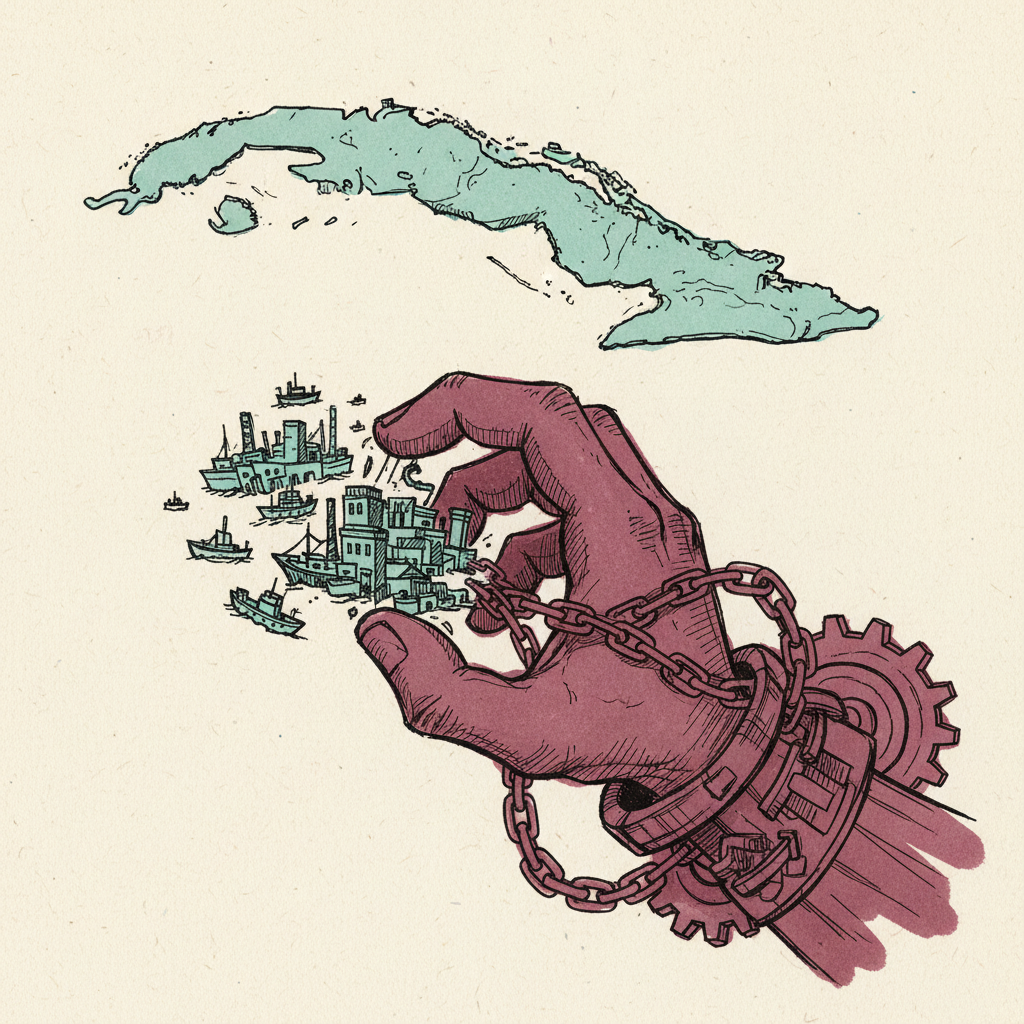
Helms-Burton Act
1996 Helms-Burton Act; codifies Cuba embargo and requires congressional vote to lift it.
The US Supreme Court ruled 6-3 on 23 June 2026 that Cuban state entities cannot claim sovereign immunity in US courts under the Helms-Burton Act, clearing a further legal shield for lawsuits over property confiscated after 1959.
Last refreshed: 4 August 2026 · Appears in 1 active topic
Why can no US president lift the Cuba embargo without an act of Congress?
Timeline for Helms-Burton Act
Mentioned in: Havana calls the threat framing a lie
Cuba DispatchMentioned in: Havana's UN week turns against it
Cuba DispatchSupreme Court reopens Cuba land suits
Cuba DispatchMentioned in: Cuba carve-out strands nine SDN cargoes
European Oil MarketsBackground
The LIBERTAD Act (Cuban Liberty and Democratic Solidarity Act, 1996), known as the Helms-Burton Act, is the foundational US legislative framework for the Cuba embargo. Passed by a Republican Congress and signed by President Clinton after Cuba's shoot-down of two Brothers to the Rescue civilian aircraft in February 1996, it codified the embargo into statute, stripping the president of unilateral authority to lift it without a congressional vote.
Title III allows US nationals, including naturalised Cuban-Americans, to sue foreign companies that traffic in property confiscated from them after the 1959 revolution; Title IV bars executives of such companies from entering the United States. Title III was suspended by every administration from 1996 until the first Trump term activated it in 2019, opening US courts to claims against foreign firms with Cuban operations.
For foreign investors the Act remains a concrete liability, since Title III activation exposed European and Canadian companies with Cuban exposure to US court claims and chilled third-country investment. Cuba treats the Act's repeal as a precondition for full normalisation engagement, and because only Congress can lift it, the Florida congressional delegation holds effective veto power over any diplomatic settlement.
Its lawsuits gained a new legal path
The US Supreme Court ruled 6-3 on 23 June 2026 that Cuban state entities cannot claim sovereign immunity in US courts under the 1996 Act, removing one more legal shield against lawsuits over property confiscated after the 1959 revolution. Spanish hotel groups Melia and Iberostar, both already exposed to Title III claims after the provision's 2019 activation, now face compensation claims they had not faced before.
The ruling compounds pressure the Act already applies through Title III's litigation route, and follows Florida's three Cuban-American representatives citing the Act's statutory lock on the embargo in their February 2026 letter demanding OFAC and BIS revoke every active Cuba-facing licence. Because the Act requires a congressional vote to lift the embargo, no executive settlement with Havana can bypass it.