Skip to content
Briefings are running a touch slower this week while we rebuild the foundations.See roadmap
Cuba Dispatch
28MAY

Russian tanker lands 730,000 barrels at Havana

3 min read
08:42UTC

The Anatoly Kolodkin delivered nine to ten days of Cuban demand on 31 March and Moscow announced a second vessel was loading.

PoliticsDeveloping
Key takeaway

Moscow's tanker is not normalisation, it is the difference between a dark evening and a darker one.

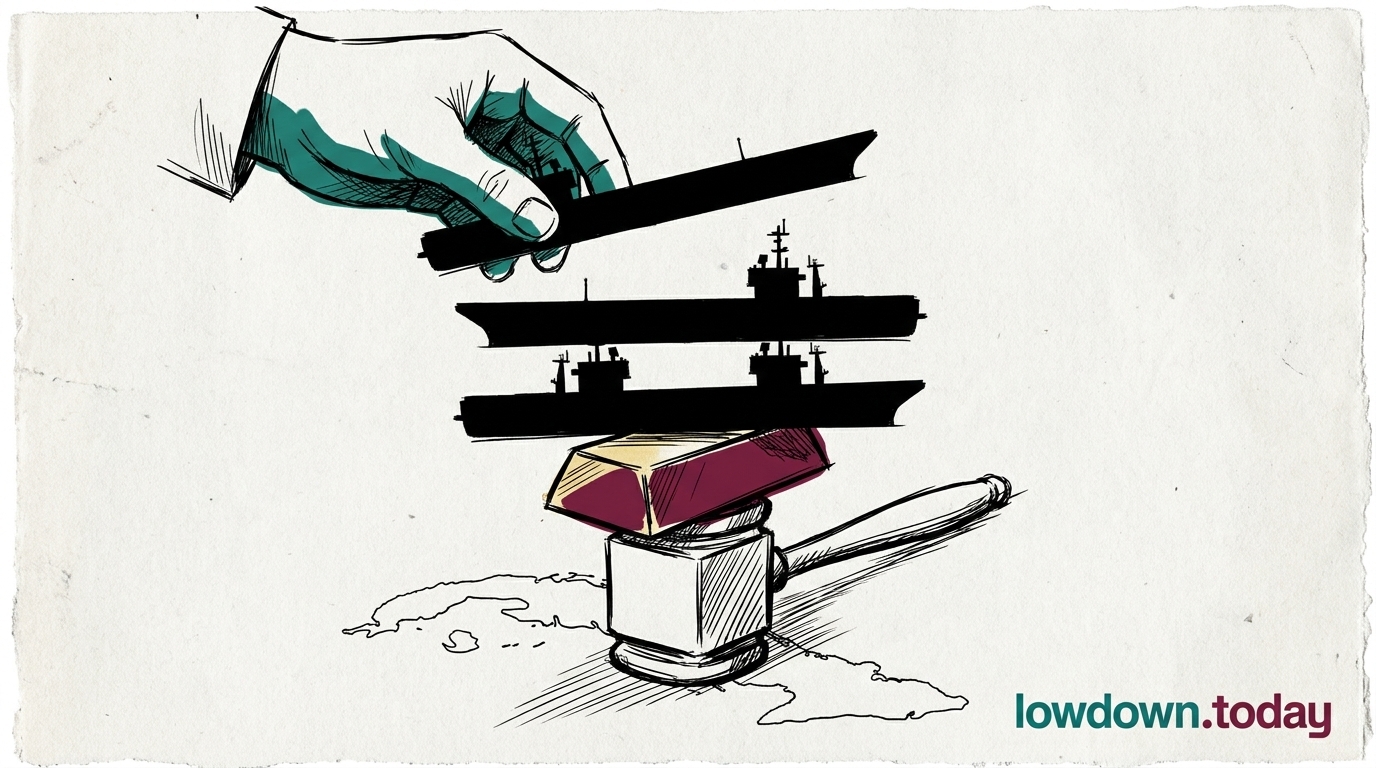
The Russian tanker Anatoly Kolodkin docked at Havana on 31 March 2026 carrying approximately 730,000 barrels of crude, the equivalent of nine to ten days of Cuban demand 1. Russian Energy Minister Sergei Tsivilyov announced at an energy forum in Kazan that a second vessel was being loaded, pledging Moscow would "not leave Cubans alone in trouble". No name, departure date or cargo volume has been confirmed for the second tanker.

The delivery has a specific role in the larger architecture. Venezuelan oil is the historical backbone of Cuba's state supply; the 18 March US Treasury carve-out blocks that pipeline. Mexican shipments ended in late January under Executive Order 14380 tariff pressure. Russia is the only remaining state-to-state source able to deliver tanker-sized cargoes into Cuban ports, and it is doing so in direct defiance of the US secondary-tariff threat. Moscow treats the deliveries as a low-cost strategic signal in a relationship that costs it little, sustains Havana, and extends Russian presence in the western hemisphere.

President Donald Trump dismissed the delivery in a brief exchange with reporters: "Cuba's finished. Whether or not they get a boat of oil, it's not going to matter." The phrasing treats Cuban state collapse as already determined and the tanker as theatrical. What the quote understates is that even nine to ten days of crude, arriving on a reliable cadence, materially changes the UNE grid arithmetic. It does not normalise supply; it buys survival. Whether Moscow sustains the cadence is the single most consequential external variable in the Cuba fuel picture over the next quarter.

Deep Analysis

In plain English

Russia sent a tanker with Cuban oil because it is one of the few countries willing to defy US sanctions and accept the tariff risk. The delivery covers Cuba's power station needs for about 10 days. Russia's energy minister announced another tanker was loading, suggesting this isn't a one-off. But Cuba used to get far more oil from the Soviet Union; what Russia is sending now is a fraction of what it once provided. Think of it as sending one ambulance when the patient needed a hospital.

What could happen next?
  • Risk

    If Russia encounters its own tanker capacity constraints or diplomatic incentive to pause Cuba deliveries, Havana's grid situation deteriorates immediately with no substitute source in the pipeline.

  • Consequence

    Moscow's public defiance of EO 14380 secondary tariff threats; delivering oil despite the declared tariff exposure; tests the enforcement credibility of the secondary mechanism against a nuclear-armed state.

First Reported In

Update #1 · Cuba carve-out survives Venezuela oil easing

Euronews / Reuters· 15 Apr 2026
Read original
Causes and effects
This Event
Russian tanker lands 730,000 barrels at Havana
Russia's direct-to-Havana tanker route is the only reliable state-level fuel backstop surviving the 18 March carve-out.
Different Perspectives
Holy See and WOLA engagement-track analysts
Caritas Cuba distributed 82 per cent of a $3M tranche to 8,800 families via the Church channel Rubio proposed at his 9 May Vatican audience. WOLA analysts note that personal sanctions on peso-denominated officeholders carry limited coercive effect; the Church track is the one instrument that reaches ordinary Cubans directly.
Sovcomflot and Russia
Moscow has announced no replacement for the Universal after it diverted on 26 May, and Sovcomflot's failure to activate Russia's National Reinsurance Company cover as a substitute for the expired P&I insurance signals that Russian fuel deliveries to Cuba now depend on OFAC-compatible licensing rather than on an unconditional bilateral commitment.
Prisoners Defenders and OCDH human rights monitors
Prisoners Defenders' April 2026 census of 1,260 political prisoners, its highest on record, documents the caseload rising by ten in a month despite repeated Cuban pardon announcements. Maykel Osorbo's refusal of the State Security exile-or-2030 ultimatum in May kept a high-profile name inside the registry Havana would need cleared before any prisoner-release negotiation proceeds.
MINREX and Cuban government
Cuba's foreign ministry condemned the indictment as 'political coercion' and filed a formal protest met by the US Deputy Secretary of State on 24 May. Diaz-Canel offered dialogue 'on equal terms' but ruled political prisoners off the table, while Cuba's pardon decrees structurally exclude crimes-against-authority charges from every amnesty wave, leaving the 1,260-prisoner count unchanged.
Trump administration and Florida delegation
The administration framed the 18 May designation wave and 20 May indictment as accountability for Cuba's security apparatus; Florida Republicans Gimenez, Diaz-Balart, and Salazar credited constituent pressure for the EO 14404 architecture. Senate Democrats Kaine, Schiff, and Gallego, having lost S.J.Res.124 51-47 on 29 April, called the Nimitz deployment under Operation Southern Spear a constitutional overreach.
OCDH and dissident coalition (Otero Alcántara, Osorbo proxies)
The Madrid-based OCDH coordinated the 13 May Brussels handover after the Cuban Supreme Popular Court rejected Otero Alcántara's early-release appeal in late April. The coalition's pivot to the EU restrictive-measures track follows procedural closure of the early-release vector before the 24 April US deadline lapsed.

