Skip to content
You can now search across every topic, entity and event.What's new
Autonomous Systems: Land & Sea
12AUG

Zelenskyy signs Gulf security deals

2 min read
14:17UTC

Ukraine is exchanging three years of battle-tested counter-drone expertise for Gulf security agreements, POW releases, and a diplomatic constituency beyond Europe.

TechnologyDeveloping
Key takeaway

Ukraine converted battlefield drone expertise into Gulf security partnerships and a new diplomatic constituency.

Zelenskyy completed a three-state Gulf tour between 27 and 28 March, signing 10-year security agreements with Saudi Arabia and Qatar and securing cooperation terms with the UAE 1. Over 200 Ukrainian counter-drone specialists are now deployed across four Gulf states, with 30 more assigned to Jordan and Kuwait. Six countries have submitted formal cooperation requests.

Iran manufactures the Shahed-136 drone. Russia buys it and launches it at Ukrainian cities nightly. Iran also fires the same design at Gulf targets. Ukraine's three years of defending against Shaheds produced the world's most battle-tested counter-drone expertise. Gulf states that spent $13.5 million per Patriot interception are now buying Ukrainian interceptor drones at under $2,000 each.

Ukraine is exchanging drone expertise for things it needs: Gulf states are facilitating POW releases and the return of Ukrainian children deported by Russia. Qatar is the primary intermediary. Zelenskyy's earlier offer to Trump of counter-drone assistance opened this track; the Gulf tour formalises it into binding agreements that create a diplomatic constituency beyond Europe.

Deep Analysis

In plain English

Ukraine's president toured Saudi Arabia, Qatar, and the UAE in late March and signed security agreements with two of them. The logic: Iran makes the Shahed drones that Russia fires at Ukrainian cities every night. Iran also fires the same drones at Gulf state targets. Ukraine has three years of battle experience shooting down these drones cheaply. The Gulf states want that expertise. In exchange, Ukraine is getting help with POW releases, the return of children Russia deported, and something more strategic: six countries in the Middle East now have a material interest in Ukraine's survival. That is diplomatic leverage Ukraine did not have a year ago.

Deep Analysis
Root Causes

The Gulf tour's strategic foundation is Iran's dual role: Iran manufactures the Shahed drones used against both Ukraine and Gulf states, creating a shared threat perception. Ukraine's three-year operational experience against Iranian drones gives it knowledge that Gulf states, despite vastly greater defence budgets, cannot replicate without battlefield exposure.

The timing reflects Ukraine's recognition that European and American support has structural limits, including aid fatigue, election cycles, and the PURL diversion. Building a Gulf constituency diversifies Ukraine's political support base and its economic relationships simultaneously.

What could happen next?
  • Opportunity

    Ukraine's Gulf defence export relationships provide a revenue stream and diplomatic constituency that partially offsets potential reductions in US and European support.

  • Consequence

    Qatar's role as POW intermediary and Zelenskyy's public acknowledgement of it strengthens Qatar's diplomatic position relative to other Gulf mediators.

First Reported In

Update #9 · Ukraine halves Russia's Baltic oil exports

Euronews· 1 Apr 2026
Read original
Different Perspectives
Conservative opposition
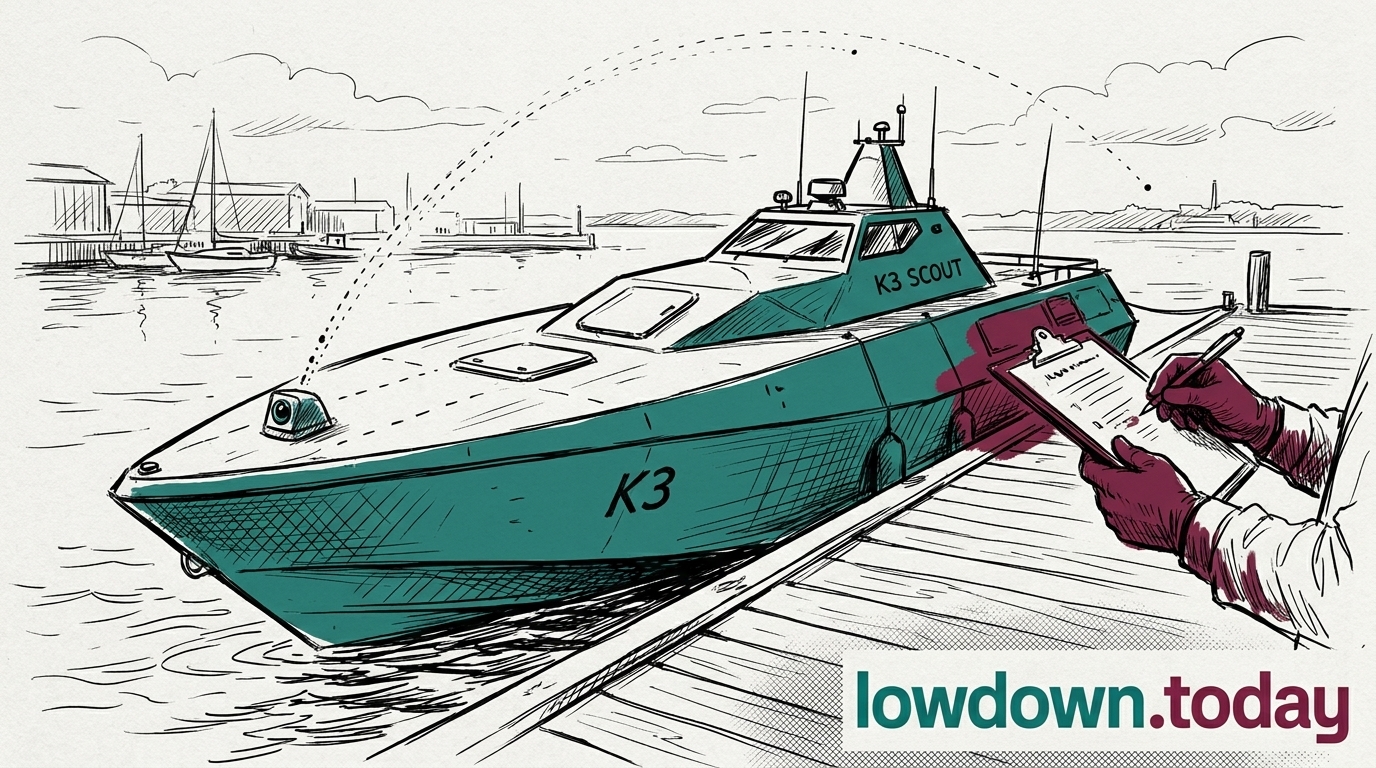
The Conservative opposition called on the Government on 9 August to 'urgently audit' equipment for hidden Chinese components, after the Telegraph's K3 SCOUT report. No named MP has been quoted on the record; the call came at party level, alongside the Ministry of Defence's own 10 August statement that no data had been compromised.
Netherlands Ministry of Defence
The Netherlands Ministry of Defence authorised Dutch Naval Design on 4 August to design 12-metre anti-submarine warfare uncrewed vessels for the Dutch-Belgian frigate programme, and to buy an adapted Compact FLASH dipping sonar from Thales Underwater Systems France. The order commits money and a named supplier while Britain's own certification body remains at the market-engagement stage.
Kraken Technology Group
Kraken Technology Group is a UK maritime-defence company based in Portsmouth that builds the K3 SCOUT, and crossed a $1bn valuation in July on a single-sourced $175m raise. The camera components reached the fleet under a third party's written security assurance, which the Platform Authority, which does not yet exist, was never positioned to check.
Navy Commercial
Navy Commercial
Navy Commercial at Whale Island published two notices on 5 August: 074032-2026, asking industry how to build a Platform Authority to certify uncrewed vessels, and 074351-2026, a GBP10m multi-role USV testbed for the Defence Chief Technology Officer. Responses on the Platform Authority close 19 August, ten days after the cameras were found transmitting to China.
Ministry of Defence
Ministry of Defence
The Ministry of Defence said on 10 August that a routine cyber vulnerability assessment found the camera fault, and a thorough investigation found no evidence that MoD data or systems had been accessed, compromised or transmitted externally. It stripped the cameras of internet connectivity but did not say whether it acted against the supplier.
Thales
Thales
Thales converted its 6 July engaging accord with Exail into a definitive combination agreement on 30-31 July, but the tender offer for Exail's remaining shares now closes by early 2028, later than July's timetable implied. Thales integrates its new undersea prime while still bidding against Kongsberg and DRASS's 2027 target for the AUKUS Pillar II contest.
