Skip to content
You can now search across every topic, entity and event.What's new
Autonomous Systems: Land & Sea
12AUG

Ukraine Revealed Operating from Libya in Mediterranean Sea War

2 min read
14:17UTC

An RFI investigation confirmed 200 or more Ukrainian troops at two Libyan bases, establishing that the 4 March strike on a Russian LNG carrier in the Mediterranean was launched from Libyan soil.

TechnologyDeveloping
Key takeaway

Ukraine extended its anti-shipping war 2,000 km from the Black Sea via Libyan bases, outside any collective defence framework.

RFI published on 4 April that 200 or more Ukrainian officers are stationed at two sites in Libya: the Misrata Air Force Academy (shared with Turkish, Italian, US AFRICOM, and British intelligence personnel) and a drone launch facility at Ezzawiya port with direct Mediterranean sea access. A Magura V5 autonomous surface drone launched from Ezzawiya disabled the Russian LNG carrier Arktik Metagaz on 4 March. Ukraine's Black Sea campaign (2023 to 2025) operated from Ukrainian soil. The Mediterranean campaign uses a third country's territory with Tripoli government consent but no formal alliance framework.

General Andriy Bayuk brokered the agreement, which includes long-term arms deliveries and Ukrainian investment in Libya's oil sector. Zelenskyy's Gulf security deals signed in March created the diplomatic architecture; Libya provides the physical reach. The operational range now extends more than 2,000 km beyond the Black Sea.

Russia has threatened to strike the Libyan bases. That threat carries different weight than strikes on Ukrainian soil: Libya is outside NATO's Article 5, the EU, and any mutual defence treaty with Ukraine. The Government of National Unity in Tripoli authorised the Ukrainian presence, making any Russian strike a direct attack on Libyan sovereignty, but Libya has no defence guarantee from any major power that would compel a response.

Deep Analysis

In plain English

Ukraine has secretly been running military operations from Libya, a country in North Africa, to attack Russian ships in the Mediterranean Sea. French radio journalists revealed this after investigating a March attack on a Russian gas tanker. This is a significant development because Ukraine is now using another country's territory to fight Russia — and that country, Libya, is not protected by NATO. If Russia strikes back at Ukrainian bases in Libya, it creates a completely new conflict zone with no automatic Western defence obligation.

Deep Analysis
Root Causes

The Zelenskyy Gulf tour in March created the diplomatic framework enabling third-country military presence. Libya's Government of National Unity has strategic incentives: arms deliveries, Ukrainian oil sector investment, and a defence relationship with multiple Western intelligence services already present at Misrata.

Escalation

High escalation risk if Russia retaliates against Libyan targets. The theatre is ungoverned by any collective defence treaty that would trigger a mandatory Western response — Russia's calculation is structurally different from striking Ukrainian soil.

What could happen next?
  • Risk

    Russia may strike Ukrainian bases in Libya, opening a new conflict theatre with no NATO Article 5 protection for Ukrainian personnel.

    Short term · Medium
  • Consequence

    Russia's shadow fleet now faces interdiction risk in the Mediterranean in addition to the Baltic, North Sea, and Channel.

    Immediate · High
  • Precedent

    A non-NATO, non-EU state has been used as a launch pad for attacks on Russian military-commercial assets, establishing a new model for Ukrainian power projection.

    Medium term · Assessed
First Reported In

Update #11 · Russia Sells Less Oil but Earns More

RFI via Euronews· 5 Apr 2026
Read original
Causes and effects
This Event
Ukraine Revealed Operating from Libya in Mediterranean Sea War
Ukraine has extended its anti-shipping campaign more than 2,000 km beyond the Black Sea into the Mediterranean via a third-country base, creating a new operational theatre outside NATO's Article 5 coverage.
Different Perspectives
Conservative opposition
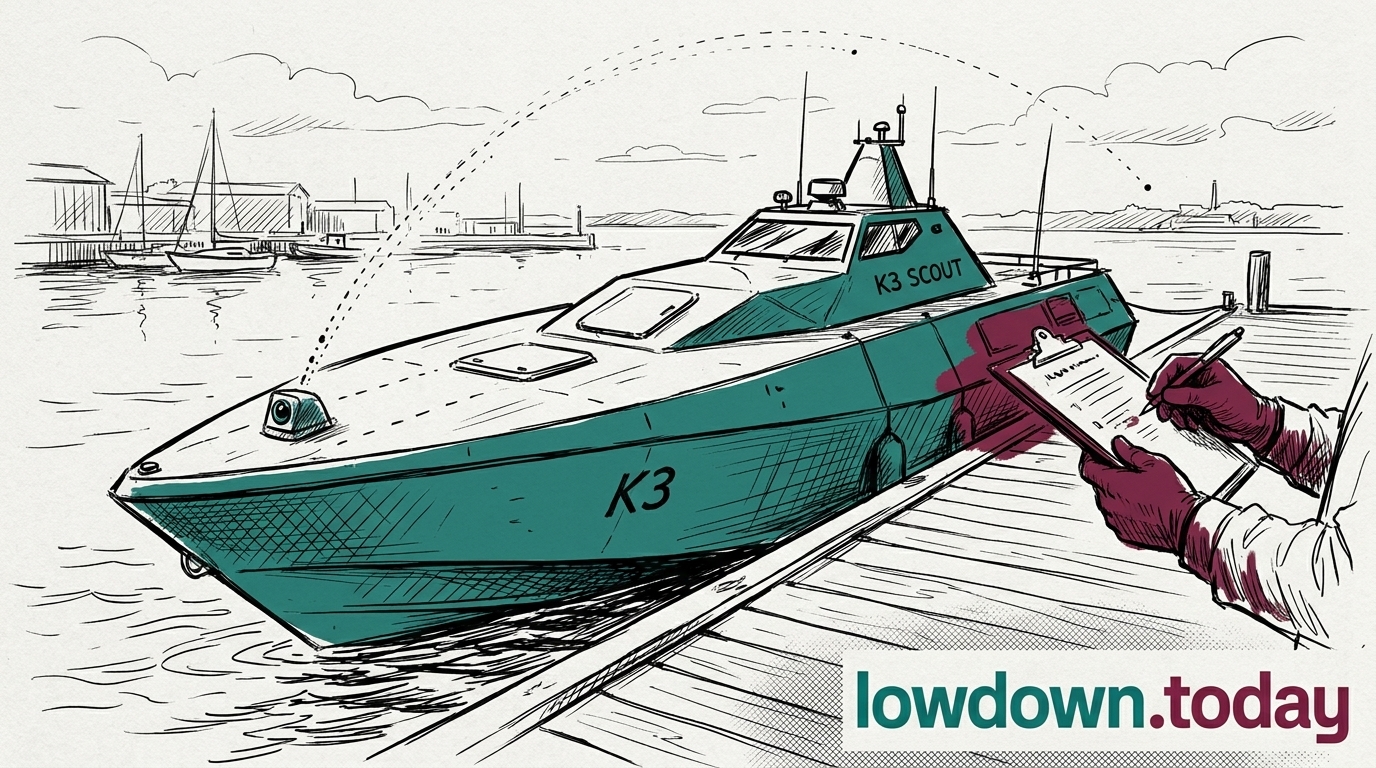
The Conservative opposition called on the Government on 9 August to 'urgently audit' equipment for hidden Chinese components, after the Telegraph's K3 SCOUT report. No named MP has been quoted on the record; the call came at party level, alongside the Ministry of Defence's own 10 August statement that no data had been compromised.
Netherlands Ministry of Defence
The Netherlands Ministry of Defence authorised Dutch Naval Design on 4 August to design 12-metre anti-submarine warfare uncrewed vessels for the Dutch-Belgian frigate programme, and to buy an adapted Compact FLASH dipping sonar from Thales Underwater Systems France. The order commits money and a named supplier while Britain's own certification body remains at the market-engagement stage.
Kraken Technology Group
Kraken Technology Group is a UK maritime-defence company based in Portsmouth that builds the K3 SCOUT, and crossed a $1bn valuation in July on a single-sourced $175m raise. The camera components reached the fleet under a third party's written security assurance, which the Platform Authority, which does not yet exist, was never positioned to check.
Navy Commercial
Navy Commercial
Navy Commercial at Whale Island published two notices on 5 August: 074032-2026, asking industry how to build a Platform Authority to certify uncrewed vessels, and 074351-2026, a GBP10m multi-role USV testbed for the Defence Chief Technology Officer. Responses on the Platform Authority close 19 August, ten days after the cameras were found transmitting to China.
Ministry of Defence
Ministry of Defence
The Ministry of Defence said on 10 August that a routine cyber vulnerability assessment found the camera fault, and a thorough investigation found no evidence that MoD data or systems had been accessed, compromised or transmitted externally. It stripped the cameras of internet connectivity but did not say whether it acted against the supplier.
Thales
Thales
Thales converted its 6 July engaging accord with Exail into a definitive combination agreement on 30-31 July, but the tender offer for Exail's remaining shares now closes by early 2028, later than July's timetable implied. Thales integrates its new undersea prime while still bidding against Kongsberg and DRASS's 2027 target for the AUKUS Pillar II contest.
