Skip to content
You can now search across every topic, entity and event.What's new
Autonomous Systems: Land & Sea
12AUG

Ukraine exports the factory, not the drone

3 min read
14:17UTC

RSI Europe in Vilnius and Ukraine's The Fourth Law signed a memorandum at Eurosatory on 18 June to build drones in Lithuania, deepening a corridor that puts Ukrainian production lines and combat-iterated software on EU soil.

TechnologyDeveloping
Key takeaway

Ukraine's export ban has become a know-how export, seeding combat-proven production lines across NATO states.

RSI Europe, a Lithuanian drone manufacturer in Vilnius, signed a memorandum of understanding with Ukraine's The Fourth Law at Eurosatory on 18 June 2026 to build drones in Lithuania under the Build with Ukraine framework 1. The Fourth Law supplies the artificial-intelligence, computer-vision and manufacturing know-how; Ukrainian citizens are given priority for the production jobs. RSI is already delivering 9,500 Shpak FPV first-person-view drones to an undisclosed NATO buyer.

The deal advances a corridor that opened when Fire Point broke ground on a Danish plant and Kyiv announced ten EU export offices . Ukraine's Fire Point is scaling FP-1 output to more than 100 a day at Denmark's Skrydstrup airbase, set against the roughly 4 million drones Ukraine builds at home each year. The volume travelling abroad is small by that measure, which is not the point of the move.

What travels with the production matters more than the throughput. Design know-how and combat-iterated software, refined over three years against Russian drones, now flow into NATO states alongside the airframes. Kyiv's wartime export ban still blocks the hardware, so it sells the harder asset instead, while host states absorb the manufacturing and the political risk of weapons plants on their territory. The export ban has been converted into an industrial-transfer business: Lithuania for assembly, Denmark for propellant and airframes, with Ukraine retaining the intellectual property.

Deep Analysis

In plain English

Ukraine produces roughly 4 million drones per year and has developed advanced manufacturing knowledge during the war. But Ukraine cannot legally export finished drones to most allied countries under its own export controls. Instead, Ukrainian firms are licensing their know-how to manufacturers in NATO countries. RSI Europe, a Lithuanian company, signed an agreement with Ukrainian firm The Fourth Law to build drones in Lithuania using Ukrainian AI and manufacturing methods. Ukrainian workers get priority for the jobs. This is Ukraine exporting a factory's worth of knowledge rather than the products themselves.

What could happen next?
  • Consequence

    The Baltic drone manufacturing corridor (Lithuania, Denmark hosting Fire Point and RSI Europe) is becoming a distinct regional industrial cluster that could attract further Ukrainian technology transfers and NATO supply contracts ahead of the UK and Germany.

  • Risk

    Manufacturing know-how transferred to Lithuania before the Ukraine war ends could be re-licensed to third parties outside Ukraine's control, reducing Ukraine's post-war export leverage in defence markets.

First Reported In

Update #13 · Air Force shuts primes out of drone wingman

The Telegraph· 25 Jun 2026
Read original
Different Perspectives
Conservative opposition
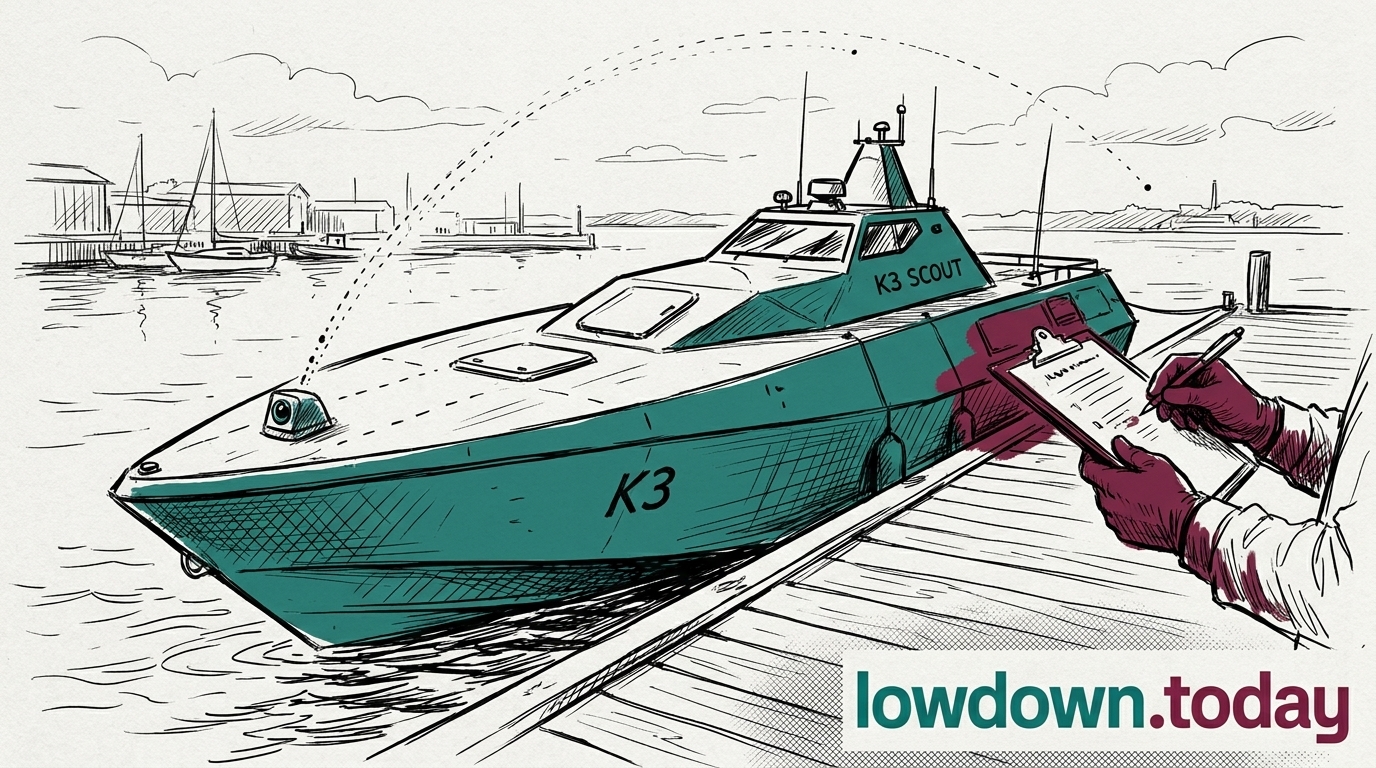
The Conservative opposition called on the Government on 9 August to 'urgently audit' equipment for hidden Chinese components, after the Telegraph's K3 SCOUT report. No named MP has been quoted on the record; the call came at party level, alongside the Ministry of Defence's own 10 August statement that no data had been compromised.
Netherlands Ministry of Defence
The Netherlands Ministry of Defence authorised Dutch Naval Design on 4 August to design 12-metre anti-submarine warfare uncrewed vessels for the Dutch-Belgian frigate programme, and to buy an adapted Compact FLASH dipping sonar from Thales Underwater Systems France. The order commits money and a named supplier while Britain's own certification body remains at the market-engagement stage.
Kraken Technology Group
Kraken Technology Group is a UK maritime-defence company based in Portsmouth that builds the K3 SCOUT, and crossed a $1bn valuation in July on a single-sourced $175m raise. The camera components reached the fleet under a third party's written security assurance, which the Platform Authority, which does not yet exist, was never positioned to check.
Navy Commercial
Navy Commercial
Navy Commercial at Whale Island published two notices on 5 August: 074032-2026, asking industry how to build a Platform Authority to certify uncrewed vessels, and 074351-2026, a GBP10m multi-role USV testbed for the Defence Chief Technology Officer. Responses on the Platform Authority close 19 August, ten days after the cameras were found transmitting to China.
Ministry of Defence
Ministry of Defence
The Ministry of Defence said on 10 August that a routine cyber vulnerability assessment found the camera fault, and a thorough investigation found no evidence that MoD data or systems had been accessed, compromised or transmitted externally. It stripped the cameras of internet connectivity but did not say whether it acted against the supplier.
Thales
Thales
Thales converted its 6 July engaging accord with Exail into a definitive combination agreement on 30-31 July, but the tender offer for Exail's remaining shares now closes by early 2028, later than July's timetable implied. Thales integrates its new undersea prime while still bidding against Kongsberg and DRASS's 2027 target for the AUKUS Pillar II contest.
