Skip to content
You can now search across every topic, entity and event.What's new
Autonomous Systems: Land & Sea
12AUG

Latvia, Ukraine build drones on border

2 min read
14:17UTC

Latvia and Ukraine agreed on 30 June to build a joint drone factory in Latgale, hard against the Russian and Belarusian border.

TechnologyDeveloping
Key takeaway

Latvia and Ukraine will build drones in Latgale, on the Russian border and within reach of a strike.

Latvia and Ukraine agreed on 30 June to build a joint drone factory in the Latgale region of eastern Latvia, hard against the Russian and Belarusian border 1. Latvian Prime Minister Andris Kulbergs said the government would site the plant near the frontier deliberately, to lift one of the country's poorest regions; President Volodymyr Zelensky and Defence Minister Mykhailo Fedorov confirmed the framework alongside Latvian Defence Minister Raivis Melnis. Construction begins this year, though the location, drone types and cost split stay undisclosed.

Latvia will also field counter-drone systems along its borders in July and August, cutting its reliance on scrambling fighter jets at every incursion. The country put mobile intercept teams on that border in May .

The factory extends Ukraine's export model into a third state. Rather than sell finished drones, Kyiv licenses combat-proven know-how through Build-with-Ukraine corridors, already running in Lithuania and folded into the ten EU export offices Zelensky announced in June . Siting a production line within artillery reach of Russia also invites a strike, because a weapons plant on that border is a lawful military target, and NATO has published no guidance on what hosting one does to a member's status.

Deep Analysis

In plain English

Latvia is a small Baltic country bordering both Russia and Belarus. On 30 June it agreed with Ukraine to build a factory that makes drones together, in a region called Latgale in eastern Latvia, right up against that border. Latvian Prime Minister Andris Kulbergs said the site was chosen partly to bring jobs to one of Latvia's poorer regions. Ukraine's President Volodymyr Zelensky and defence officials from both countries confirmed the plan. Because Ukraine cannot legally sell finished drones abroad under its own wartime export ban, it instead shares the know-how to build them, an arrangement it already runs with Lithuania.

Deep Analysis
Root Causes

Latvia's decision follows a domestic political rupture: Defence Minister Andris Spruds resigned in May after two Russian-origin drones crashed on Latvian soil on 7 May, one striking an empty fuel depot, widely read as a gap in the country's border counter-drone response. Kulbergs inherited a portfolio already discredited on exactly the capability, drone defence, that this factory and the accompanying July-August border deployments are built to answer.

Ukraine's 2022 wartime export ban prohibits selling finished drones abroad, which pushes Kyiv to license know-how instead, extending the Build-with-Ukraine model that already runs in Lithuania to a second Baltic host.

What could happen next?
  • Risk

    Siting drone production within artillery reach of Russia and Belarus makes the Latgale plant a plausible strike target once operational, a risk NATO has not addressed in published guidance for members hosting Ukrainian production.

First Reported In

Update #14 · UK's £5bn drone bet follows Healey's exit

Defense News· 5 Jul 2026
Read original
Different Perspectives
Conservative opposition
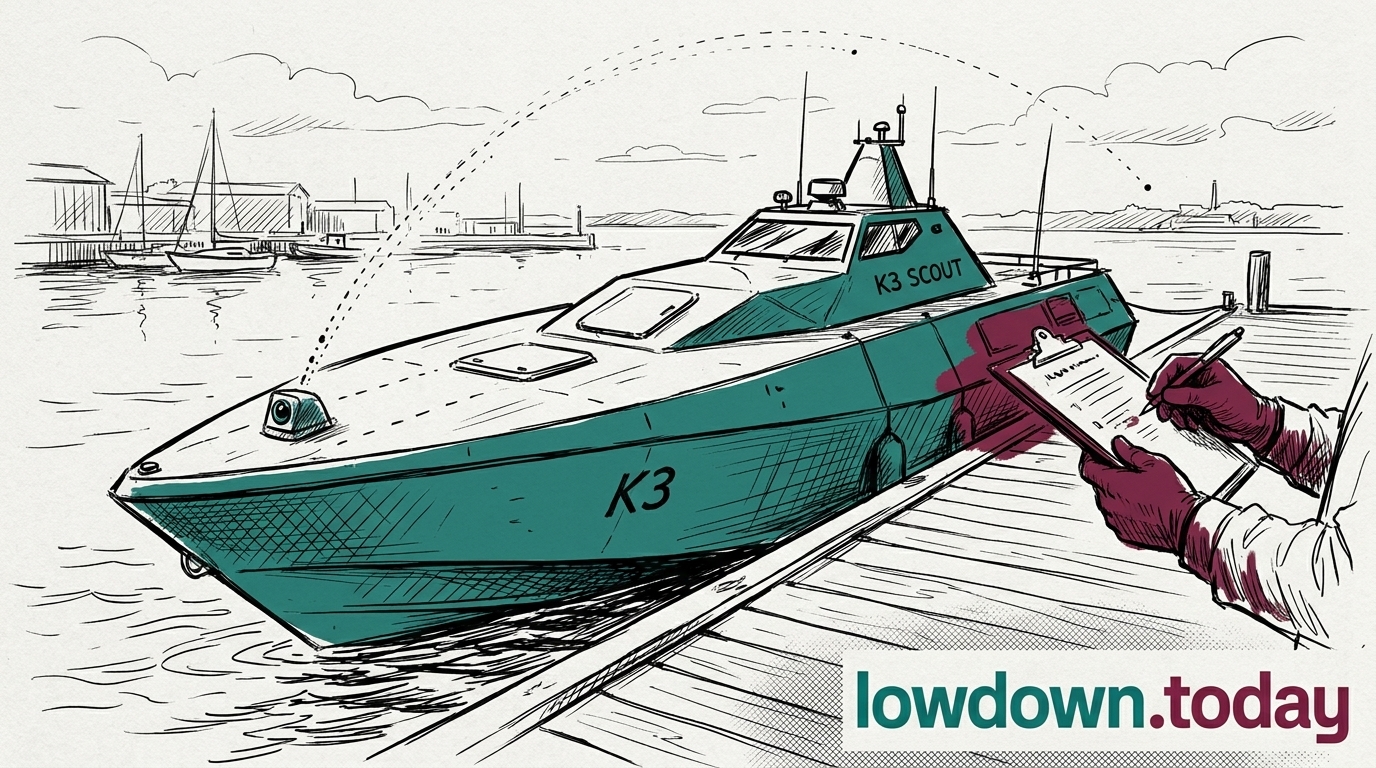
The Conservative opposition called on the Government on 9 August to 'urgently audit' equipment for hidden Chinese components, after the Telegraph's K3 SCOUT report. No named MP has been quoted on the record; the call came at party level, alongside the Ministry of Defence's own 10 August statement that no data had been compromised.
Netherlands Ministry of Defence
The Netherlands Ministry of Defence authorised Dutch Naval Design on 4 August to design 12-metre anti-submarine warfare uncrewed vessels for the Dutch-Belgian frigate programme, and to buy an adapted Compact FLASH dipping sonar from Thales Underwater Systems France. The order commits money and a named supplier while Britain's own certification body remains at the market-engagement stage.
Kraken Technology Group
Kraken Technology Group is a UK maritime-defence company based in Portsmouth that builds the K3 SCOUT, and crossed a $1bn valuation in July on a single-sourced $175m raise. The camera components reached the fleet under a third party's written security assurance, which the Platform Authority, which does not yet exist, was never positioned to check.
Navy Commercial
Navy Commercial
Navy Commercial at Whale Island published two notices on 5 August: 074032-2026, asking industry how to build a Platform Authority to certify uncrewed vessels, and 074351-2026, a GBP10m multi-role USV testbed for the Defence Chief Technology Officer. Responses on the Platform Authority close 19 August, ten days after the cameras were found transmitting to China.
Ministry of Defence
Ministry of Defence
The Ministry of Defence said on 10 August that a routine cyber vulnerability assessment found the camera fault, and a thorough investigation found no evidence that MoD data or systems had been accessed, compromised or transmitted externally. It stripped the cameras of internet connectivity but did not say whether it acted against the supplier.
Thales
Thales
Thales converted its 6 July engaging accord with Exail into a definitive combination agreement on 30-31 July, but the tender offer for Exail's remaining shares now closes by early 2028, later than July's timetable implied. Thales integrates its new undersea prime while still bidding against Kongsberg and DRASS's 2027 target for the AUKUS Pillar II contest.
