FPV
first-person view drone; cheap kamikaze drone technology dominating the ground war in Ukraine.
Last refreshed: 16 April 2026 · Appears in 1 active topic
Why is a $400 FPV drone changing the Ukraine war more than a $30 million missile?
Timeline for FPV
Mentioned in: Ukraine exports the factory, not the drone
Drones: Industry & DefenceMentioned in: Hezbollah drone kills an Israeli soldier
Iran Conflict 2026Mentioned in: AeroVironment delivers four LOCUST X3 lasers to RCCTO for EHEL
Drones: Industry & DefenceMentioned in: 75th Rangers fly live Powerus FPVs at Best Ranger
Drones: Industry & DefenceBackground
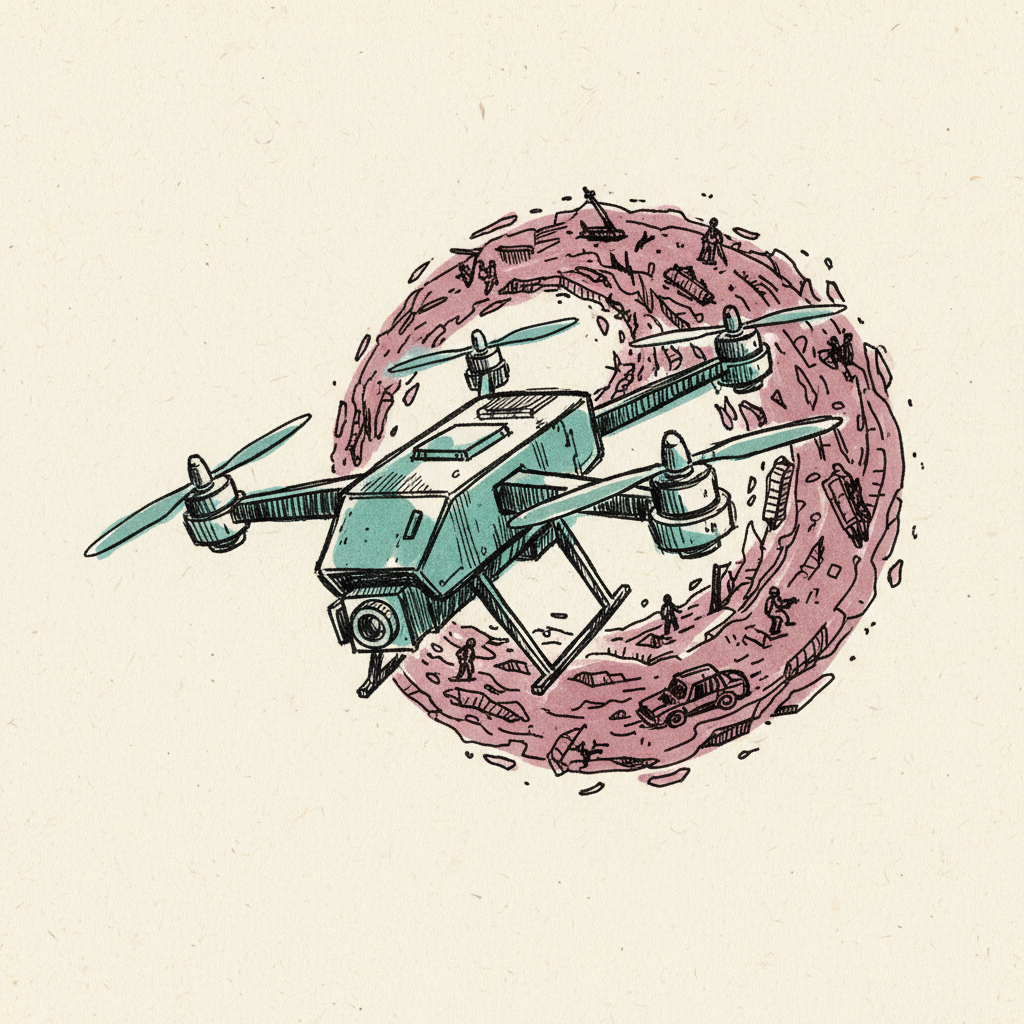
FPV (First-Person View) drones are small, low-cost quadcopters flown by a pilot wearing a video headset, giving a real-time first-person view from the drone's camera. Originally used in drone racing, FPV technology was adapted by both Ukrainian and Russian forces as a kamikaze strike weapon. A single FPV drone costs as little as $400, compared to tens of millions for the missiles it often forces enemy forces to manoeuvre away from. By 2025-26, FPV drones had become the primary cause of armoured vehicle losses and infantry casualties on both sides of the front line.
Ukraine industrialised FPV production under the oversight of the Ministry of Digital Transformation and the Army of Drones programme. Domestic production reached tens of thousands of units per month by early 2026. Russia similarly ramped production, with state programmes and volunteer workshops operating in parallel. The proliferation of FPV drones has fundamentally changed infantry tactics: exposed movement across open ground is near-suicidal within FPV range of the opposing side.
FPV drones are also a jamming battleground. electronic warfare systems that spoof or cut control signals are in constant development on both sides, with each improvement prompting counter-adaptations in drone software and communication protocols. The race between FPV capability and electronic countermeasures is one of the fastest-evolving technology competitions in the war.
What is an FPV drone and how is it used in Ukraine?
How many drones is Ukraine producing each month?
Can electronic warfare stop FPV drones?






