Skip to content
Welcome, thoughtbot's Giant Robots listeners!Start here
Autonomous Systems: Land & Sea
12AUG

Pentagon files secret brief against DJI

3 min read
14:17UTC

The Department of Defense submitted classified evidence to Congress opposing DJI's petition to be removed from the FCC Covered List, creating a legal barrier DJI cannot see or challenge.

TechnologyDeveloping
Key takeaway

Three independent regulatory layers now foreclose DJI from the US drone market.

The Department of Defense filed a memo on 3 April opposing DJI's petition to the Ninth Circuit (Case 26-1029) for removal from the FCC Covered List. The filing includes a classified intelligence annex submitted to Congress the same day. DJI's reply is due 11 May.

Classified annexes create an asymmetric legal environment where the plaintiff cannot examine the evidence against it. US courts have historically deferred to executive branch national security claims under these conditions. DJI retained a former Solicitor General, but the procedural disadvantage is structural: no amount of legal talent compensates for the inability to see or contest the opposing brief.

This classified opposition completes a three-layer regulatory lock. FAR clause 52.240-1 bars Chinese drones from all federal contracts. The FCC Covered List blocks new product certifications. The DoD annex now effectively neutralises the one judicial mechanism DJI had to contest both. Each layer requires a separate legal or political victory to overturn; together, they foreclose DJI's path to the US market regardless of the Section 232 tariff outcome, which itself remains unresolved 16 days past its statutory deadline.

For the broader US drone market, DJI's exclusion is now functionally permanent. Hundreds of thousands of existing DJI aircraft continue to fly under prior authorisations, but no new models can enter. Domestic manufacturers like Skydio inherit a protected market, though the capability gap with DJI hardware remains real and will take years to close.

Deep Analysis

In plain English

DJI is the world's most popular drone brand, but it has been banned from the US market because the government considers it a Chinese security risk. DJI went to court to try to get that ban overturned. The US military then filed secret evidence with Congress saying DJI is a threat. Because the evidence is secret, DJI's lawyers cannot read it, let alone challenge it. It is like being told you failed a test but not being allowed to see the test paper. US courts have almost always sided with the government when national security secrecy is involved. DJI is likely to lose, which means no new DJI drones in the US market, probably permanently.

Deep Analysis
Root Causes

DJI's three-layer exclusion is the product of three separate institutional actors acting independently: the FCC (administrative), the DoD (legislative via classified annex), and the FAR rulemakers (procurement). No single political decision created the lock; removing it would require simultaneously reversing three independent institutional determinations, each with its own legal standard and political constituency.

The classified annex is structurally different from the other two layers. The FCC Covered List and FAR clause 52.240-1 can in principle be reversed by the administrations that created them. A classified intelligence annex, once submitted to Congress, creates a permanent record that future administrations inherit. DJI's challenge is not merely legal; it is permanent in a way the other restrictions are not.

What could happen next?
  • Precedent

    The DoD's use of a classified annex to neutralise DJI's judicial challenge creates a template for excluding any foreign technology company from US markets without requiring a conviction or an open evidentiary hearing.

    Long term · 0.82
  • Opportunity

    DJI's permanent exclusion creates a protected US market for domestic manufacturers; Skydio and Red Cat are the primary beneficiaries of a gap that will take three to five years to close on capability.

    Medium term · 0.85
  • Risk

    European regulators have not imposed equivalent restrictions on DJI; a divergent transatlantic standard creates compliance complexity for multinational operators and may drive EU customers toward Chinese hardware while US customers shift to domestic alternatives.

    Medium term · 0.74
First Reported In

Update #5 · Gulf drone war rewrites procurement

DroneDJ· 13 Apr 2026
Read original →
Different Perspectives
Conservative opposition
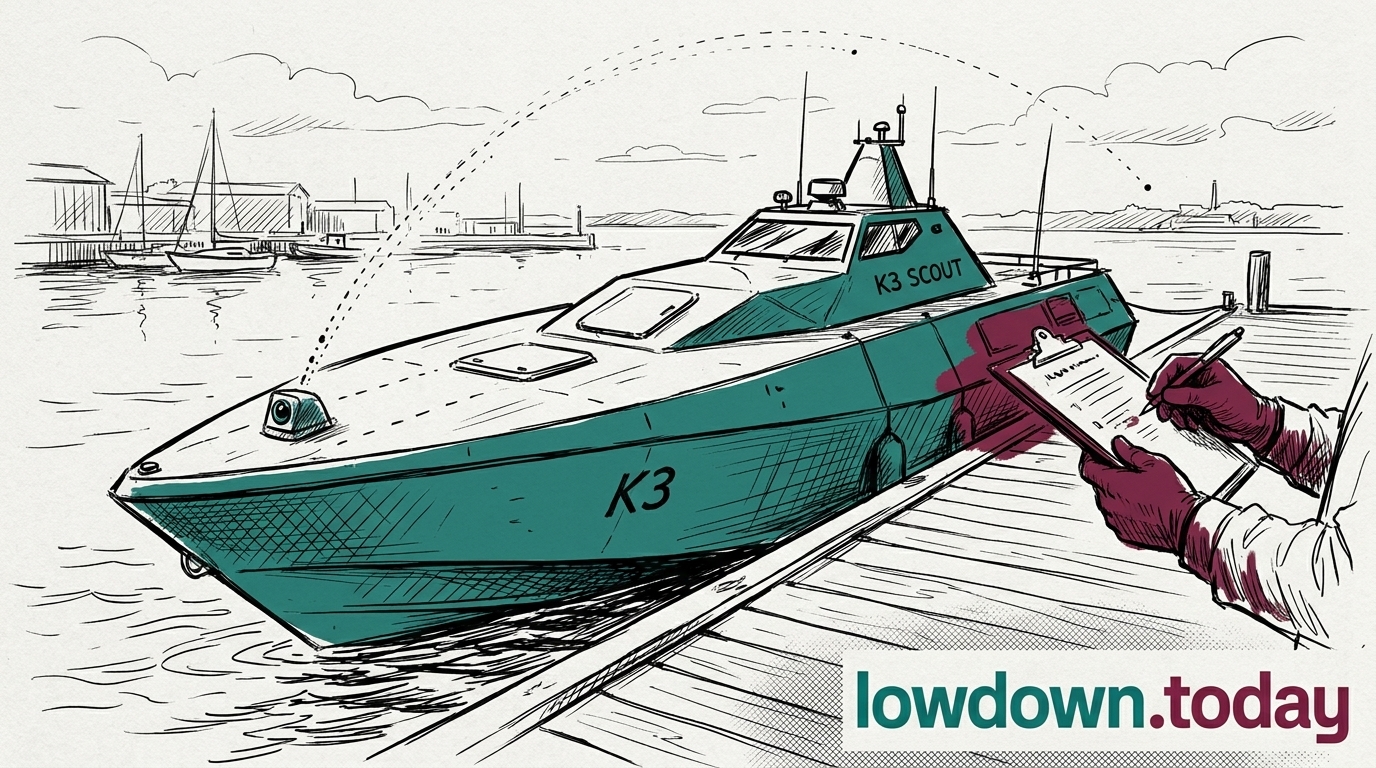
The Conservative opposition called on the Government on 9 August to 'urgently audit' equipment for hidden Chinese components, after the Telegraph's K3 SCOUT report. No named MP has been quoted on the record; the call came at party level, alongside the Ministry of Defence's own 10 August statement that no data had been compromised.
Kraken Technology Group
Kraken Technology Group is a UK maritime-defence company based in Portsmouth that builds the K3 SCOUT, and crossed a $1bn valuation in July on a single-sourced $175m raise. The camera components reached the fleet under a third party's written security assurance, which the Platform Authority, which does not yet exist, was never positioned to check.
Navy Commercial
Navy Commercial
Navy Commercial at Whale Island published two notices on 5 August: 074032-2026, asking industry how to build a Platform Authority to certify uncrewed vessels, and 074351-2026, a GBP10m multi-role USV testbed for the Defence Chief Technology Officer. Responses on the Platform Authority close 19 August, ten days after the cameras were found transmitting to China.
HUMAIN
HUMAIN
HUMAIN and Applied Intuition stated a 2030 target for thousands of autonomous trucks on Saudi logistics corridors. The announcement disclosed no order, fleet baseline or contract value.
Saildrone
Saildrone
Saildrone and Lockheed Martin demonstrated two JAGM launches from a Surveyor-class vessel at RIMPAC. The accepted record identifies no requirement, customer or production configuration behind the demonstration.
Taiwan Legislative Yuan
Taiwan's Legislative Yuan passed the Act at third reading with a small suicide uncrewed boat on the named development list. The NT$240 billion ceiling covers all unmanned domains, and the Act was not promulgated by 4 September.
