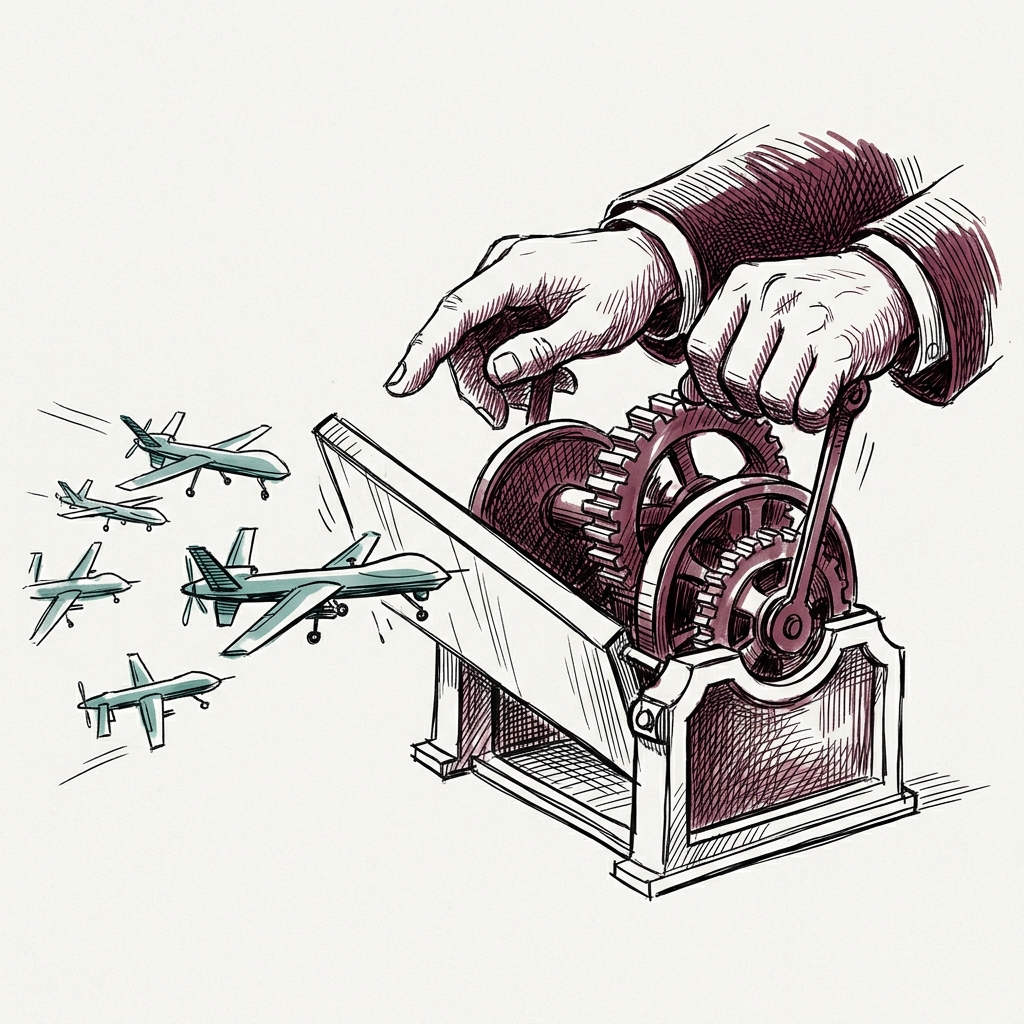
Has the US been investigating the wrong supply chain while Russia arms its drones with American chips?
Timeline for Section 232 UAS Investigation
Trump taxes drone parts at 100 per cent
Drones: Industry & DefenceRemained approximately 90 days past statutory deadline with no tariff decision
Drones: Industry & Defence: US drone rules frozen at both endsMentioned in: World Cup as a counter-drone audition
Drones: Industry & DefenceMentioned in: Autel takes FCC to court over secret evidence
Drones: Industry & DefenceRemained 54 days overdue as of 21 May with no Commerce report transmitted to President
Drones: Industry & Defence: DHS, Shield AI and a Section 232 clock still runningBackground
Section 232 of the Trade Expansion Act of 1962 allows the US President to impose tariffs on imports that threaten national security. The mechanism was used for steel and aluminium tariffs in 2018 and is now aimed at unmanned aerial systems. The Commerce Department opened a Section 232 investigation into UAS imports in July 2025, with a 270-day statutory Deadline for a presidential decision. That clock expired around late March 2026 with no public tariff announcement, and as of 18 June 2026 the investigation is approximately 90 days past its statutory Deadline with still no Commerce report transmitted to the President, and no tariff announced. The demand-side freeze, the delayed Part 108 BVLOS rule, and the supply-side freeze of this tariff investigation are running in parallel, leaving the entire US commercial and defence drone regulatory stack in suspension simultaneously.
If tariffs are imposed, the 38% of Ukrainian drones still built with Chinese parts face an immediate cost shock, as do US integrators sourcing motors, flight controllers, and sensors from Shenzhen. The investigation runs alongside FAR 52.240-1, which bans ASDA-covered drones from federal contracts, and the FCC Covered List, which blocks new product certifications. Together these three actions form a regulatory scissors closing on Chinese drone suppliers before domestic alternatives can scale. However, a CSIS analysis published on 17 April 2026 found that 69% of memory hardware and 57% of processors in Russia's AI-enabled drone ecosystem are sourced from US firms, not Chinese suppliers, arguing that Section 232's Chinese-import framing is investigating the wrong supply chain.
The investigation's indefinite open status is itself a market signal: Chinese suppliers face continued regulatory uncertainty in US commercial channels, while domestic producers cannot yet fully substitute for the volume and component Variety that Chinese supply chains provide.