Skip to content
Briefings are running a touch slower this week while we rebuild the foundations.See roadmap
Drones: Industry & Defence
4APR

Drone Tariff Deadline Passes in Silence

2 min read
20:57UTC

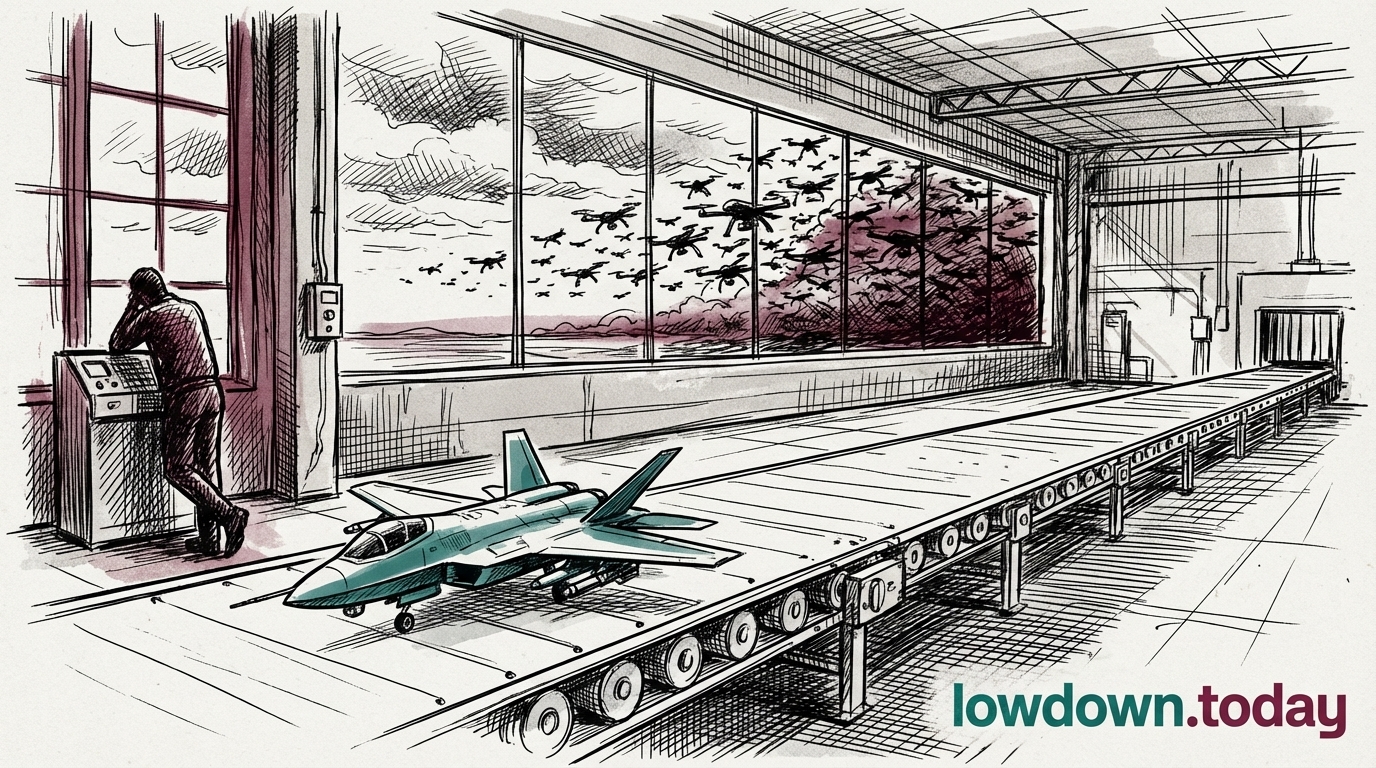
The statutory clock expired. Commerce said nothing. The industry built for tariffs that may never arrive.

TechnologyAssessed
Key takeaway

The 270-day tariff deadline expired without action, leaving drone import policy in limbo.

The Section 232 national security investigation into UAS imports, opened by the Commerce Department in July 2025, passed its 270-day statutory deadline on approximately 28 March 2026 . No report has been transmitted to the President. No tariff has been announced. 1

The administration's 2 April proclamation reinforced tariffs on steel, aluminium, and copper. It did not mention drones. 2 Even if the report were delivered this week, the President has 90 days to act, pushing any decision into summer at the earliest. For domestic drone manufacturers who invested in China-free supply chains expecting imminent protection, the silence is a material negative signal. For commercial operators still sourcing Chinese components, it is a temporary reprieve. Combined with FAR 52.240-1's procurement ban , the regulatory environment is tightening on one front while stalling on another.

Deep Analysis

In plain English

The US government opened an investigation in 2025 to decide whether to impose tariffs on drones imported from China, on national security grounds. The investigation had a legal deadline of 270 days. That deadline passed in late March 2026 with nothing announced. No report, no tariffs, no explanation. The administration's April tariff announcement covered metals but not drones. This matters because US companies who invested in building drone parts locally, expecting tariff protection from cheaper Chinese competitors, now face continued price competition without the protection they planned for.

Deep Analysis
Root Causes

The Section 232 investigation was opened in July 2025 alongside similar investigations into semiconductors, pharmaceuticals, and commercial aircraft. The Commerce Department's Bureau of Industry and Security faces limited bandwidth to complete multiple complex investigations simultaneously, and drone tariffs scored lower priority against sectors with larger domestic constituencies.

Domestic drone manufacturers who invested in China-free supply chains based on tariff expectations face a compounded risk: the FAR 52.240-1 procurement ban reduces Chinese competition in government contracts, but commercial markets remain open to Chinese components, which are cheaper by 40-60% for motors, flight controllers, and sensors.

What could happen next?
  • Even if a Commerce report is delivered in April 2026, presidential action cannot occur before late July 2026, meaning tariffs remain months away at minimum.

  • Domestic component manufacturers without government contract revenue will face increasing margin pressure from commercial operators continuing to source Chinese parts.

First Reported In

Update #4 · Factories Under Fire: America's Drone Gap Meets Reality

Army Recognition· 4 Apr 2026
Read original
Causes and effects
This Event
Drone Tariff Deadline Passes in Silence
The expired deadline without action signals the administration may be quietly deprioritising drone tariffs, leaving domestic manufacturers without expected trade protection.
Different Perspectives
UK Ministry of Defence
BAE Systems' 7-9% sales growth guidance and named drones priority, combined with UKDI's high-volume-of-proposals counter-drone call (ID:2934), confirm UK procurement is accelerating across both offensive and defensive drone categories. The absence of a specific BAE drone revenue line will draw investor questions at the next results call.
NATO procurement institutions
Red Cat's first NSPA-routed Black Widow order draws on pooled alliance budgets rather than bilateral Foreign Military Sales, changing which procurement officials can release follow-on contracts. The NSPA routing creates a replicable template for small-UAS procurement outside individual nation budget cycles.
Chinese defence-industrial base
Telefly jet engines, fitted in Geranium-3 and Geranium-5 variants, are the identified engine-side failure mechanism in Russia's drone quality collapse. Whether Beijing allows Telefly to continue supplying Russian production or restricts exports under diplomatic pressure will determine Russia's ability to adapt within one to two production cycles.
Russian Defence Ministry
Russia reported 347 Ukrainian drones downed across 20 regions on 8-9 May while shutting down mobile internet across Moscow and ringing the parade route with 101 air defence systems. The shutdown confirms operational acceptance that civilian signals infrastructure leaks GPS spoofing and drone telemetry.
Ukraine armed forces and civilians
Ukraine's 347-drone Victory Day strike against Moscow confirms offensive capacity has scaled to saturation-strike level; the Spetstechnoexport partnership with Red Cat shows Kyiv prioritising frontline drone development over export income. Russian Geranium-2 launches above 50,000 per year still impose systematic civilian infrastructure risk even as accuracy degrades.
European defence procurement
The EU AGILE 115 million euro single-company pilot (ID:2308) is now calibrated for a pre-$18 billion world. Germany's 4.3 billion euro combined drone awards were the contract floor that made Dragoneer's lead possible; Brussels faces pressure to revise the AGILE ceiling upward before it closes.
