Skip to content
You can now search across every topic, entity and event.What's new
Autonomous Systems: Land & Sea
12AUG

France buys a Baltic interceptor drone

3 min read
14:17UTC

France ordered Latvian BLAZE interceptor drones at Eurosatory on 17 June, becoming the fourth European operator, and signed Airbus the same day to turn 20 A400M transports into ISR command nodes.

TechnologyDeveloping
Key takeaway

France importing a Latvian interceptor signals the front-line states now sell into Western Europe's arms market.

France ordered BLAZE interceptor drones from Latvia's Origin Robotics at Eurosatory on 17 June 2026, after a competitive evaluation by the DGA, France's defence procurement agency 1. BLAZE is a kinetic counter-drone system that defeats a hostile drone by ramming it. The order makes France the fourth European operator after Latvia, Belgium and Estonia, and French integrator DSV will co-assemble the drone in France with first deliveries due within weeks. Eurosatory is the biennial Paris land-defence exhibition, this year held 15-19 June.

Paris normally exports drones rather than importing them, and choosing a Latvian system over indigenous options inverts the usual flow of European defence-industrial trade. Origin's BLAZE was fielded on Latvia's Russian border barely a month earlier , and Lithuania had bought 48 Merops interceptors built on Ukrainian combat data before that . The emerging pattern across these buys is consistent: acquire combat-proven MASS now from the front-line states, build the sovereign high end later.

That second track also moved on the same day. France signed the A400M Parallel Mission System with Airbus Defence and Space through OCCAR, the European arms-cooperation agency 2. The system is a roll-on, roll-off fit giving 20 A400M transports an intelligence, surveillance, reconnaissance, data-distribution and command-and-control capability, with installation in 2027 and flight test in 2028. The palletised drone-mothership layer that early headlines promised was not in the contract; Airbus and France deferred it to a later block, which marks the sovereign high end as aspiration rather than a signed commitment.

Deep Analysis

In plain English

Drones attacking military positions are often guided by fibre-optic cables rather than radio signals. This makes them impossible to jam electronically. The only way to stop them is to physically intercept them with another drone. BLAZE is a Latvian-made interceptor drone designed to do exactly that. It was deployed on Latvia's Russian border in early 2026 after two hostile drones crashed on Latvian soil. France, after running its own tests, has now ordered some. France also signed a separate deal to add surveillance and communications equipment to 20 of its large military transport aircraft, the A400M.

Deep Analysis
Root Causes

Two structural gaps pushed France toward a Latvian interceptor rather than a domestic solution.

First, fibre-optic guided FPV drones are effectively immune to radio-frequency jamming because they carry no wireless signal to disrupt. France's existing counter-drone portfolio, built around Lacroix CARGO and Thales Gamekeeper jamming systems, is technically ineffective against this threat category. Latvia's operational experience since May 2026 on its Russian border provided the only confirmed dataset in Europe on kinetic-intercept engagement rates against fibre-optic drones.

Second, France's A400M transport fleet has accumulated ISR capability gaps relative to what the conflict in the Sahel and continued European operations demand. The Parallel Mission System contract addresses an operational debt: 20 aircraft flying strategic airlift missions without organic intelligence-collection capability, relying on ad-hoc SIGINT attachments rather than an integrated mission system.

What could happen next?
  • Opportunity

    Origin Robotics can now approach Series B or C funding with four NATO customer nations as reference accounts, substantially de-risking investor due diligence on demand.

    Short term · Assessed
  • Precedent

    France's DGA competitive evaluation treating Baltic operational data as a qualifying criterion creates a procurement pathway for Baltic and Nordic firms that did not exist before the Russia-Ukraine conflict, restructuring who can win Western European defence contracts.

    Medium term · Assessed
  • Risk

    The co-assembly arrangement with DSV adds a domestic labour step but may not satisfy France's sovereign capability requirements if Origin Robotics is acquired by a non-EU entity, creating a supply dependency in a mission-critical counter-drone role.

    Medium term · Assessed
First Reported In

Update #13 · Air Force shuts primes out of drone wingman

Aviation Week· 25 Jun 2026
Read original
Different Perspectives
Conservative opposition
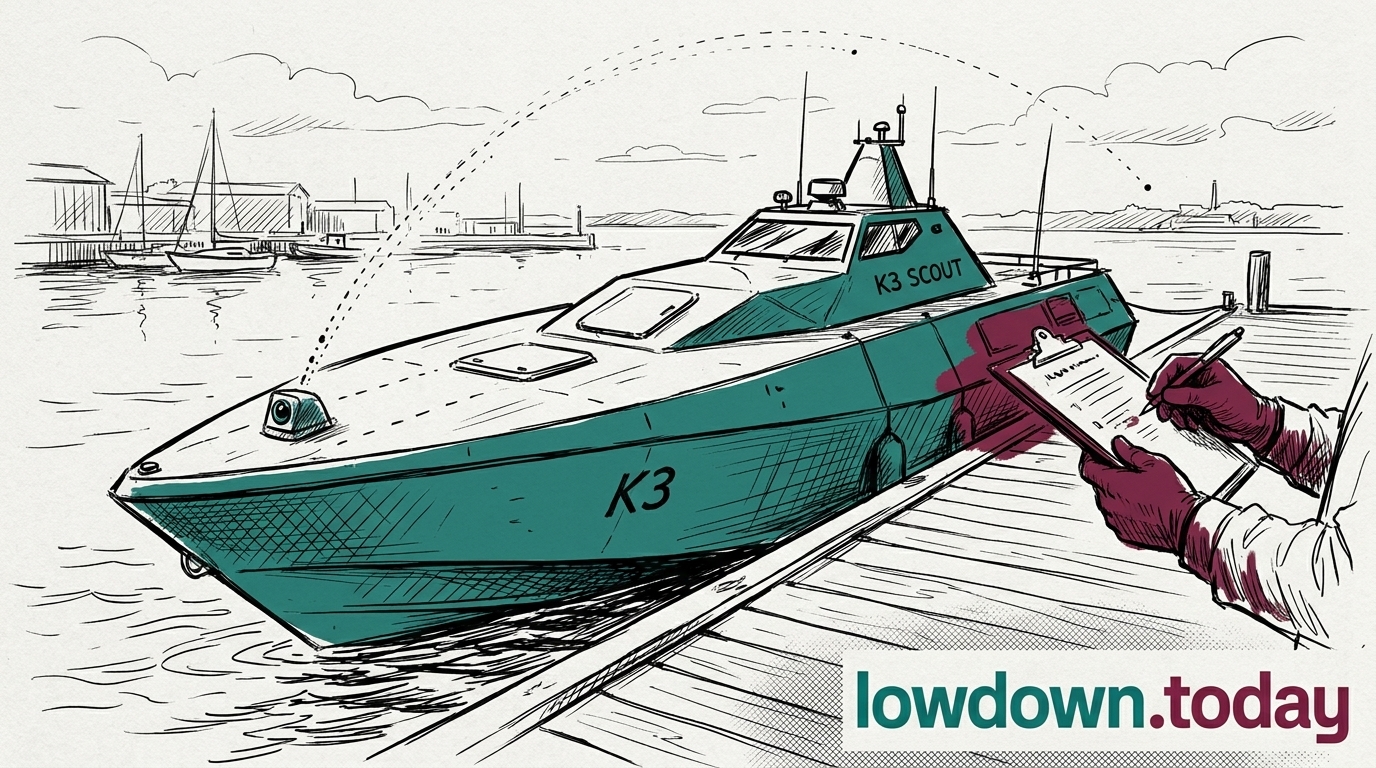
The Conservative opposition called on the Government on 9 August to 'urgently audit' equipment for hidden Chinese components, after the Telegraph's K3 SCOUT report. No named MP has been quoted on the record; the call came at party level, alongside the Ministry of Defence's own 10 August statement that no data had been compromised.
Netherlands Ministry of Defence
The Netherlands Ministry of Defence authorised Dutch Naval Design on 4 August to design 12-metre anti-submarine warfare uncrewed vessels for the Dutch-Belgian frigate programme, and to buy an adapted Compact FLASH dipping sonar from Thales Underwater Systems France. The order commits money and a named supplier while Britain's own certification body remains at the market-engagement stage.
Kraken Technology Group
Kraken Technology Group is a UK maritime-defence company based in Portsmouth that builds the K3 SCOUT, and crossed a $1bn valuation in July on a single-sourced $175m raise. The camera components reached the fleet under a third party's written security assurance, which the Platform Authority, which does not yet exist, was never positioned to check.
Navy Commercial
Navy Commercial
Navy Commercial at Whale Island published two notices on 5 August: 074032-2026, asking industry how to build a Platform Authority to certify uncrewed vessels, and 074351-2026, a GBP10m multi-role USV testbed for the Defence Chief Technology Officer. Responses on the Platform Authority close 19 August, ten days after the cameras were found transmitting to China.
Ministry of Defence
Ministry of Defence
The Ministry of Defence said on 10 August that a routine cyber vulnerability assessment found the camera fault, and a thorough investigation found no evidence that MoD data or systems had been accessed, compromised or transmitted externally. It stripped the cameras of internet connectivity but did not say whether it acted against the supplier.
Thales
Thales
Thales converted its 6 July engaging accord with Exail into a definitive combination agreement on 30-31 July, but the tender offer for Exail's remaining shares now closes by early 2028, later than July's timetable implied. Thales integrates its new undersea prime while still bidding against Kongsberg and DRASS's 2027 target for the AUKUS Pillar II contest.
