BLAZE
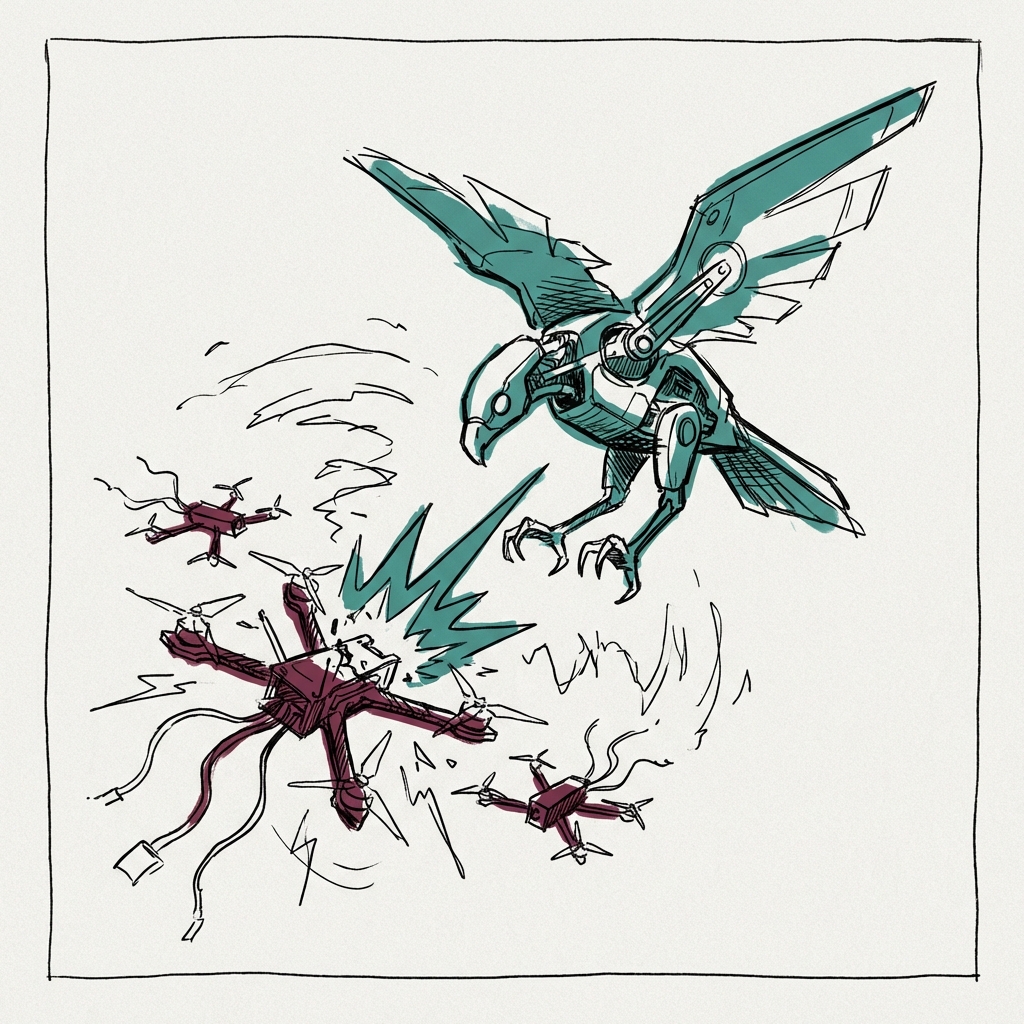
Latvian-British kinetic interceptor defeating fibre-optic FPV drones; four European operators.
BLAZE is a Latvian-British kinetic interceptor for hostile drones. On 17 June, France became its fourth European operator after a competitive procurement evaluation.
Last refreshed: 1 October 2026 · Appears in 1 active topic
As fibre-optic FPV drones proliferate, can kinetic intercept systems like BLAZE fill the gap that jamming cannot?
Timeline for BLAZE
Mentioned in: France buys 50 Harmattan AI interceptors
Drones: Industry & DefenceMentioned in: France charters hulls for mine drones
Drones: Industry & DefenceMentioned in: Hegseth watches five laser weapons fire
Drones: Industry & DefenceSelected by France's DGA after competitive evaluation for counter-drone interceptor role
Drones: Industry & Defence: France buys a Baltic interceptor droneMentioned in: Latvia puts drone hunters on the road
Drones: Industry & DefenceBackground
BLAZE is a kinetic drone-on-drone interceptor developed by Origin Robotics, a Latvian-British company. It destroys hostile unmanned aircraft physically at close range, rather than relying on electronic jamming.
That role makes BLAZE relevant where fibre-optic guided first-person-view drones cannot be disrupted through their control signal. On 31 March, DroneShield agreed to integrate BLAZE with its DroneSentry-C2 command platform, linking a physical Intercept option to detection, tracking and electronic-defeat functions.
France ordered BLAZE on 17 June after a competitive evaluation by its defence procurement agency. French firm DSV was to co-assemble the system, while Latvia, Belgium and Estonia were already operators. Latvia also deployed mobile drone-Intercept Teams near its Russian border in late May, using Origin Robotics interceptors in operational conditions.
Reference
Why can the BLAZE interceptor defeat fibre-optic drones when jamming cannot?
What is the BLAZE drone interceptor and how does it work?
Who is co-assembling BLAZE in France?
Which countries have bought the BLAZE interceptor?
How is BLAZE integrated with DroneShield's system?

