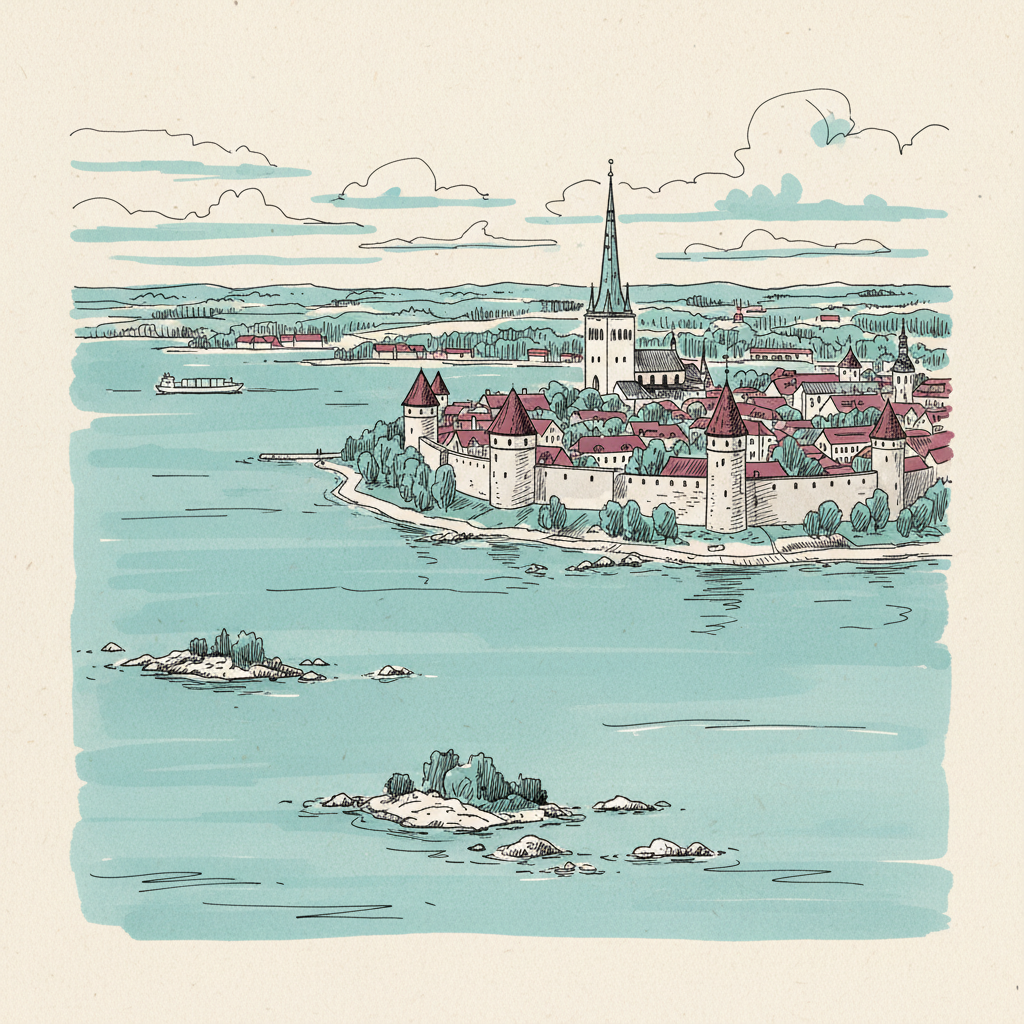
Estonia
Baltic NATO/EU member; cited in Russia's extraterritorial deployment bill debate; highest per-capita Ukraine donor.
In June, Estonia’s Milrem Robotics opened its first THeMIS assembly line outside the country, in the Netherlands, for more than 100 Dutch-funded vehicles destined for Ukraine.
Last refreshed: 22 September 2026 · Appears in 5 active topics
NATO's first kinetic drone intercept happened over Estonian soil in May; what changed?
Timeline for Estonia
Mentioned in: EU ministers adopt 22nd Russia package
Russia-Ukraine War 2026Mentioned in: Hanwha buys two Milrem THeMIS robots
Autonomous Systems: Land & SeaMentioned in: ENISA finds most NoName057(16) claims fail
Cybersecurity: Threats and DefencesMentioned in: Belgium buys Exail mine kit for Ukraine
Autonomous Systems: Land & SeaMentioned in: EuroHPC signs €387.8m LUMI-AI deal
European Tech SovereigntyBackground
Estonia is a Baltic state on Russia’s eastern border and has been a member of both NATO and the European Union since 2004. Its security choices carry unusual weight because its population is about 1.35 million and it has a substantial ethnic Russian minority.
The country has built an identity around digital public services and European integration. Its e-Residency programme lets non-citizens establish and manage an Estonian company remotely, while digital signatures, tax filing and electronic voting form part of normal public administration.
Russia’s State Duma passed an extraterritorial deployment bill on 14 April that explicitly raised concern for Estonia, Latvia and Lithuania because of their Russian-citizen minorities. Estonia’s defence-industrial role also gained practical salience on 4 June when Milrem’s first overseas THeMIS line began supplying Dutch-funded vehicles for Ukraine.
Estonia’s robot maker expands abroad
On 4 June, Milrem Robotics opened a THeMIS unmanned ground-vehicle line in Born, Netherlands. The site delivered the first of more than 100 Dutch-funded vehicles for Ukraine, making it the first THeMIS assembly operation outside Estonia.
For Estonia, the move turns a domestic defence manufacturer into a supplier embedded in allied production. On 11 August, Milrem was also coordinating a 15-country European programme seeking a shared control standard for uncrewed ground vehicles, with a Norway exercise planned for 2028.
Estonia’s robot maker expands abroad
What is Milrem Robotics?
Reference
Does Estonia have a digital nomad visa?
What is Estonia's e-Residency?
Recently resolved
How does Estonia's nomad visa differ from Georgia's Law No.1509?
Was a NATO jet used to shoot down a drone over Estonia?
Is Estonia threatened by Russia's extraterritorial deployment law?
