Skip to content
Welcome, thoughtbot's Giant Robots listeners!Start here
Autonomous Systems: Land & Sea
29MAY

UK signs HII mine-hunters: MoD says £142m, notice says £303m

4 min read
08:47UTC

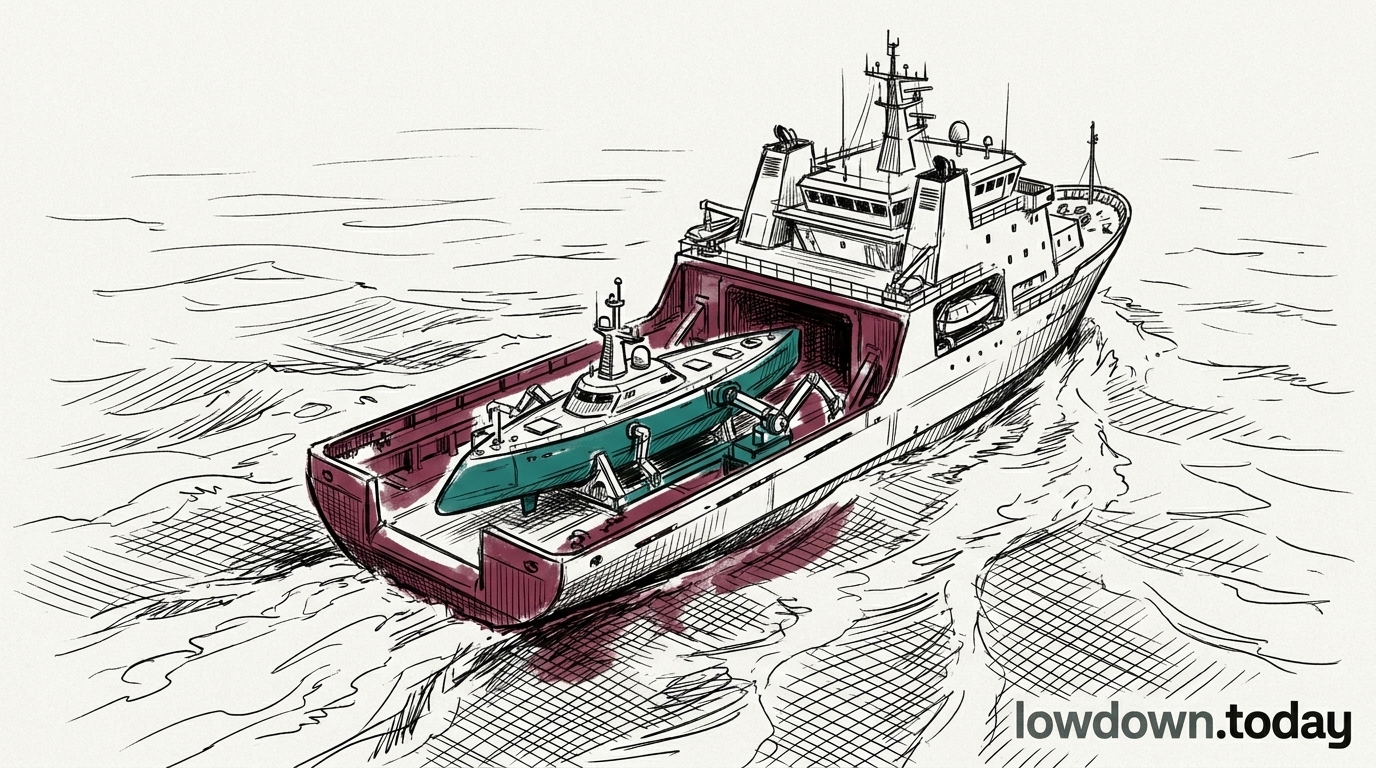
The MoD signed HII for REMUS 620 robots to replace the Royal Navy's crewed minehunters. It announced £142m; the signed contract's notice records £303m.

TechnologyDeveloping
Key takeaway

The MoD announced £142m for Britain's robot mine-hunters, but the signed contract's notice records £303m excluding VAT, and neither explains the gap.

The UK Ministry of Defence (MoD) announced on 24 November a £142m contract with HII for REMUS 620 uncrewed underwater vehicles (UUVs), equipment and support⁠1. The deal, for the Mine Hunting Capability (MHC) Block 2 programme, was awarded "after an international competition". MHC replaces the Royal Navy's crewed minehunters with robots.

HII puts the deal at about $186m and calls it the largest international unmanned-systems contract in its history⁠2. The package includes HII's Sea Launcher launch and recovery system and works with SeeByte's mission software. The robots replace ships such as HMS Chiddingfold, the minehunter the Royal Navy retired this year after 42 years' service.

The MoD gives the vehicle a top speed of 8 knots (about 9mph), a 600m depth rating and missions of up to about four and a half days. Neither release states a vehicle count or a delivery date. Support work moves to Britain, including to Portchester, the MoD says. HII, in its own release, says the award supports 15 jobs.

On 3 November Defence Equipment and Support (DE&S), the MoD's buying agency, named HII's unmanned arm intended winner at £303m excluding VAT. That figure covered eight mission systems and an option, a right to buy more later, for up to twelve more. The October 2025 tender notice had estimated £125m. DE&S's own notice of the signed contract, published on 25 November, records the same £303m excluding VAT for eight mission systems, signed on 24 November. Its options cover up to twelve more systems and two more years of support.

The MoD release gives £142m and says nothing on options, VAT or the eight systems. Neither document says why the two figures differ.

The robots also need ships to carry them. On 12 November, at the Atlantic Future Forum in Oslo, Britain and Norway confirmed three offshore support vessels for the UK through Norway's P1118 standardised vessel programme⁠3. The first is due in 2031, with an option for three more, which puts a delivery year on the joint purchase Britain confirmed in July. The MoD put no price on the ships; its only figure is the £90m seed sum, which Navy Lookout judged too small for three hulls.

The same release names Atlantic Net, a separate £90m MoD and Royal Navy contract with Ocean Infinity. It pairs uncrewed systems with sensors detecting underwater threats across the North Atlantic. The MoD gives no award date.

Deep Analysis

In plain English

Sea mines are explosives laid underwater to sink ships. Navies used to clear them with small crewed ships called minehunters. Britain's Mine Hunting Capability programme replaces those ships with robots. The REMUS 620 is a torpedo-shaped robot submarine made by HII, a US shipbuilder. It runs a search pattern on its own, scanning the seabed for mines, for up to 110 hours at a time. The Ministry of Defence (MoD) has now signed the contract. Bigger crewed ships, called motherships, will later carry the robots to sea, but the first of those is not due until 2031.

Deep Analysis
Root Causes

The Royal Navy is retiring its Hunt and Sandown minehunters faster than replacements arrive, and it is short of sailors. A robot that searches a minefield with nobody aboard needs fewer crew and keeps people out of the most dangerous job at sea.

Britain's new procurement law changes what the public sees. The Procurement Act 2023, in force since February 2025, requires an intended-award notice before signature and a separate contract details notice after. The value named before signature need not match the value signed, and the later notice is where the count and options appear.

Escalation

Programme advancing. The next marker is the contract details notice, which should state the number of systems and whether the option for twelve more is included.

What could happen next?
  • Consequence

    The Royal Navy's mine-hunting robots arrive years before the P1118 motherships meant to carry them, so interim launch arrangements will decide how much use they get.

    Medium term · Assessed
  • Risk

    If the contract details notice shows fewer systems than the eight named on 3 November, the programme will have shrunk rather than been phased.

    Short term · Suggested
  • Meaning

    Britain is buying a US production vehicle for a core naval role, trading domestic design work for speed.

    Long term · Assessed
First Reported In

Update #15 · Waymo halts freeway rides after DMV order

UK Ministry of Defence· 27 Nov 2026
Read original →
Different Perspectives
Kongsberg
Kongsberg
Kongsberg offered Arctic Hunter, an uncrewed ship of commercial Arctic design, for Britain's Type 92 submarine-hunter requirement, Naval News reported. It puts a civil hull design forward for a Royal Navy submarine-hunting role.
Swedish Defence Materiel Administration (FMV)
FMV gave Teledyne Gavia a SEK 13.67m follow-on for portable mine-hunting robots on 19 November, with no prior call for competition. Sweden is adding to an earlier Gavia order rather than opening the buy to rivals.
Royal Netherlands Army (MatLogCo)
The Dutch tender of 23 November sets €160m aside for at least seven mine-breaching ground robots. Its stated aim is to add an uncrewed option to existing breaching kit and protect personnel, the engineers who would otherwise drive in first.
Tesla Gigafactory Berlin-Brandenburg (Andre Thierig)
The plant director announced a Cybercab building at Grünheide, with production from 2029 and a hoped-for ramp to up to 1 million a year. Tesla self-certified the car, which has no steering wheel or pedals; NHTSA has alleged no breach.
WeRide
WeRide
WeRide told US investors that more than 90% of its robotaxi revenue now comes from outside China, with about 600 cars in the Middle East. It claims "positive unit economics" in Guangzhou but discloses no cost basis for the claim.
HD Hyundai
HD Hyundai
HD Hyundai built ASV ALPHA with Anduril before any order, and Choi Tae-bok says it will enter the prototype if a US tender comes out next year. The group aims to lift its naval revenue five- to tenfold within a decade, iNews24 reports.

Written with AI from Lowdown's published reporting. Not individually reviewed by an editor. Editorial standards.