Skip to content
You can now search across every topic, entity and event.What's new
Autonomous Systems: Land & Sea
18JUL

UK to buy three Norway motherships

2 min read
13:42UTC

Defence Minister Luke Pollard confirmed on 17 July that Britain will build three mine-hunting motherships with Norway, GBP 90 million inside a GBP 1.3 billion programme.

TechnologyDeveloping
Key takeaway

Britain funded three motherships to carry its robot minehunters, turning one deployed hull into a committed class.

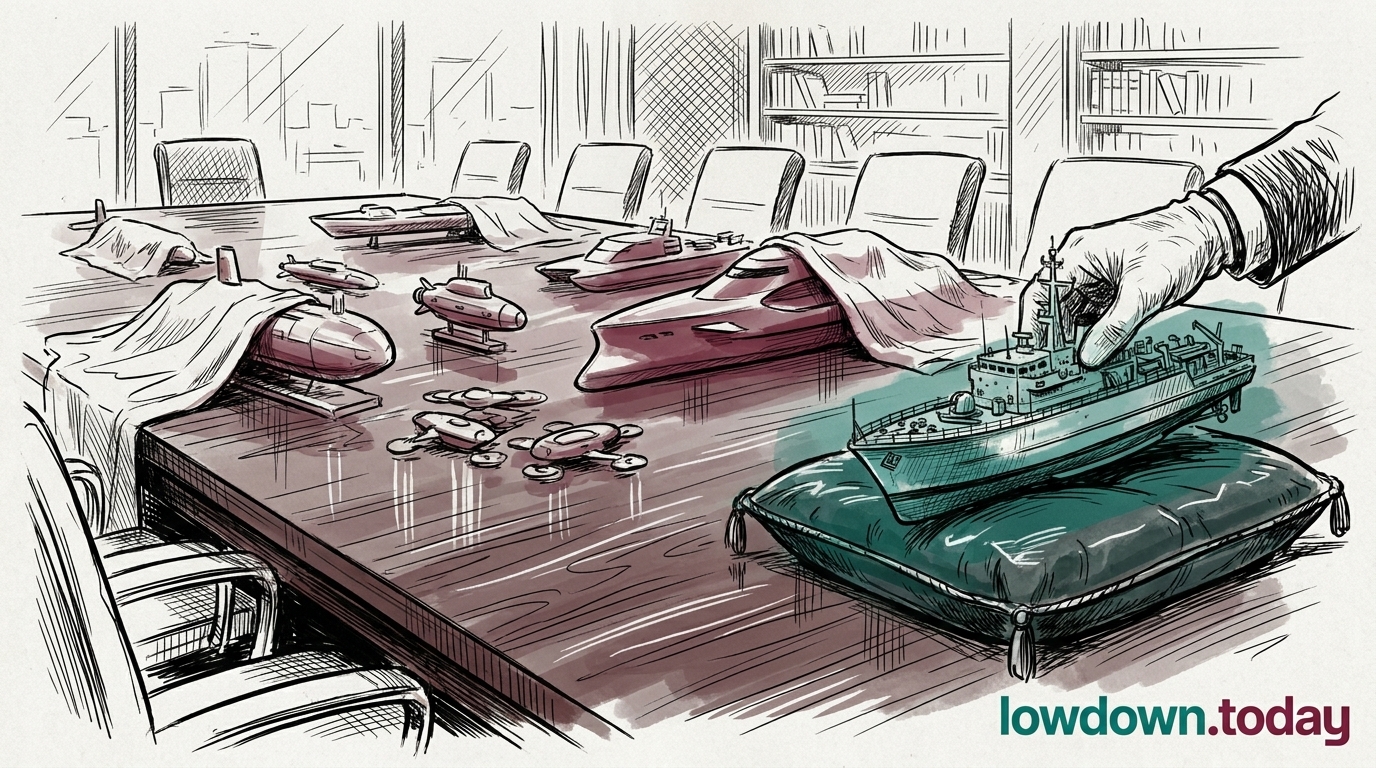
UK Defence Minister Luke Pollard confirmed on 17 July 2026 that Britain will procure three offshore support vessels jointly with Norway as the next tranche of the Mine Hunting Capability (MHC) programme, with GBP 90 million set aside inside a wider GBP 1.3 billion autonomous mine-countermeasures effort. 1 The ships are motherships, built to carry, store, maintain and control the autonomous Ariadne-class minehunters now positioned off Hormuz .

An uncrewed minehunter still needs a hull to launch, recover, refuel and command it. That is why the first-of-class HMS Stirling Castle was a converted oil-rig support vessel bought for about GBP 40 million rather than a warship built from scratch. Committing money to three more of them turns a single deployed asset into a class, the load-bearing part of the autonomy transition that headlines rarely name.

Building with Norway also ties Britain's mine-hunting backbone to a Nordic supply chain at the same moment a Norwegian prime, Kongsberg, is threading through both the US and European undersea programmes, evidence that the autonomy build-out is running along partnership lines rather than purely national ones.

Deep Analysis

In plain English

Britain is buying three ships from Norway that will act as floating bases for its robot mine-hunting boats. These motherships carry the small uncrewed vessels, launch and recover them, and let sailors control them from onboard rather than putting people near live mines. The GBP90 million is a slice of a much bigger GBP1.3 billion programme to replace Britain's old crewed minehunters with robot boats. But those robot boats still need a big ship to carry, fuel and fix them, which is why the government is spending money on support vessels as well as drones.

Deep Analysis
Root Causes

An uncrewed minehunter cannot cross ocean distances on its own or carry the crew needed to maintain, recharge and re-task it mid-mission, so the autonomy transition was always going to need a host vessel; that structural dependency, not drone technology maturity, has set the pace of the whole Mine Hunting Capability programme.

Buying Norwegian-built hulls rather than commissioning new UK-built ones lets the Ministry of Defence add capacity on a shorter timeline than a domestic new-build competition would allow, at the cost of shipbuilding work that would otherwise go to a UK yard.

What could happen next?
  • Meaning

    The mothership tranche shows the autonomy transition was constrained by host-vessel capacity, not just drone availability.

  • Consequence

    Building the support vessels in Norway rather than a UK yard trades faster delivery for lost domestic shipbuilding work.

First Reported In

Update #7 · Thales buys Exail; UK retires a minehunter

UK Defence Journal· 18 Jul 2026
Read original
Different Perspectives
RUSI naval-procurement analysts
RUSI reads Thales-Exail as backward integration into a supply chain Thales already depended on, and the mothership order as the true bottleneck behind Britain's autonomy transition, not the drones themselves. Firm specifications for Type 91-94 without a named contractor mark a requirement stage, not a procurement commitment.
US Defense Innovation Unit
DIU used its Other Transaction Authority to select Norway's Kongsberg over a US-only team to design the CAMP extra-large underwater vehicle, due for concept design in the third quarter of 2026. DIU values proven HUGIN-class vehicle hours over the domestic-sourcing preference a standard procurement track would apply.
UK Ministry of Defence
Defence Minister Luke Pollard confirmed on 17 July that Britain will spend GBP 90 million on three Norwegian-built mine-hunting motherships, retiring HMS Chiddingfold the same fortnight after 42 years' service. The motherships, not more drones, are the bottleneck the Royal Navy is actually funding to hold its autonomy timetable.
Kongsberg
Kongsberg
Kongsberg's HUGIN line won a US Navy XLUUV design lead from the Defense Innovation Unit on 15 July while the same product family closed Main Supplier and HUGIN-order deals with Fugro and DOF. One Norwegian programme now serves a US design study, a European AUKUS bid and two commercial survey contracts at once.
Thales
Thales
Thales agreed on 6 July to pay EUR 3.9 billion for Exail Technologies, folding sonar, vehicle and navigation production under one French roof rather than continuing to buy in the vehicle layer. The deal turns Thales into a single vertically-integrated bidder against Kongsberg's DRASS-partnered European AUKUS counter-bid.
China (military commentary)
Chinese military commentary has called uncrewed maritime equipment 'an excellent force multiplier' that cannot overturn the fundamental logic of naval warfare, the lone voice against the Western consensus that autonomy is the central axis of naval modernisation. Beijing reads the airdrop trial as an incremental logistics fix, not London's claimed doctrinal breakthrough.