Skip to content
Welcome, thoughtbot's Giant Robots listeners!Start here
Autonomous Systems: Land & Sea
29MAY

Navy retires HMS Chiddingfold at 42

2 min read
08:47UTC

The Royal Navy retired HMS Chiddingfold on 13 July after 42 years, the first crewed minehunter withdrawn as its tasking passes to autonomous systems.

TechnologyDeveloping
Key takeaway

The Royal Navy scrapped a working 1984 minehunter, locking its shift to autonomous mine-hunting onto a hard-to-reverse timetable.

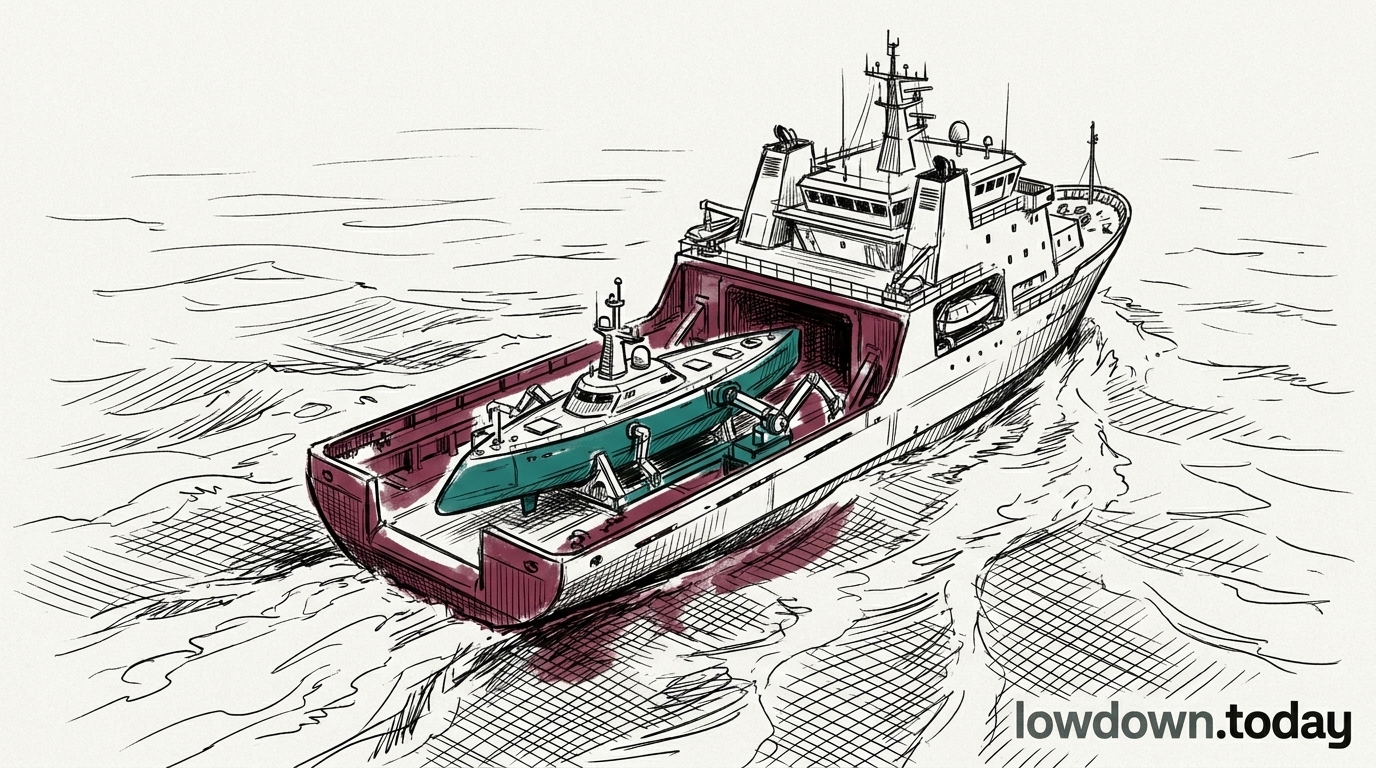
The Royal Navy retired HMS Chiddingfold, a Hunt-class minehunter in service since 1984, on 13 July 2026, alongside the Type 23 frigates HMS Richmond and HMS Iron Duke.⁠1 By the service's own account, Chiddingfold's mine-countermeasures (MCM) tasking passes to autonomous and remotely operated underwater vehicles and to newer Type 26 and Type 31 frigates.

This is the first crewed MCM hull actually withdrawn since the autonomy programme moved from paper to fleet architecture, when Britain named its Type 91 to Type 94 uncrewed classes in late June. Retiring a working minehunter before its replacement is fully fielded is a commitment, not a housekeeping line: it locks the Royal Navy onto a timetable it can no longer easily reverse.

Crew and sustainment budget freed from a 42-year-old hull now redirect toward the mothership and drone layer just funded, the practical mechanism by which a doctrine of "uncrewed wherever possible" becomes a smaller crewed fleet doing different work.

Deep Analysis

In plain English

The Royal Navy has retired HMS Chiddingfold, a mine-hunting ship that first entered service in 1984, along with two other older ships. Mine-hunting means finding and destroying underwater mines that could sink ships or block a port. Instead of a crewed ship like Chiddingfold, that job is now passing to uncrewed robot boats and modern frigates. The retirement matters because it is the first time Britain has actually taken an old mine-hunting ship out of service, rather than just announcing plans to build robot replacements.

Deep Analysis
Root Causes

Hunt-class minehunters like Chiddingfold were designed in the late 1970s for a crewed-diver and sonar-sweep doctrine the Royal Navy no longer trains new sailors to operate at scale, so retaining the class past 2026 would mean sustaining a shrinking specialist workforce rather than accelerating the autonomous transition.

The retirement date was set by the Defence Investment Plan's funding profile rather than by the readiness of the mothership fleet, since the £1.3bn autonomous-MCM programme funding the vessels that will actually carry the drones was confirmed only days before the ship left service.

What could happen next?
  • Risk

    Retiring a crewed minehunter before its autonomous replacement is fully fielded commits the Royal Navy to a transition timetable it can no longer easily reverse.

  • Precedent

    Chiddingfold is the first crewed mine-countermeasures hull actually withdrawn since the Defence Investment Plan named uncrewed replacement classes.

First Reported In

Update #7 · Thales buys Exail; UK retires a minehunter

Royal Navy· 18 Jul 2026
Read original →
Different Perspectives
Kongsberg
Kongsberg
Kongsberg offered Arctic Hunter, an uncrewed ship of commercial Arctic design, for Britain's Type 92 submarine-hunter requirement, Naval News reported. It puts a civil hull design forward for a Royal Navy submarine-hunting role.
Swedish Defence Materiel Administration (FMV)
FMV gave Teledyne Gavia a SEK 13.67m follow-on for portable mine-hunting robots on 19 November, with no prior call for competition. Sweden is adding to an earlier Gavia order rather than opening the buy to rivals.
Royal Netherlands Army (MatLogCo)
The Dutch tender of 23 November sets €160m aside for at least seven mine-breaching ground robots. Its stated aim is to add an uncrewed option to existing breaching kit and protect personnel, the engineers who would otherwise drive in first.
Tesla Gigafactory Berlin-Brandenburg (Andre Thierig)
The plant director announced a Cybercab building at Grünheide, with production from 2029 and a hoped-for ramp to up to 1 million a year. Tesla self-certified the car, which has no steering wheel or pedals; NHTSA has alleged no breach.
WeRide
WeRide
WeRide told US investors that more than 90% of its robotaxi revenue now comes from outside China, with about 600 cars in the Middle East. It claims "positive unit economics" in Guangzhou but discloses no cost basis for the claim.
HD Hyundai
HD Hyundai
HD Hyundai built ASV ALPHA with Anduril before any order, and Choi Tae-bok says it will enter the prototype if a US tender comes out next year. The group aims to lift its naval revenue five- to tenfold within a decade, iNews24 reports.

Written with AI from Lowdown's published reporting. Not individually reviewed by an editor. Editorial standards.