Mine Hunting Capability
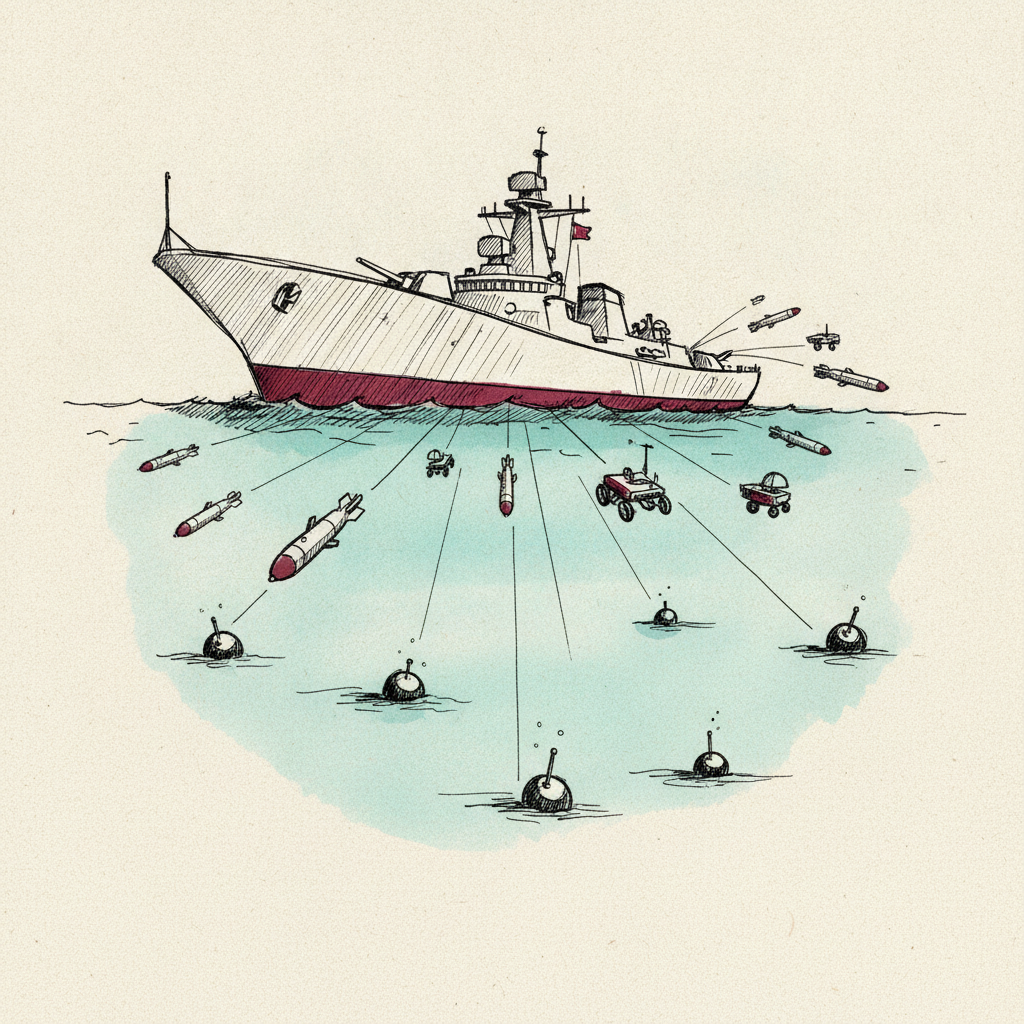
UK Royal Navy programme replacing crewed minehunters with autonomous systems and motherships.
Mine Hunting Capability, the Royal Navy's programme replacing crewed minehunters with autonomous systems, has a mothership deck-space shortfall: an 11 August 2026 assessment set its Block 2 minimum at 1,000 square metres against HMS Stirling Castle's roughly 600.
Last refreshed: 12 August 2026 · Appears in 1 active topic
Is the Royal Navy's robot-ship mine hunting programme actually replacing crewed ships on schedule?
Timeline for Mine Hunting Capability
The mothership Britain has not bought
Autonomous Systems: Land & SeaMentioned in: £10m buys a robot boat testbed
Autonomous Systems: Land & SeaMentioned in: Navy asks how to certify a robot ship
Autonomous Systems: Land & SeaReceived its next procurement tranche
Autonomous Systems: Land & Sea: UK to buy three Norway mothershipsBackground
The Mine Hunting Capability programme is the Royal Navy's transition plan from crewed Hunt-class minehunters to autonomous mine-countermeasures systems and the motherships that launch, recover and command them at sea. UK Defence Minister Luke Pollard confirmed on 17 July 2026 that Britain will procure three further offshore support vessels jointly with Norway, a £90 million tranche within the programme's wider £1.3 billion budget.
An 11 August 2026 assessment set the programme's Block 2 requirement at a minimum 1,000 square metres of mothership deck space, against first-of-class ship HMS Stirling Castle's roughly 600, and weighed the £90 million Norway tranche against a fuller three-hull build estimated at roughly £330 million, with the Hunt-class due out of service by 2032.
Block 2 needs more deck space
An 11 August 2026 assessment by Navy Lookout set the Mine Hunting Capability programme's Block 2 mothership requirement at a minimum 1,000 square metres of deck space, more than the roughly 600 square metres offered by first-of-class ship HMS Stirling Castle.
The same assessment weighed the £90 million Norway funding tranche, confirmed 17 July 2026, against a fuller three-hull build estimated at roughly £330 million, with the Hunt-class due out of service by 2032. The comparison leaves the programme's near-term mothership capacity short of what its own next stage requires.
What is the UK's Mine Hunting Capability programme?
How much is the UK spending on mine hunting motherships?
Which ships are part of the UK's Mine Hunting Capability programme?


Written with AI from Lowdown's published reporting. Not individually reviewed by an editor. Updated 12 August 2026. Editorial standards.