Skip to content
You can now search across every topic, entity and event.What's new
AI: Jobs, Power & Money
1JUL

Washington pulls a live AI model

4 min read
11:00UTC

At 5:21pm Eastern on Friday 12 June, Commerce Secretary Howard Lutnick ordered Anthropic to bar foreign nationals from Claude Fable 5 and Mythos 5. The only way to comply was to switch both off for everyone on earth.

EconomicDeveloping
Key takeaway

Washington used an export law built for chips to switch off a consumer AI model hundreds of millions were using.

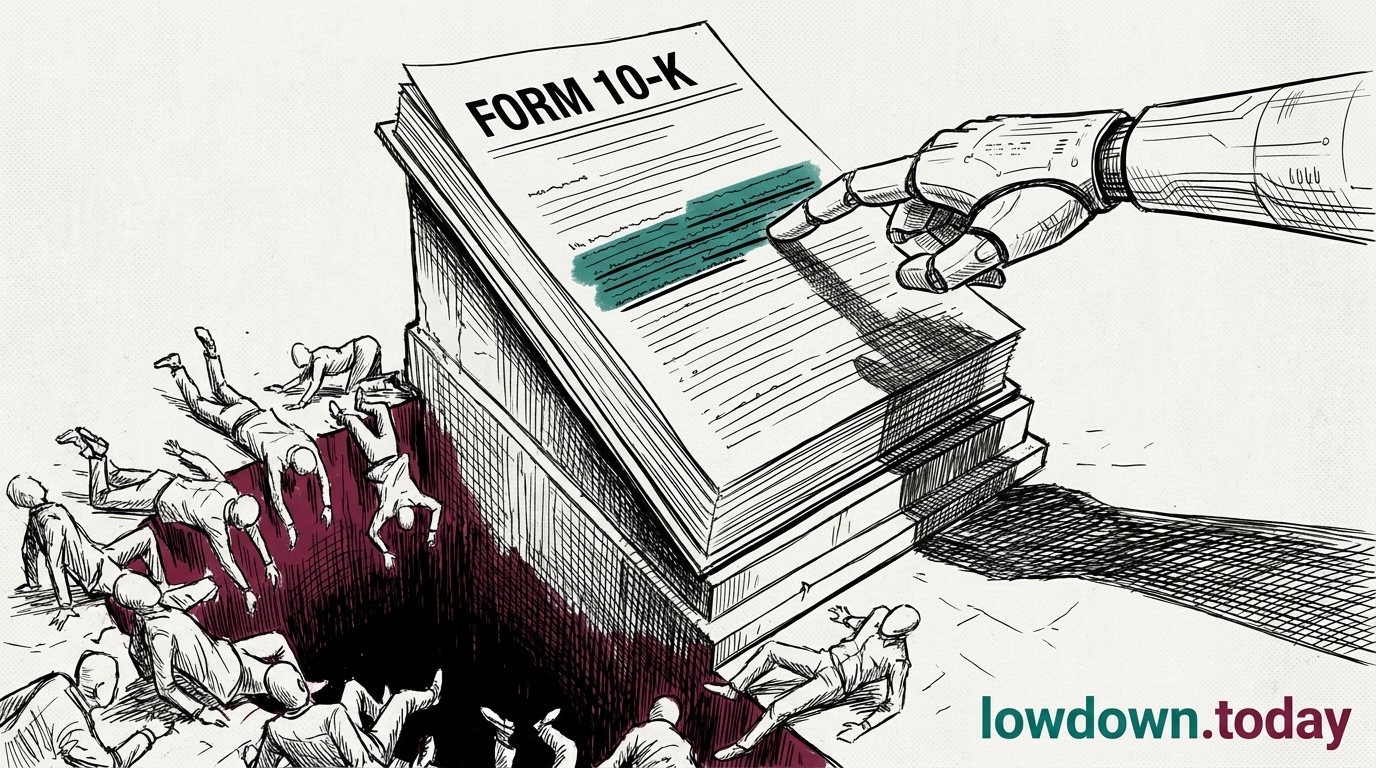
At 5:21pm Eastern on Friday 12 June, Commerce Secretary Howard Lutnick sent Anthropic chief executive Dario Amodei a directive barring every foreign national, inside or outside the United States, from accessing Claude Fable 5 and Claude Mythos 5 1. The order reached Anthropic's own foreign-national staff. To comply, the company disabled both models for every customer worldwide, three days after Fable 5 went on sale.

Anthropic is the San Francisco AI lab behind the Claude family of models; Commerce is the US federal department that polices what technology may leave American hands. Lutnick reached them through the deemed-export doctrine: under US law, granting a foreign national access to controlled technology on American soil counts as an export to that person's home country 2. A live consumer model cannot check the nationality of every user mid-conversation, so the only way Anthropic could keep foreign nationals out was to keep everyone out. The controlled item, in effect, became the act of using the model rather than possessing it, and no commercial AI product is built to gate inference by passport in real time.

The capability did not change on Friday. This desk has tracked the Mythos arc since April, when the Treasury and the Federal Reserve summoned five Wall Street bank chiefs over the withheld Mythos Preview, the model Anthropic distributed to twelve partners under Project Glasswing, that the UK AI Security Institute clocked at a 32-step autonomous attack chain, and that Anthropic then reframed in a 244-page Alignment Risk Update abandoning its own capability thresholds. By 1 May, OpenAI's rival GPT-5.5 had cleared the identical 32-step chain , and it remains on sale. The trigger, per Axios, was an unnamed rival claiming to have jailbroken Mythos 5 by asking it to read a codebase and fix the flaws it found; the administration first sought a launch pause, Anthropic refused, and the letter followed 3.

The campaign-money symmetry sharpens the irony. Anthropic backed the pro-regulation Public First campaign while the OpenAI camp funded the anti-regulation Leading the Future PAC . The lab that asked to be regulated is the one Washington reached first, while the untouched competitor is the one whose founders paid to weaken the rules. Restoration terms, whenever they come, will set the first precedent for how a deployed consumer model re-enters a market after a national-security recall.

Deep Analysis

In plain English

The US government has a rule called the deemed-export doctrine. Under it, if an American company lets a foreign citizen use controlled technology inside the United States, the law treats that as if the technology had been physically shipped to that person's home country. The same rule applies to military hardware, advanced chips, and now, apparently, AI models. The problem is that Claude cannot tell who is foreign and who is not when someone types a question. It has no passport scanner. So when Commerce Secretary Howard Lutnick sent Anthropic a letter saying no foreign nationals could use Fable 5 or Mythos 5, the only way Anthropic could comply was to switch both models off for everyone, everywhere, including paying customers in every country. The government did not seize a server or a file. It made access illegal, and the model's inability to enforce that distinction did the rest.

Deep Analysis
Root Causes

The deemed-export doctrine was written for an era when controlled technology lived in a discrete artifact: a chip, a weapon schematic, a software binary on physical media. The 2025 AI Diffusion Rule extended it to closed model weights, which at least travel as discrete files.

Runtime inference on a cloud API produces no artifact that crosses a border; the foreign-national user receives a token stream, not a weight file, meaning the 'export' the law notionally controls exists only as a probabilistic output. No commercial inference architecture gates by nationality in real time because no commercial architecture was designed to be a border control.

A second structural vulnerability sits in the competitive reporting channel. An unnamed rival claimed the Mythos jailbreak and routed the report to the administration.

Private competitor reporting to regulators creates a repeatable incentive: flagging a rival's vulnerability is costless to the reporter, imposes a compliance burden on the target, and carries an asymmetric political return if the target lobbied for regulation. The BIS directive reached Anthropic, not OpenAI, despite GPT-5.5 carrying the same vulnerability at the same date.

Escalation

Escalatory. The directive represents the first instance of a US government withdrawing runtime access to a deployed consumer AI product, not a pre-release model or a hardware export. Restoration terms, if and when set, will define whether the control persists, widens, or is abandoned as unenforceable, each of which has a different escalatory profile for the broader AI sector.

What could happen next?
  • Precedent

    Lutnick's directive establishes that the deemed-export framework can reach runtime inference access, not only model weights or hardware, giving the BIS legal surface to act on any deployed frontier model used by foreign nationals.

    Immediate · Assessed
  • Risk

    Competitors may use the private-reporting channel to the BIS as a competitive lever, filing jailbreak claims against rivals to trigger suspension events, given that Anthropic's suspension occurred while GPT-5.5 carried the same vulnerability.

    Short term · Suggested
  • Consequence

    Enterprise procurement of US-based frontier AI models now carries a regulatory-withdrawal risk that did not exist before 12 June, which will raise the cost and complexity of multi-year AI infrastructure commitments.

    Medium term · Assessed
  • Opportunity

    Non-US frontier labs, particularly those in the EU, UK, and Canada, can now market regulatory-jurisdiction diversity as a feature to international enterprise customers who cannot afford a repeat suspension.

    Medium term · Suggested
First Reported In

Update #13 · Washington pulls a live AI model

Anthropic· 13 Jun 2026
Read original
Different Perspectives
Barclays
Barclays
Barclays economist Pooja Sriram flagged a 28,000-a-month bleed in finance and information roles the same week Microsoft disputed that AI drove its own 4,800 cuts. The bank treats Challenger's AI-attribution share as a lagging indicator against faster erosion visible in raw labour-market data.
European Commission
European Commission
Brussels deferred the Digital Omnibus's Annex III employment-compliance deadline from 2 August 2026 to December 2027, even as California advanced three binding AI-hiring bills the same week. The 17-month delay leaves EU workers without the algorithmic-hiring safeguards the regulation already promises.
OpenAI
OpenAI
OpenAI proposed a 5% US government equity stake worth $42.6bn, structured as a public wealth fund modelled on the Alaska Permanent Fund, with Sam Altman pitching it directly to Trump, Bessent and Lutnick. The offer pre-empts Sanders' rival one-time 50% AI-stock tax, which has not yet reached committee.
India's IT and outsourcing sector
BAT's transfer of 3,500 roles to Accenture on 29 June fits a delivery model Indian IT firms increasingly run: consultancies win Western contracts, then execute through offshore centres. The sector expects more Fit2Win-style transfers, not straight redundancies, as employers absorb AI without cutting outsourced headcount.
European Trade Union Confederation
ETUC says the Council's shift from 'ensure' to 'support' in the AI-literacy duty, confirmed in the Digital Omnibus's final adoption on 29 June, is a collapse of the legal threshold, not a drafting tidy-up. It expects EU workers to face AI-driven hiring and monitoring decisions with a statutory right to explanation that exists in name only.
British American Tobacco's Fit2Win workforce
BAT is cutting 9,000 roles under Fit2Win, transferring 3,500 to Accenture rather than making them redundant, to reach roughly £500m in AI-driven savings by 2027. For affected staff, that distinction decides whether they keep a job at all, just not at BAT.
