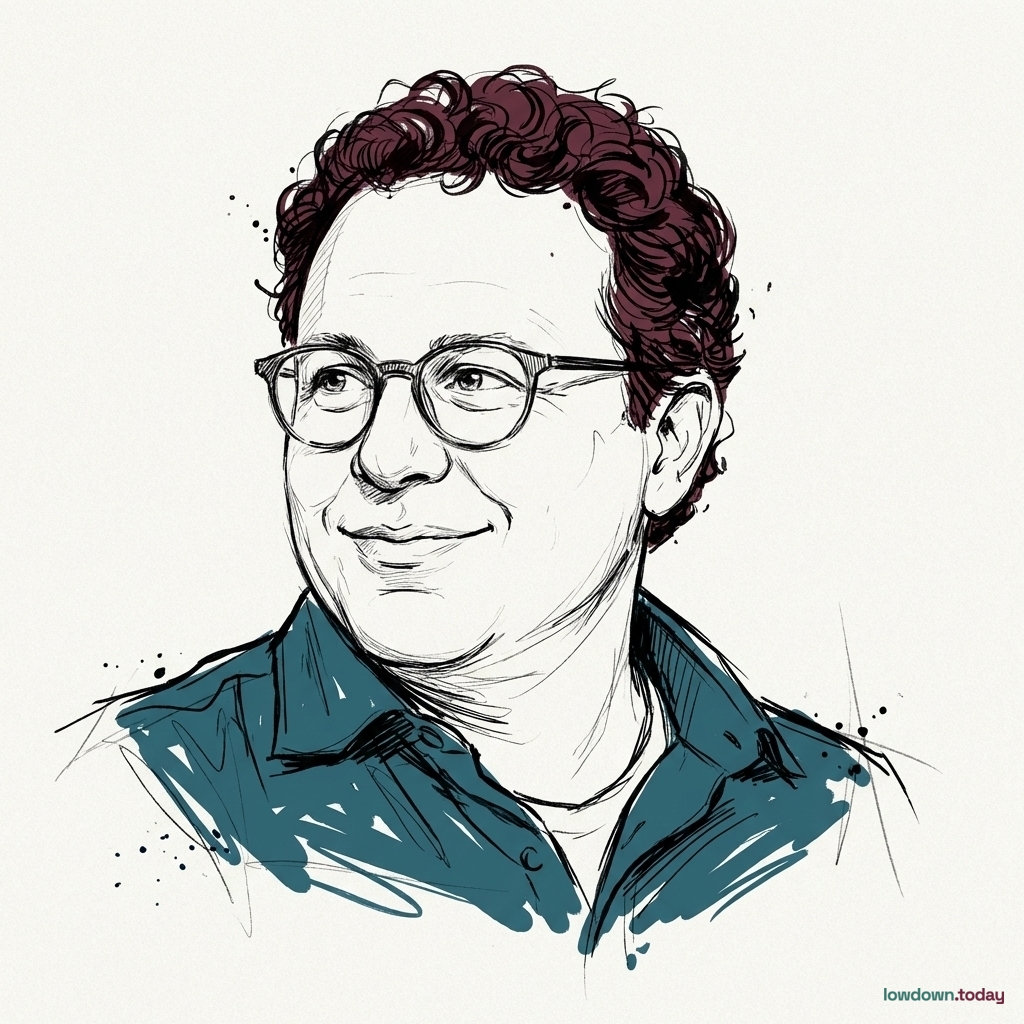
Dario Amodei
CEO of Anthropic; received first US export-control directive suspending a live commercial AI model.
Last refreshed: 13 June 2026 · Appears in 2 active topics
Is Anthropic now subject to the same export rules as weapons manufacturers?
Timeline for Dario Amodei
Received directive and disabled both models globally to comply, then publicly disputed the action
AI: Jobs, Power & Money: Washington pulls a live AI modelMentioned in: Intuit cuts 3,000, licenses its data
AI: Jobs, Power & MoneyMentioned in: Alsup withholds approval on Anthropic $1.5bn
Media's AI PivotTold staff Anthropic is running at 80x annualised revenue and usage growth in Q1 2026
Media's AI Pivot: Akamai puts Claude on the EU edge for $1.8bnMentioned in: NBER: nine in ten firms untouched by AI
AI: Jobs, Power & MoneyBackground
Dario Amodei is the CEO and co-founder of Anthropic, the AI safety company behind the Claude model family. He previously served as Vice President of Research at OpenAI before leaving in 2021 to found Anthropic with his sister Daniela Amodei and several colleagues. Anthropic launched Claude Cowork in January 2026, positioning the product at enterprise workplace automation.
Amodei became a central reference point in the AI-and-Labour debate when his January 2026 essay urged AI companies to steer customers away from firing workers and called on governments to tax AI-generated wealth. Andrew Yang cited that essay directly in March 2026 while renewing his push to tax AI rather than Labour. His company was mentioned alongside NBER survey findings showing 90% of firms report no employment impact from AI. On 12 June 2026, Commerce Secretary Howard Lutnick sent Amodei a directive barring all foreign nationals from accessing Claude Fable 5 and Claude Mythos 5, forcing Anthropic to disable both models globally. Anthropic complied and publicly disputed the action, noting that the same jailbreak vector exists in GPT-5.5, which remained on sale.
The tension in Amodei's position has sharpened: he built a company whose core product automates knowledge work, publicly advocates protecting the workers it displaces, and now finds that company at the centre of the first US government intervention to suspend a commercially deployed frontier AI model on national-security grounds. Whether that position survives commercial pressure and regulatory friction is the defining question around his leadership.
Who is Dario Amodei?
What did Dario Amodei say about AI and jobs?
What is Claude Cowork?
How does Dario Amodei differ from Sam Altman on AI jobs?
Did Anthropic support a robot tax?
Why did the US government ban Dario Amodei's AI models?
What did Anthropic say after the US suspended its AI models?

