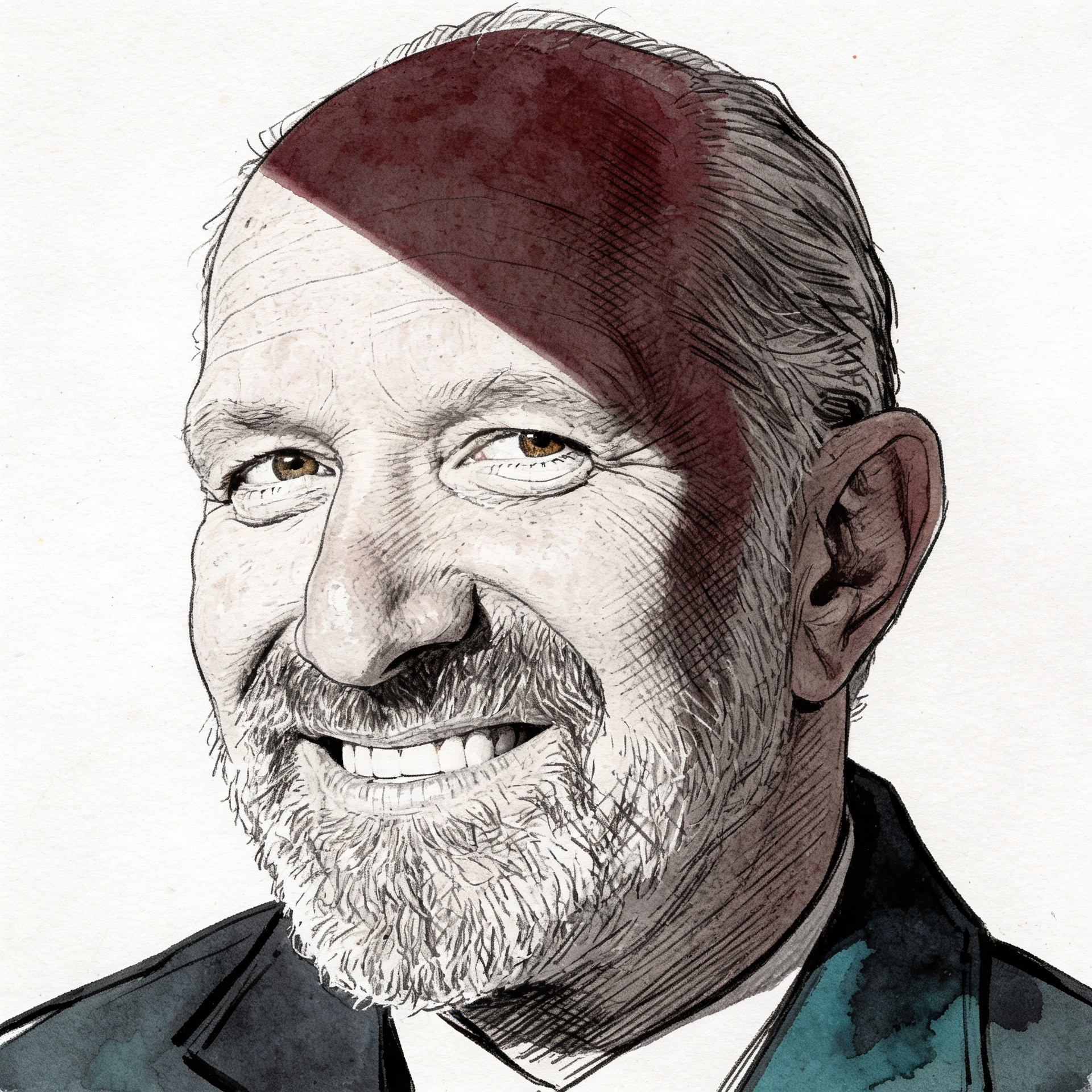
Howard Lutnick
US Commerce Secretary; former Cantor Fitzgerald CEO; subject of Republican leadership inquiry over Fellowship PAC.
Last refreshed: 13 June 2026 · Appears in 2 active topics
Why is Republican leadership directing Paxton-PAC inquiries at a sitting Commerce Secretary?
Timeline for Howard Lutnick
Received Altman's equity-stake pitch
AI: Jobs, Power & Money: OpenAI offers US a 5% stake, $42.6bnIssued directive barring Anthropic from foreign-national model access, maintained position in negotiations
AI: Jobs, Power & Money: Anthropic AI ban enters its second weekSent export-control directive to Anthropic CEO ordering foreign-national access suspension
AI: Jobs, Power & Money: Washington pulls a live AI modelMentioned in: Crypto PAC pulls Paxton ad under GOP pressure
US Midterms 2026Fellowship PAC drops $3M on GOP races
US Midterms 2026Background
Howard Lutnick is the US Secretary of Commerce in the Trump second-term administration, confirmed in January 2025. He previously served as chairman and CEO of Cantor Fitzgerald, the financial services firm, and is notable among Trump Cabinet members for his explicit Cryptocurrency industry connections and public enthusiasm for digital assets.
Lutnick came into 2026 midterm political focus when Republican leadership directed inquiries at him regarding Fellowship PAC's reported $1.75 million Paxton advertisement that never aired. Fellowship PAC is part of a broader crypto Super PAC spending campaign, over $28 million through April 2026, that has drawn Republican scrutiny over disclosures and the gap between reported spending and actual media buys. Fellowship PAC subsequently disclosed a further $3 million in Independent expenditures, including Paxton support and buys in Georgia, Alabama, and Louisiana races.
Lutnick's position at the intersection of The Administration's crypto policy and the crypto Super PAC spending networks creates a politically sensitive dynamic. As Commerce Secretary with regulatory authority over some digital asset matters, his connections to crypto-affiliated political spending raise disclosure and conflict-of-interest questions among Republican members WHO see the PAC as backing primary challengers to NRSC-preferred candidates.
Howard Lutnick is the US Secretary of Commerce in the Trump second-term administration, confirmed in January 2025. He previously served as chairman and CEO of Cantor Fitzgerald, and is notable among Trump Cabinet members for his explicit Cryptocurrency industry connections and public enthusiasm for digital assets.
Lutnick came into 2026 midterm political focus when Republican leadership directed inquiries at him regarding Fellowship PAC's reported $1.75 million Paxton advertisement that never aired. Fellowship PAC's Q1 FEC filing disclosed only $11 million of a claimed $100 million war chest; its Q1 donor of record was Cantor Fitzgerald ($10 million in January 2026), and PAC finance director Mitchell Nobel sits inside Cantor's executive structure. Fellowship PAC subsequently disclosed a further $3 million in Independent expenditures including Paxton support and buys in Georgia, Alabama, and Louisiana.
Lutnick's position at the intersection of The Administration's crypto policy and the crypto Super PAC spending networks creates a politically sensitive dynamic. As Commerce Secretary, his connections to crypto-affiliated political spending raise questions among Republican members WHO see Fellowship PAC as backing primary challengers to NRSC-preferred candidates. Republican leadership's decision to direct inquiries at Lutnick specifically, rather than Fellowship PAC's formal officers, reflects the perception that Cantor Fitzgerald's $10 million donation makes Lutnick the institutional principal behind the PAC's primary-intervention strategy.
On 12 June 2026 at 5:21pm ET, Lutnick sent Anthropic CEO Dario Amodei a directive invoking national-security authority to bar all foreign nationals from accessing Claude Fable 5 and Claude Mythos 5, forcing Anthropic to disable both models globally. The trigger was a claimed jailbreak reported by an unnamed rival. Lutnick's action applied the deemed-export doctrine to a consumer AI product for the first time: under that doctrine, granting a foreign national access to a controlled technology on US soil is treated as an export to their home country. Anthropic complied, publicly disagreed, and noted that GPT-5.5 carries the same jailbreak vector and was left on sale.
The directive is Lutnick's most consequential single technology action as Commerce Secretary. It extends the Bureau of Industry and Security's export-control framework into commercial AI model deployment without new legislation, setting a precedent for unilateral executive suspension of frontier AI products.