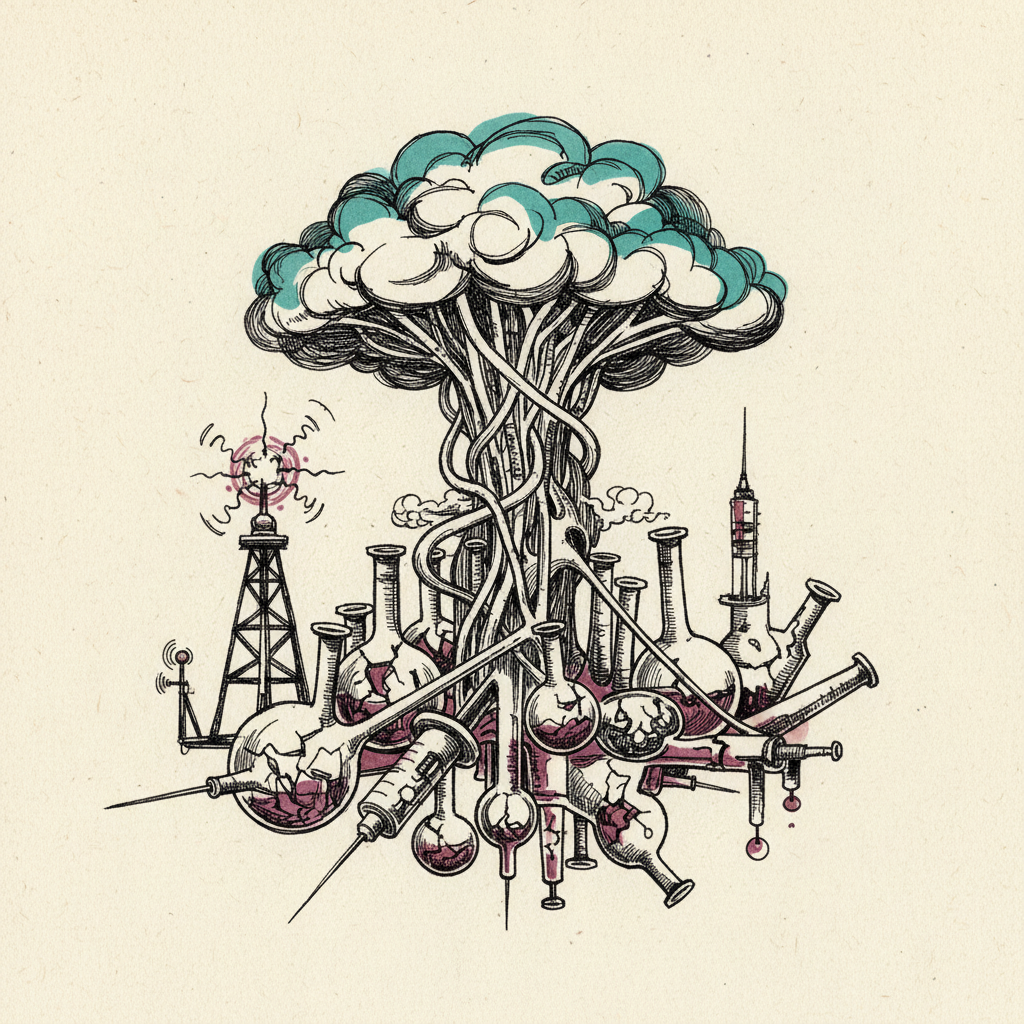
Weapons of Mass Destruction
Categories of arms capable of mass casualties: nuclear, chemical, biological, radiological.
Last refreshed: 17 April 2026
Does Iran still have the materials needed to build a nuclear weapon?
Timeline for Weapons of Mass Destruction
Mentioned in: Iran narrows enrichment gap to 3-5 years
Iran Conflict 2026Mentioned in: Munir extracts Iran's first nuclear monitoring concession
Iran Conflict 2026Mentioned in: Peskov reopens uranium off-ramp to Iran
Iran Conflict 2026Mentioned in: Enrichment Gap Hardens Before Talks Open
Iran Conflict 2026Background
Weapons of Mass Destruction encompass nuclear, chemical, biological, and radiological arms whose defining characteristic is the capacity to kill at scale without discrimination. The Iran war of 2026 has placed the nuclear subset at the centre of the conflict's endgame: 440.9 kilograms of uranium enriched to 60% U-235 remain untracked since IAEA inspectors lost access more than eight months ago, enough fissile material for approximately seven weapons if enriched to weapons-grade 90%.
The term entered modern law through the 1925 Geneva Protocol, the 1968 Nuclear Non-Proliferation Treaty, and the Chemical Weapons Convention of 1993. In the Iran context it has crystallised around two irreconcilable positions: the United States demands zero enrichment as a precondition for any deal, while Iran has declared enrichment rights non-negotiable, with Supreme Leader Mojtaba Khamenei stating in April 2026 that nuclear weapons are "a matter of life and not a matter for negotiation." The IDF struck Malek Ashtar University of Technology in Tehran — designated a nuclear weapons development site — as part of its strike campaign.
The phrase "Weapons of Mass Destruction" gained legal force after the 1991 Gulf War, when UN Resolution 687 mandated Iraq's disarmament. The concept underpinned the 2003 invasion of Iraq and the collapse of the WPR consensus. In 2026 the same framing shapes congressional debate on whether the Iran strikes require a formal authorisation for use of military force, and whether The Administration's silence on executive instruments — zero Iran-related executive orders in 48 days of war — reflects legal restraint or deliberate opacity.
Does Iran have enough uranium to build a nuclear bomb?
What is the difference between 60% enriched uranium and weapons-grade?
Why is the US demanding zero enrichment from Iran?
What counts as a weapon of mass destruction under international law?


