Skip to content
You can now search across every topic, entity and event.What's new
UNIFIL
OrganisationLB

UNIFIL

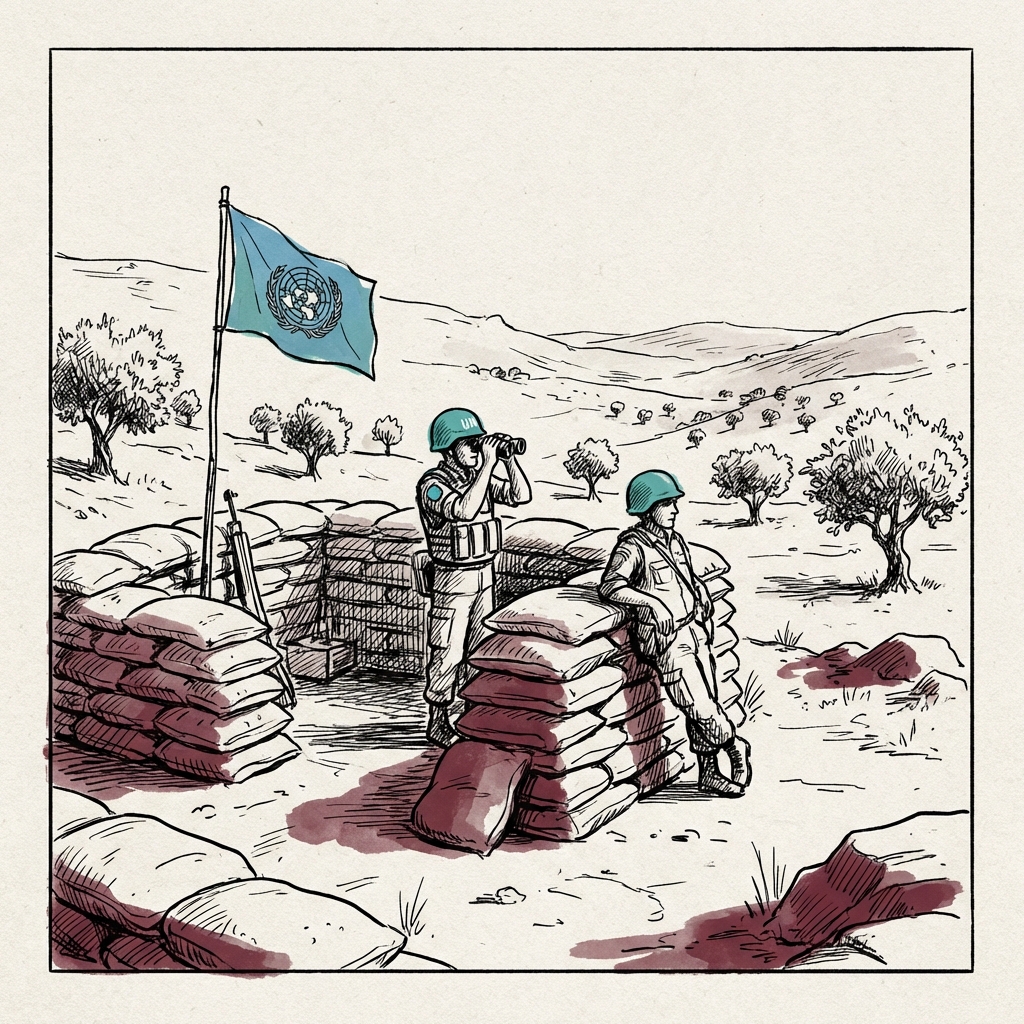
UN peacekeeping force in southern Lebanon since 1978; entering IDF-vacated areas in June 2026.

Last refreshed: 22 June 2026 · Appears in 1 active topic

Key Question

UNIFIL enters Debbine as Israel holds 36 other villages; is this progress or optics?

Timeline for UNIFIL

#13522 Jun

Moved into Debbine alongside the LAF to reopen roads

Iran Conflict 2026: Israel hands back Debbine, keeps the zone
View full timeline →
Common Questions
What is UNIFIL and what does it do?
UNIFIL is a UN peacekeeping force deployed in southern Lebanon since 1978. Under Resolution 1701 it monitors the Blue Line, supports Lebanese forces, and reports Ceasefire violations by all parties.
Were UNIFIL peacekeepers attacked in 2026?
Yes. Two Ghanaian peacekeepers were critically wounded in a strike on 7 March 2026, and Israeli ground forces were earlier confirmed inside UNIFIL positions in southern Lebanon.Source: event
How many troops does UNIFIL have?
Approximately 10,000 troops from more than 50 countries, with headquarters at Naqoura on the Lebanese coast.

Background

UNIFIL (the United Nations Interim Force in Lebanon) was established in 1978 under UN Security Council Resolution 425 after Operation Litani, tasked with overseeing Israeli withdrawal and restoring peace. Its modern mandate derives from Resolution 1701, passed in August 2006 to end the Israel-Hezbollah war, which expanded the force to roughly 10,000 troops from more than 50 contributing nations. Headquarters is at Naqoura on the Lebanese coast. UNIFIL's REMIT is to monitor the Blue Line, support the Lebanese Armed Forces, prevent armed groups from operating in the south and report violations by all parties. It has no enforcement authority: it can observe and report, but cannot compel. The mission's legitimacy rests on the consent of the parties; when that consent is withdrawn or ignored, UNIFIL has no military option. France and Italy lead the largest European contingents; Spain, Germany, Ghana and Serbia are among the major contributors.

UNIFIL's entire operating area became contested as Israel's ground campaign expanded through 2026. On 7 March, two Ghanaian peacekeepers were critically wounded in a strike on their base; Ghana filed a formal protest with the UN Secretary-General. On 10 April, six more peacekeepers were injured and one detained when the IDF blocked a logistics convoy . On 4 June, Serbian Sergeant Milovan Jovanovic was killed by mortar fire near Marjayoun, the first UNIFIL fatality of the campaign; two others were wounded. UNIFIL cited grave violations of Resolution 1701 and said the attack may amount to war crimes .

On 22 June 2026, a UNIFIL contingent and a Lebanese Army engineering unit moved into the village of Debbine to reopen roads behind a localised IDF redeployment toward Khiam in the Marjeyoun district . The IDF described the move as "dynamic defense" rather than a withdrawal and confirmed its wider security zone, up to 10 km deep, remained in place. UNIFIL's role in the Debbine pilot zone is consistent with the Washington round-5 framework (sessions on 23 and 25 June) envisaging Lebanese Armed Forces taking exclusive control of designated pilot areas south of the Litani. The Debbine handover is the first confirmed instance of the pilot-zone architecture operating on the ground, though Israel granted access to one village while holding position in dozens of others. UNIFIL's viability hinges on whether the Washington track produces further handovers or stalls.

More questions
What is UN Security Council Resolution 1701?
Resolution 1701, passed in August 2006, ended the Israel-Hezbollah war and expanded UNIFIL's mandate to monitor the Ceasefire and support Lebanese Armed Forces deployment in the south.
Why is Israel in conflict with UNIFIL?
Israel argues UNIFIL's presence constrains necessary operations against Hezbollah. IDF forces have entered peacekeeper positions, blocked supply convoys, and struck areas where peacekeepers are deployed. UNIFIL has no enforcement authority and cannot compel Israeli compliance.Source: IDF statements / UNIFIL reports
What did Ghana say about the UNIFIL attack?
Ghana lodged a formal protest with the UN Secretary-General after two of its peacekeepers were critically wounded in March 2026, demanding accountability and an independent investigation.Source: event
What is UNIFIL and why is it in Lebanon?
UNIFIL is the UN Interim Force in Lebanon, established in 1978 under Resolution 425 and expanded under Resolution 1701 after the 2006 war. It monitors the Blue Line, reports violations by all parties, and supports Lebanese Armed Forces deployment in the south.
Have UN peacekeepers been attacked in Lebanon in 2026?
Yes; two Ghanaian UNIFIL peacekeepers were critically wounded in a strike on 7 March 2026, and six more were injured and one detained by the IDF in April 2026 when a logistics convoy was blocked.Source: UNIFIL / UN Secretary-General
Why is Israel pushing beyond the Lebanon ceasefire buffer zone?
Israel insists Hezbollah violations are 'dismantling the Ceasefire' and has issued evacuation orders for towns beyond the agreed 10km buffer, while maintaining IDF troops will not withdraw during the truce.Source: Lowdown Iran Conflict 2026 U81
How many countries contribute troops to UNIFIL?
UNIFIL draws approximately 10,000 troops from more than 50 nations, with France as the largest European contributor.Source: UNIFIL official mandate documentation
What is UNIFIL and what does it do in Lebanon?
UNIFIL is the UN Interim Force in Lebanon, established in 1978 and expanded under Resolution 1701 after the 2006 war. It monitors the Blue Line, supports Lebanese Armed Forces deployment in the south, and reports Ceasefire violations. It fields roughly 10,000 troops from over 50 countries but has no enforcement authority.Source: UNIFIL mandate documentation
Was a UN peacekeeper killed in Lebanon in June 2026?
Yes. Serbian Sergeant Milovan Jovanovic was killed by mortar fire near Marjayoun on 4 June 2026, the first UNIFIL fatality of the campaign. Two other peacekeepers were wounded. UNIFIL said the attack may amount to war crimes under International humanitarian law.Source: UNIFIL statement
How many times have UNIFIL peacekeepers been attacked in 2026?
At least three significant incidents: two Ghanaian peacekeepers critically wounded in a strike on 7 March; six peacekeepers injured and one detained by the IDF in April; and Sgt Jovanovic killed by mortar near Marjayoun on 4 June, the first fatality of the conflict.Source: UNIFIL statements / UN Secretary-General
Will UNIFIL's mandate be renewed after peacekeepers were killed?
The mandate renewal is under intense scrutiny after a Serbian peacekeeper was killed in June 2026. France has led calls for stronger rules of engagement. The United States has blocked binding UNSC measures protecting peacekeepers, leaving troop-contributing nations to assess whether the mission remains viable.Source: UNSC / French government statements
What did UNIFIL do in Debbine, Lebanon in June 2026?
On 22 June 2026, a UNIFIL contingent and a Lebanese Army engineering unit entered Debbine after a localised IDF redeployment toward Khiam, reopening roads in the area. It was the first confirmed pilot-zone handover under the Washington framework, though Israel's wider security zone remained in place.Source: L'Orient Today
Has UNIFIL had casualties in the 2026 Lebanon conflict?
Yes. Two Ghanaian peacekeepers were critically wounded in March 2026. In April, six more were injured and one detained. On 4 June 2026, Serbian Sergeant Milovan Jovanovic was killed by mortar fire near Marjayoun, the first UNIFIL fatality of the campaign.Source: UNIFIL / UN Secretary-General
Can UNIFIL enforce a ceasefire in southern Lebanon?
No. UNIFIL has no enforcement authority under either Resolution 425 or Resolution 1701; it can observe, monitor and report violations but cannot compel any party to comply. Its effectiveness depends on the consent of all parties, which Israel and Hezbollah have each at times withdrawn during the 2026 conflict.
What is the UNIFIL mandate and how does it relate to the Litani River?
UNIFIL's mandate under Resolution 1701 covers southern Lebanon south of the Litani River. It is tasked with monitoring the Blue Line, preventing armed groups from operating in the south, and supporting the Lebanese Armed Forces. The Litani line is the northern boundary of its principal operating area.
Source Material

