Traffic Separation Scheme (TSS)
IMO-designated maritime traffic-routing corridor separating vessel lanes through congested straits worldwide.
Last refreshed: 21 June 2026 · Appears in 1 active topic
Why are tankers avoiding the standard Hormuz shipping lanes and routing through Oman?
Timeline for Traffic Separation Scheme (TSS)
Remained subject to live mine-risk reporting within and adjacent to its lanes
Iran Conflict 2026: Hormuz held severe as Guard herds shipsOman's waters become the only lane
Iran Conflict 2026Mentioned in: Northwood drafts Hormuz rules without Gulf signatures
Iran Conflict 2026Mentioned in: US warship seizes Iranian cargo ship Touska
Iran Conflict 2026IMO invokes UNCLOS on Hormuz transit tolls
Iran Conflict 2026Background
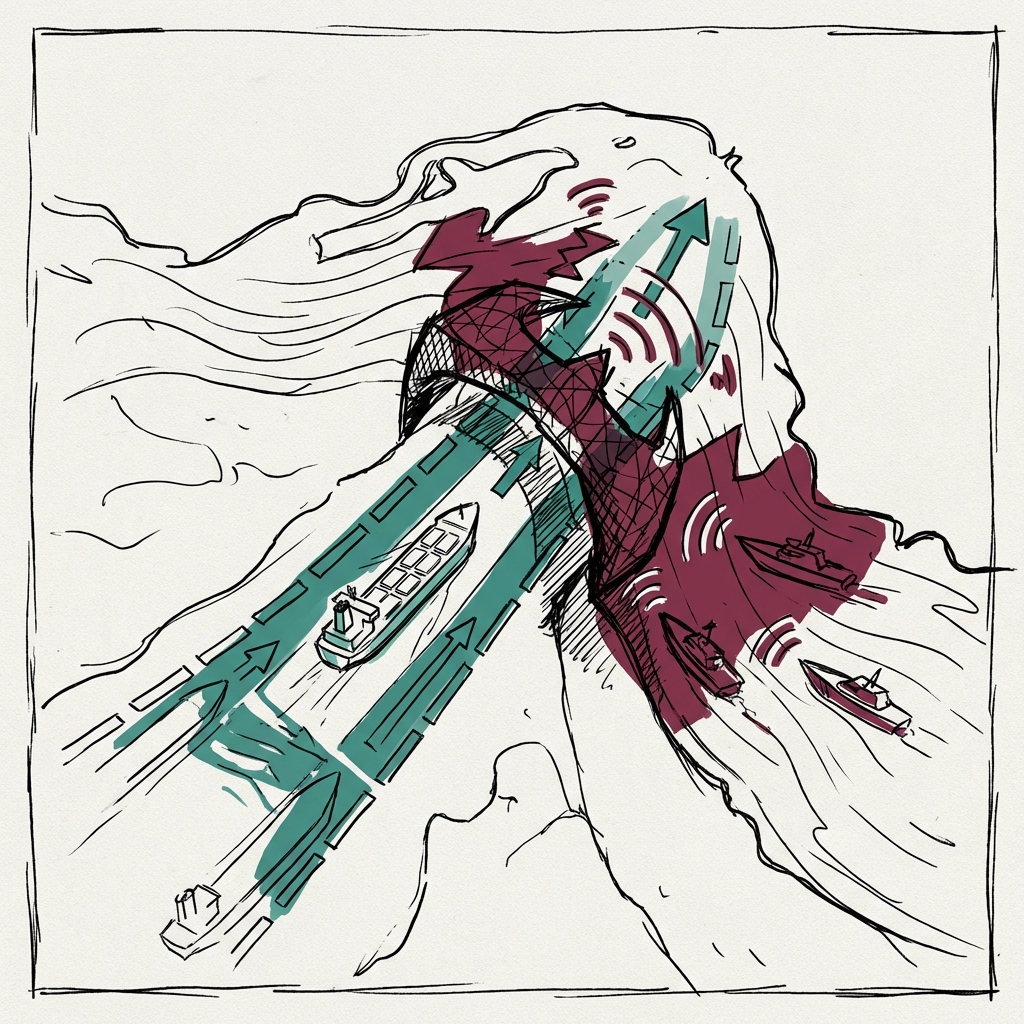
A Traffic Separation Scheme (TSS) is an IMO-designated maritime routing system that divides inbound and outbound vessel traffic through congested straits and waterways, functioning like motorway lanes at SEA. First codified under Rule 10 of the International Regulations for Preventing Collisions at SEA (COLREGS) and SOLAS V/10, TSS corridors exist in dozens of straits and approaches worldwide. The IMO approves and formally adopts each scheme; compliance is mandatory for vessels of SOLAS signatory states. The Hormuz TSS in particular carries approximately 20% of global oil supply through two designated lanes separated by a buffer zone, making it among the most heavily trafficked and strategically sensitive TSS corridors on earth.
The Hormuz TSS came under direct operational threat in the 2026 Iran conflict. On 9 April 2026, the IRGC published danger zone charts overlaying the standard TSS lanes with a maritime exclusion area, directing vessels toward Larak Island corridors under IRGC escort instead. IMO Secretary-General Arsenio Dominguez responded on 17 April with a formal statement invoking UNCLOS and rejecting any tolls or discriminatory passage measures, surfacing a pre-existing multilateral framework governing the TSS's legal status. The legal question sharpened further when the Northwood Coalition, drafting rules of engagement for the 51-nation Hormuz escort initiative, had to choose whether to operate within or around the IMO framework.
By 20 June 2026, the TSS had effectively been abandoned as the primary transit corridor. The Joint Maritime Information Center (JMIC) issued an advisory warning of possible mines in the standard TSS lanes and clearing a southern alternative: the corridor through Oman's territorial waters, mine-free, with transponders on and no US Navy coordination required. CENTCOM reported 55 merchant vessels carrying 17 million barrels transited via the Omani route on 20 June alone. The episode illustrated how a nominally legal maritime construct can be rendered operationally void through mine threat alone, without any formal annulment of the scheme's IMO status.