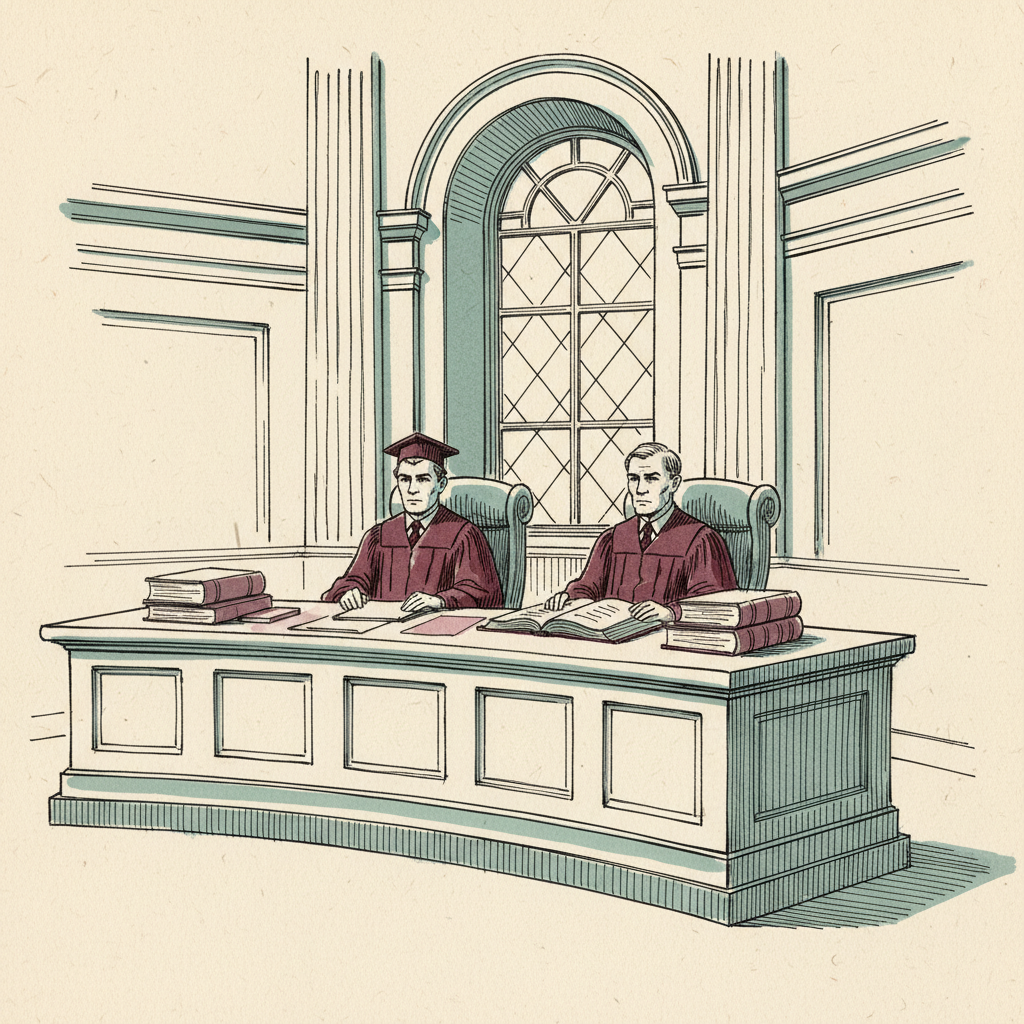
Supreme Court of Iran
Iran's highest court of appeal in civil and criminal cases.
Two men hanged in Mashhad on 30 September 2026 died on sentences this court had confirmed. Confirmation is the stage that counts: a Revolutionary Court death sentence cannot be carried out until the Supreme Court approves it.
Last refreshed: 1 October 2026 · Appears in 2 active topics
Can three teenage protesters face execution after the Supreme Court upheld their wartime death sentences?
Timeline for Supreme Court of Iran
Confirmed both death sentences before the hangings
Iran Conflict 2026: Iran hangs two men over Mashhad unrestMentioned in: Hengaw: two more 'Israel spy' hangings
Iran Conflict 2026Mentioned in: Three Iran teens days from execution
Iran Conflict 2026Background
the Supreme Court of Iran, or Divan-e Ali-ye Keshvar, is the country's highest judicial authority. It sits in Tehran across 42 branches and exists to supervise how the lower courts apply the law. The Supreme Leader appoints its chief justice for a five-year term.
the Court does not rule on whether legislation is constitutional; that belongs to the Guardian Council. What it does hold is the final word on appeal in civil and criminal cases, and cases framed as national-security offences start in the Revolutionary Courts and end here.
That route is why the Court matters to anyone following protest prosecutions. A Revolutionary Court death sentence cannot be carried out until this bench confirms it, so confirmation rather than sentencing is the decisive act, and the Court is the last place a sentence can be halted. The judiciary presents that review as ordinary appellate practice. United Nations human rights bodies dispute both the process and the outcomes, and the disagreement turns on cases this court has already signed off.
The court confirmed both Mashhad sentences
Ali Hemmati, 21, and Majid Nikandish, 25, were hanged in Mashhad on the morning of 30 September 2026, and the Court had confirmed both sentences before the executions went ahead. The judiciary announced them through Mizan, its own news outlet. The state says both joined unrest in the Tabarsi district of Mashhad on 8 January 2026, during which four members of the security forces were killed. Nobody outside the judiciary has tested the claim.
The queue behind them runs through the same chamber. Iran Human Rights Monitor published a list of 166 protesters on 29 September 2026 and said all of them were under sentence of death, awaiting confirmation here, or at imminent risk of execution. Neither Iran's judiciary nor any United Nations body has confirmed that figure. Both sentences arose from the protest of 8 January 2026, not from the war.
The court upheld three teenagers' sentences
On 27 April 2026 the Court upheld death sentences for three teenagers convicted over a mosque fire at Pakdasht in January 2026, and referred the cases to the unit that carries out final rulings. A fourth defendant, Maryam Hodavand, 45, had an appeal still pending. All four had been denied Independent legal counsel, and the three teenagers' ages put Iran in breach of Article 37 of the Convention on the Rights of the Child, which it ratified in 1994.
By 2 May the three were held at a pre-execution facility and had not been killed. Human rights organisations say their convictions rested on confessions extracted under torture. Referral, not execution, is what this court controls, and it is the last point at which such a sentence can be stopped.
What is Iran's Supreme Court?
Who appoints the chief justice of Iran's Supreme Court?
Does Iran's Supreme Court review political cases?
What is the Pakdasht mosque-fire case?
What does Iran's Supreme Court actually do?
Does Iran's Supreme Court have to approve an execution?
Why were two men hanged in Mashhad in September 2026?
