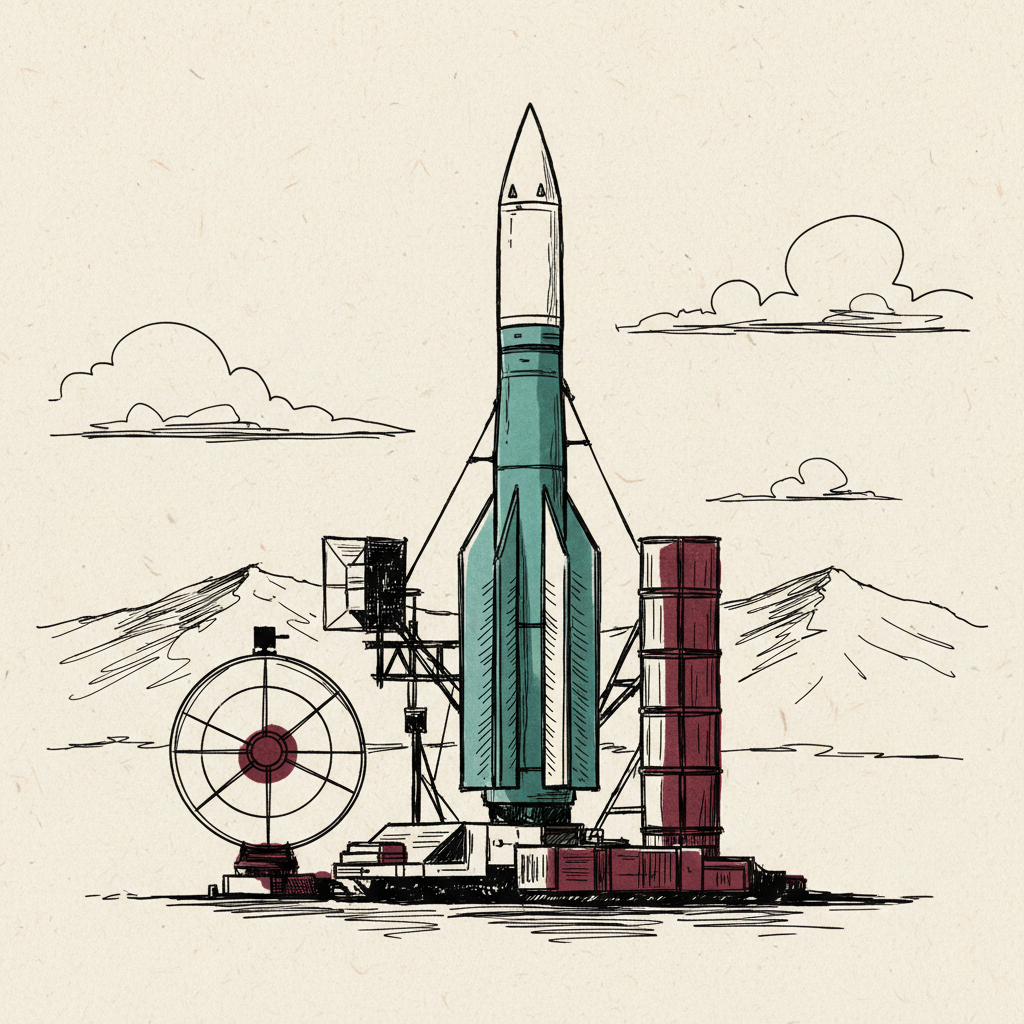
S-300
Russian long-range surface-to-air missile family; Iran's S-300PMU-2 batteries arrived from Russia in 2016.
The S-300, the Russian air-defence family Moscow sold Iran in 2007 and delivered only in 2016, framed a Western official's claim on 9 October 2026 that Russia was again sending Tehran missiles, an assessment The White House rejected.
Last refreshed: 18 October 2026 · Appears in 1 active topic
Will Russia rearm Iran's air defences, as it once did with the S-300?
Timeline for S-300
Mentioned in: Western official says Russia arms Iran
Iran Conflict 2026Mentioned in: Ukraine lands 347 drones on Moscow's Victory Day
Drones: Industry & DefenceMentioned in: Putin receives Araghchi at the Kremlin
Iran Conflict 2026Mentioned in: Ukraine hits 20 Russian air defences
Russia-Ukraine War 2026Background
The S-300 is a Soviet-designed family of long-range surface-to-air missile systems, in service since 1978 and produced by Almaz-Antey companies. Iran operates the S-300PMU-2 variant, whose 48N6E2 missile reaches about 195 km.
Iran's purchase took nine years. It paid about $900 million in 2007 for six systems. In 2010 Russia halted delivery to comply with a UN Security Council sanctions resolution, and Iran sued Russia's arms exporter for $4 billion. Putin lifted the ban on 13 April 2015, after the nuclear deal, and four S-300PMU-2 batteries arrived in 2016. Israel's strikes of April and October 2024 are credited with disabling them. That history shaped the October 2026 dispute: a Western official told Bloomberg on 9 October that Moscow was sending Tehran missiles, giving no type, number or route, and Trump said on 13 October he did not believe Russia was helping Iran.
Between 1 and 15 March 2026 Ukraine struck more than 20 Russian air-defence systems, S-300s among them, across Crimea, Kherson, Luhansk and Zaporizhzhia. Ukrainian drones also hit the Granit Plant in Sevastopol, which repairs S-300PM2 systems.
What is the S-300 missile system and who has it?
Why did Russia supply S-300 to Iran?
Can the S-300 stop cruise missiles?
When did Iran get the S-300?
Why did Russia stop the S-300 sale to Iran in 2010?
What is the range of Iran's S-300?
Is Russia supplying Iran with missiles?


Written with AI from Lowdown's published reporting. Not individually reviewed by an editor. Updated 18 October 2026. Editorial standards.