Malta
Mediterranean island state and Europe's largest ship registry, widely used as a flag of convenience.
The University of Malta published a EUR-value tender for an autonomous survey vessel in July 2026, a university procurement rather than a national defence programme, distinct from Malta's separate role blocking the EU's maritime-services sanctions ban.
Last refreshed: 3 August 2026 · Appears in 2 active topics
Why does Europe's largest ship registry keep appearing in every geopolitical flashpoint from Russian LNG to Iranian cruise missiles?
Timeline for Malta
Mentioned in: A Greek university buys one sensing UGV
Autonomous Systems: Land & SeaMentioned in: A Maltese university buys a survey boat
Autonomous Systems: Land & SeaMentioned in: Unclaimed strikes hit tankers in Hormuz
European Oil MarketsMentioned in: Thailand puts all 27 EU states on par
Nomads & Communitiesbacked the Greek compromise
European Oil Markets: Mentioned in: EU freezes Russia oil cap for a weekBackground
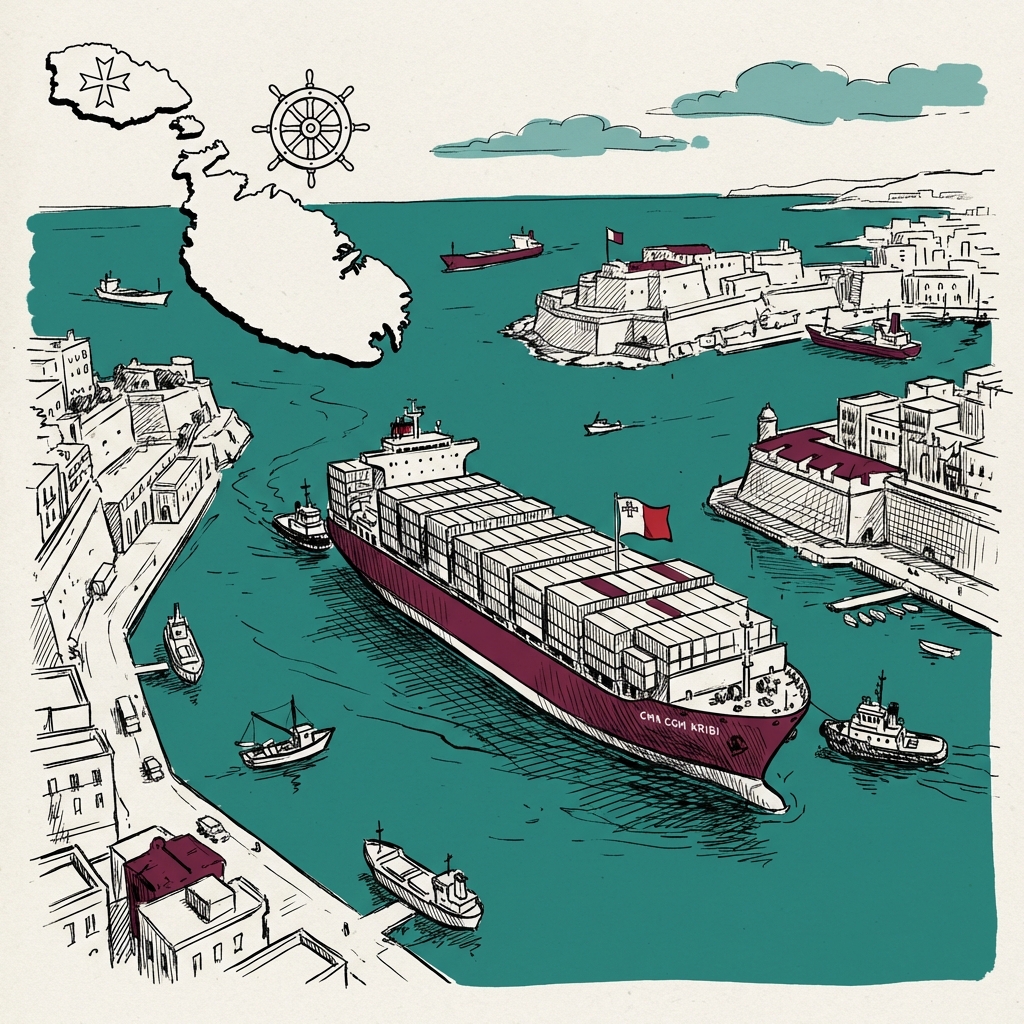
Malta operates the world's largest ship registry by gross tonnage, covering roughly 17% of the global merchant fleet. Administered under EU rules through Transport Malta, the flag is prized for its competitive fees and open registration, attracting vessels from shipping majors worldwide. As an EU member state, Malta is bound by Union Foreign Policy positions, yet its registry carries vessels owned by companies of many nationalities, creating recurring tension between flag-state obligations and owner decisions.
Malta first entered the Iran-conflict news cycle when CMA CGM Kribi, a Malta-flagged CMA CGM vessel, became the first Western European ship to transit the strait of Hormuz since the blockade began, paying Iran's IRGC toll in yuan. A second Malta-flagged CMA CGM vessel, CMA CGM San Antonio, was struck by an Iranian cruise missile inside the strait on 5 May 2026 with multiple crew injuries.
In July 2026 the University of Malta separately published a tender for an autonomous coastal and offshore survey vessel, a university procurement distinct from any national defence programme.
Malta blocks the EU maritime ban
Malta joined Greece in blocking the maritime-services ban proposed in the EU's 21st Russia sanctions package, citing the commercial exposure of Europe's largest ship registry: a services ban would stop EU-registered insurers, brokers and managers working with vessels carrying Russian oil.
By early July, Malta's position had shifted from blanket veto to active dealmaking, pushing alongside Greece and Cyprus for a three-month freeze on the $44.10 price CAP against the Commission's proposal to hold it until January 2027, leaving the wider package unresolved.
Reference
Is Malta an EU member state and does EU law apply to its ships?
What is a flag of convenience and why does it create problems in conflicts?
How big is Malta's ship registry and why do so many ships use it?
Is Malta an EU member state?
What is a flag of convenience and why does it matter?
Why was a Malta-flagged ship struck by an Iranian missile in the Strait of Hormuz?
Why is Malta linked to the Iran Hormuz toll?
Has Malta's ship registry appeared in the Russia-Ukraine conflict as well?
Did the EU resolve the Russia oil price cap freeze duration on 13 July 2026?
How big is Malta's ship registry?

