Larak-Qeshm
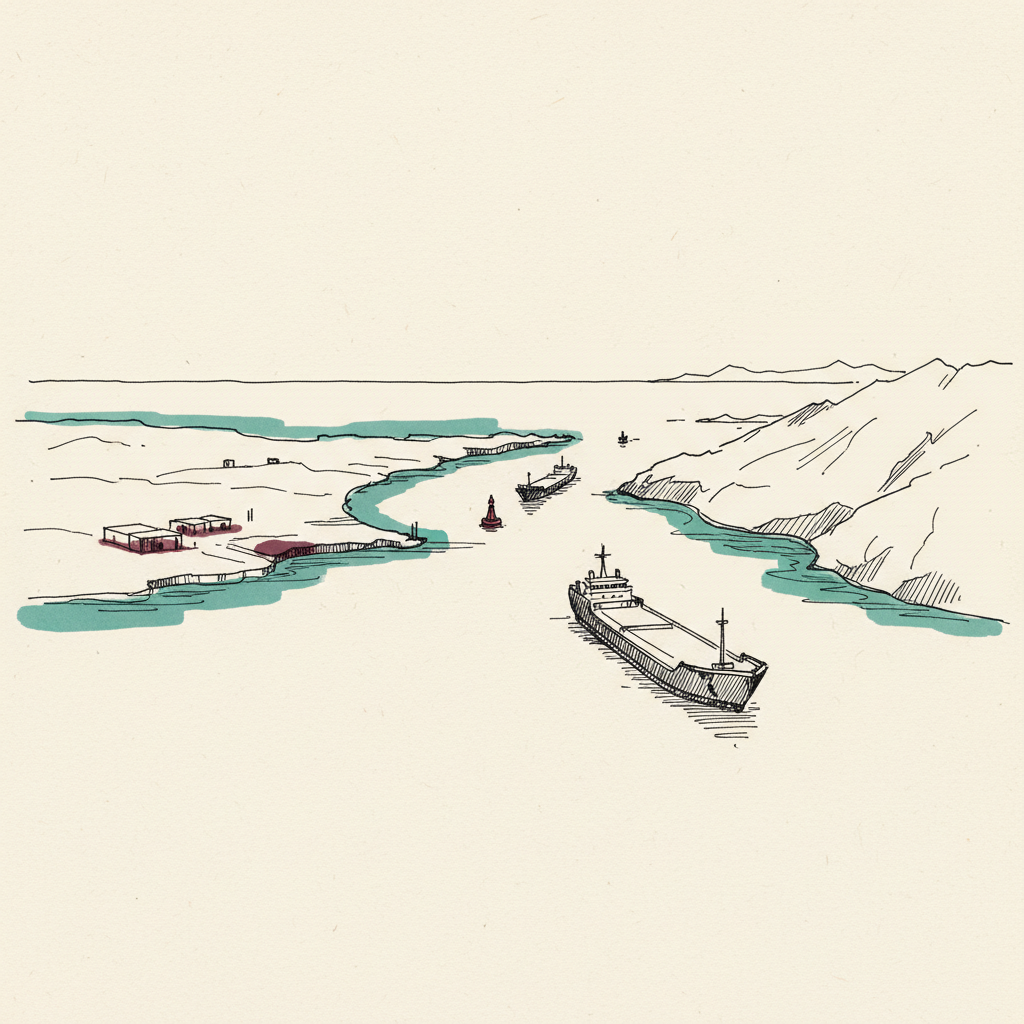
IRGC-controlled shallow channel between Larak and Qeshm islands; Iran's dark fleet bypass route.
Last refreshed: 15 June 2026 · Appears in 1 active topic
Are the Larak-Qeshm mines cleared enough for tankers to transit safely?
Timeline for Larak-Qeshm
Mentioned in: Kpler logs three ships a day in 'open' Hormuz
Iran Conflict 2026Mentioned in: Iran and US name Hormuz two ways
Iran Conflict 2026Mentioned in: CENTCOM logs 70 Hormuz vessel redirections
Iran Conflict 2026Cooper: 90% of Iran's mines cleared
Iran Conflict 2026Mentioned in: Brent settles $105.30 with no fresh seizure
Iran Conflict 2026Background
Larak-Qeshm is a shallow-water corridor in the eastern Strait of Hormuz, running between Larak Island (26°51′N 56°21′E) and Qeshm Island in Hormozgan Province, Iran. The narrowest navigable passage in the strait of Hormuz lies approximately 24 nautical miles across, between Larak and Oman's Great Quoin Island. Iran established a floating oil export terminal at Larak Island in June 1986, after Iraqi airstrikes made Kharg Island too exposed during the Iran-Iraq War; Iraqi aircraft subsequently bombed Larak in November-December 1986. Chinese-made HY-2 Silkworm surface-to-surface missiles were placed on the island's military base in 1987. Qeshm Island, to the north-west, is the largest island in The Persian Gulf and houses an IRGC logistics hub alongside a designated free trade zone.
During the 2026 Iran conflict, the corridor became the primary bypass route for Iranian oil tankers avoiding CENTCOM port-interdiction orders. IRGC-linked media published a mine danger chart on 9 April 2026, directing inbound vessels north of Larak and outbound vessels south. The chart simultaneously functioned as a deterrent against CENTCOM mine-clearance vessels entering The Channel and as a legal admission that mines had been laid. Windward Maritime Intelligence identified 16 dark tankers holding in The Channel as of 10 June 2026, including two VLCCs, one Suezmax, and one Aframax. Admiral Brad Cooper testified at the Senate Armed Services Committee on 14 May that US forces destroyed more than 90 per cent of Iran's inventory of 8,000 naval mines through over 700 airstrikes, though the claim covers mines prevented from deployment rather than already-placed devices.
A US-Iran framework agreement announced on 14 June 2026 aims to reopen the strait as a toll-free corridor, though Iran's framing of the same arrangement as a "service cost" corridor leaves the operative gap unresolved. The Larak-Qeshm channel is the most sensitive sub-zone: its mine chart, IRGC inspection regime, and residual dark fleet staging make it the last section of the strait where Commercial shipping remains cautious even after a declared ceasefire.
What happened to Hormuz shipping after the June 2026 ceasefire?
Are there still Iranian mines in the Larak-Qeshm channel?
Why did Iranian tankers use the Larak-Qeshm route instead of the main Strait?
Did Iran mine the Larak-Qeshm channel?
How are Iranian oil tankers avoiding the US blockade in the Strait of Hormuz?
What is the Larak-Qeshm corridor and why does it matter for Hormuz shipping?
Where is Larak Island and why does it matter for the Iran conflict?

Written with AI from Lowdown's published reporting. Not individually reviewed by an editor. Updated 15 June 2026. Editorial standards.