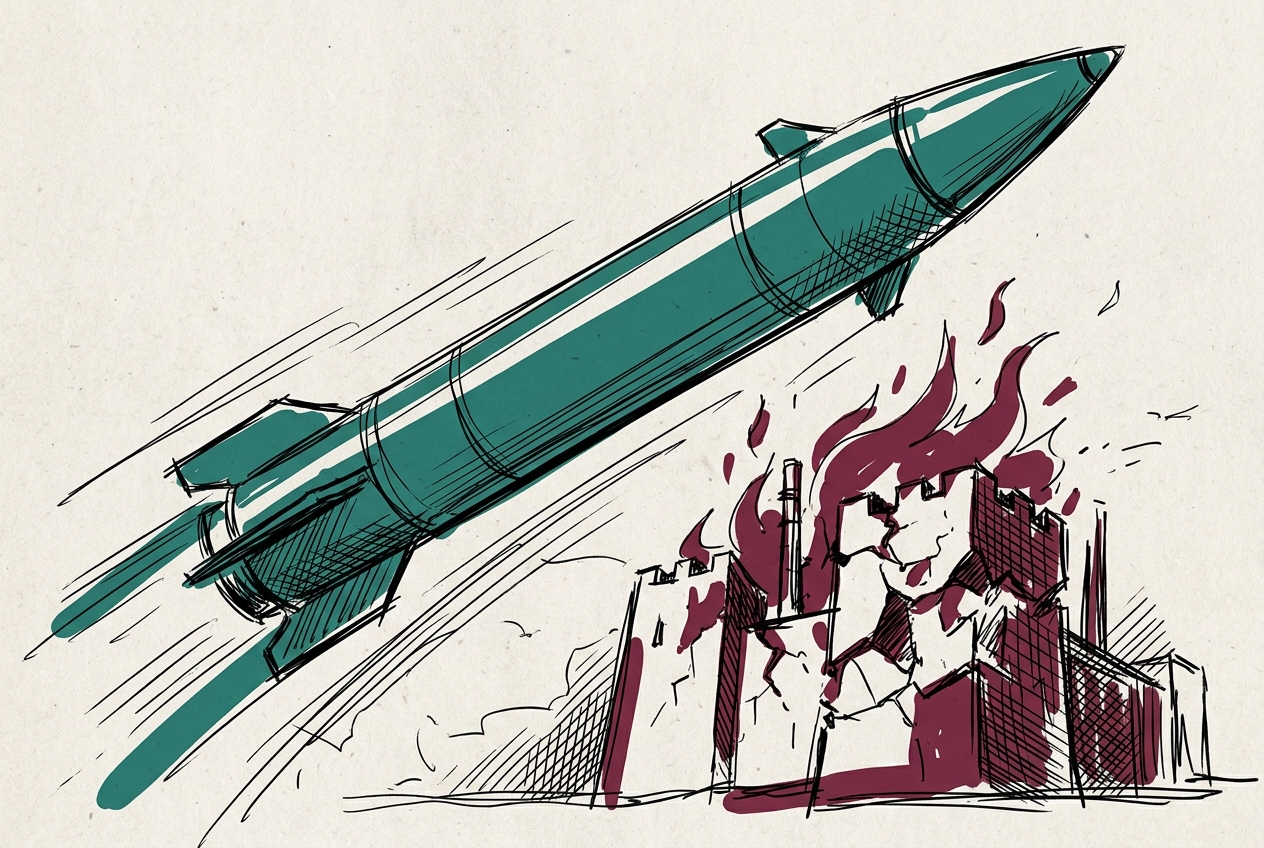
Kheibarshekan
Iranian solid-fuelled Ballistic missile ('fortress buster'); struck Haifa refinery in 'oil for oil' retaliation, March 2026.
Last refreshed: 13 April 2026 · Appears in 1 active topic
Iran says its best missiles haven't been fired yet; what's worse than the Kheibarshekan?
Timeline for Kheibarshekan
Mentioned in: US carriers slip out of strike range
Iran Conflict 2026Mentioned in: IRGC fires 70th wave, commanders falling
Iran Conflict 2026Mentioned in: Debris hits 400m from al-Aqsa Mosque
Iran Conflict 2026Mentioned in: IRGC fires 66th wave in 21 days
Iran Conflict 2026Mentioned in: Interceptors fail at Dimona and Arad
Iran Conflict 2026Background
The Kheibarshekan ("fortress buster") is a solid-fuelled medium-range Ballistic missile developed by the IRGC Aerospace Force with an estimated range of 1,450 km. First unveiled in 2022, it has become one of the most frequently used weapons in Iran's Operation True Promise 4, appearing in strike waves from the 8th through the 70th.
Its most consequential use came on 8 March 2026, when the IRGC launched Kheibarshekan missiles at Israel's Bazan oil refinery in Haifa, the country's largest, processing 197,000 Barrels Per Day. Iran explicitly framed the strike as "oil for oil" retaliation for Israeli attacks on Tehran's fuel infrastructure. The missile has since been used alongside heavier systems including Khorramshahr-4 and Qadr multi-warhead missiles in barrages that killed two elderly residents in Ramat Gan, cratered near Jerusalem's Western Wall, and penetrated air defences at Dimona.
The IRGC claimed in mid-March that most missiles fired so FAR were produced "a decade ago" and that newer weapons remain unused. If true, the Kheibarshekan represents a mid-generation system being expended in volume while Iran preserves more advanced capabilities. Its solid-fuel propulsion gives it faster launch preparation than liquid-fuelled alternatives, making it harder to pre-empt with satellite surveillance.
What is the Kheibarshekan missile?
Did Iran hit Haifa with a Kheibarshekan?
How many times has Iran fired the Kheibarshekan?
Can Israel intercept the Kheibarshekan?
Why is solid fuel important for missiles?
Does Iran have better missiles than the Kheibarshekan?


