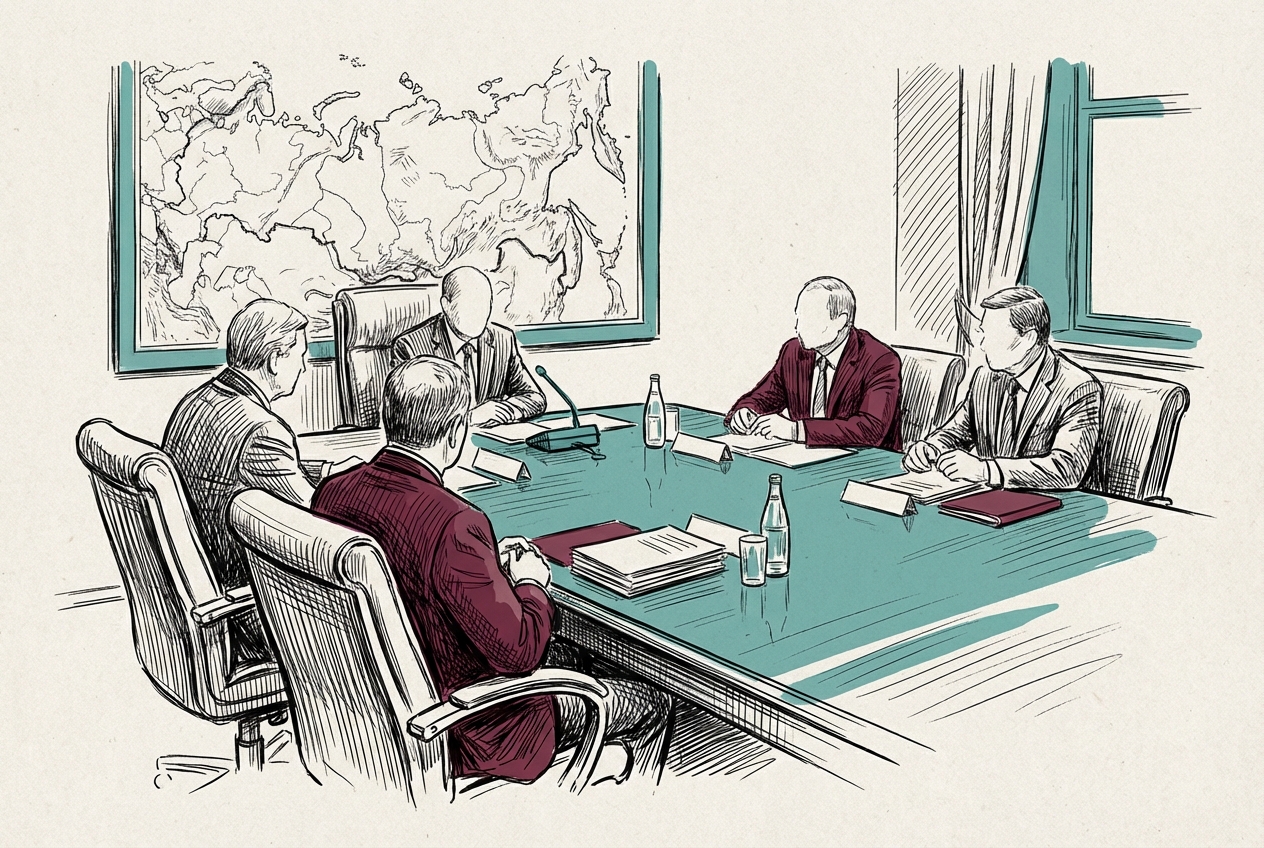
Khatam al-Anbiya Central Headquarters
Central Command of Iran's armed forces, ranking above both the IRGC and Artesh.
Last refreshed: 3 September 2026 · Appears in 1 active topic
Has Iran's second Hormuz closure declaration shifted the operational reality or only the rhetoric?
Timeline for Khatam al-Anbiya Central Headquarters
Attributed with laying fresh mines
Iran Conflict 2026: Iran says the swept lanes are minedMentioned in: Iran claims 100 nations, confirms two
Iran Conflict 2026Mentioned in: 55 ships cross the strait Iran shut
Iran Conflict 2026Declared the Strait of Hormuz closed on 20 June and ordered commercial vessels to stay clear
Iran Conflict 2026: IRGC declares Hormuz shut a second timeClaimed significant damage to US destroyers from 7-8 May attacks near Bandar Abbas
Iran Conflict 2026: F/A-18 disables tankers via smokestack on 8 MayBackground
Khatam al-Anbiya Central Headquarters is the central entity in the command chain of Iran's armed forces, making operational military decisions and coordinating between the regular Army (Artesh) and the Islamic Revolutionary Guard Corps (IRGC). Named after a Quranic title of the Prophet, it precedes both the IRGC and the Artesh in the command chain and directs combined-arms operations, including ballistic-missile campaigns and drone-wave offensives. It is distinct from Khatam al-Anbiya Construction Base, the IRGC's engineering and economic conglomerate, though both share the founding name.
Since the conflict began, the headquarters has directed Operation True Promise 4, which reached its 70th wave by late March despite the loss of four senior figures in a single week, suggesting pre-delegated authority or distributed command. Its most significant escalation threat came when it counter-warned that any strike on Iranian Energy infrastructure would trigger attacks on all energy, IT, and desalination infrastructure belonging to the US and its allies in the region.
On 19 April 2026, following the USS Spruance's seizure of the Iranian cargo ship Touska, Khatam al-Anbiya issued a written retaliation warning calling the vessel-taking a Ceasefire breach, the clearest signal that the command does not accept the ceasefire architecture as binding. The headquarters also claimed significant damage to US destroyers from attacks near Bandar Abbas on 7-8 May 2026.
On 20 June 2026, Khatam al-Anbiya issued its second Hormuz closure declaration of the war, calling it 'the first step of response to the enemy's breach of trust'. The stated grounds were that Israeli strikes in Lebanon constituted a breach of Article 1 of the Islamabad MoU. IRGC boats ordered all Commercial shipping to stay clear. CENTCOM rejected the closure, with spokesman Captain Tim Hawkins stating 'Iran does not control the strait of Hormuz', and reported 55 transits through the Oman route during the declared closure period. The first closure declaration had come on 11 June, also rejected by CENTCOM.
The pattern of dual command tracks, headquarters issuing counter-orders while the Foreign Ministry pursues diplomatic channels, remains the defining structural feature of Iran's wartime posture. Whether Khatam al-Anbiya's closure declarations carry operational weight or serve as political signalling is the question CENTCOM's transit counts are designed to answer.
What is Khatam al-Anbiya?
What did Khatam al-Anbiya say about the USS Spruance Touska seizure?
What did Khatam al-Anbiya threaten in March 2026?
How does Khatam al-Anbiya differ from the IRGC?
How many attack waves has Khatam al-Anbiya launched in 2026?
What is Khatam al-Anbiya Central Headquarters and who controls it?
Why did Iran's military issue a ceasefire counter-order in April 2026?
How has Iran's military maintained attack capability despite losing senior commanders?
What infrastructure did Iran threaten to attack in the Gulf if its energy sites were struck?
What is Khatam al-Anbiya Central Headquarters?
Why did Iran declare the Strait of Hormuz closed in June 2026?
How does Khatam al-Anbiya Central Headquarters differ from the IRGC?
Did Khatam al-Anbiya accept the Islamabad ceasefire deal?
What infrastructure did Iran threaten to attack if its energy sites were struck?


