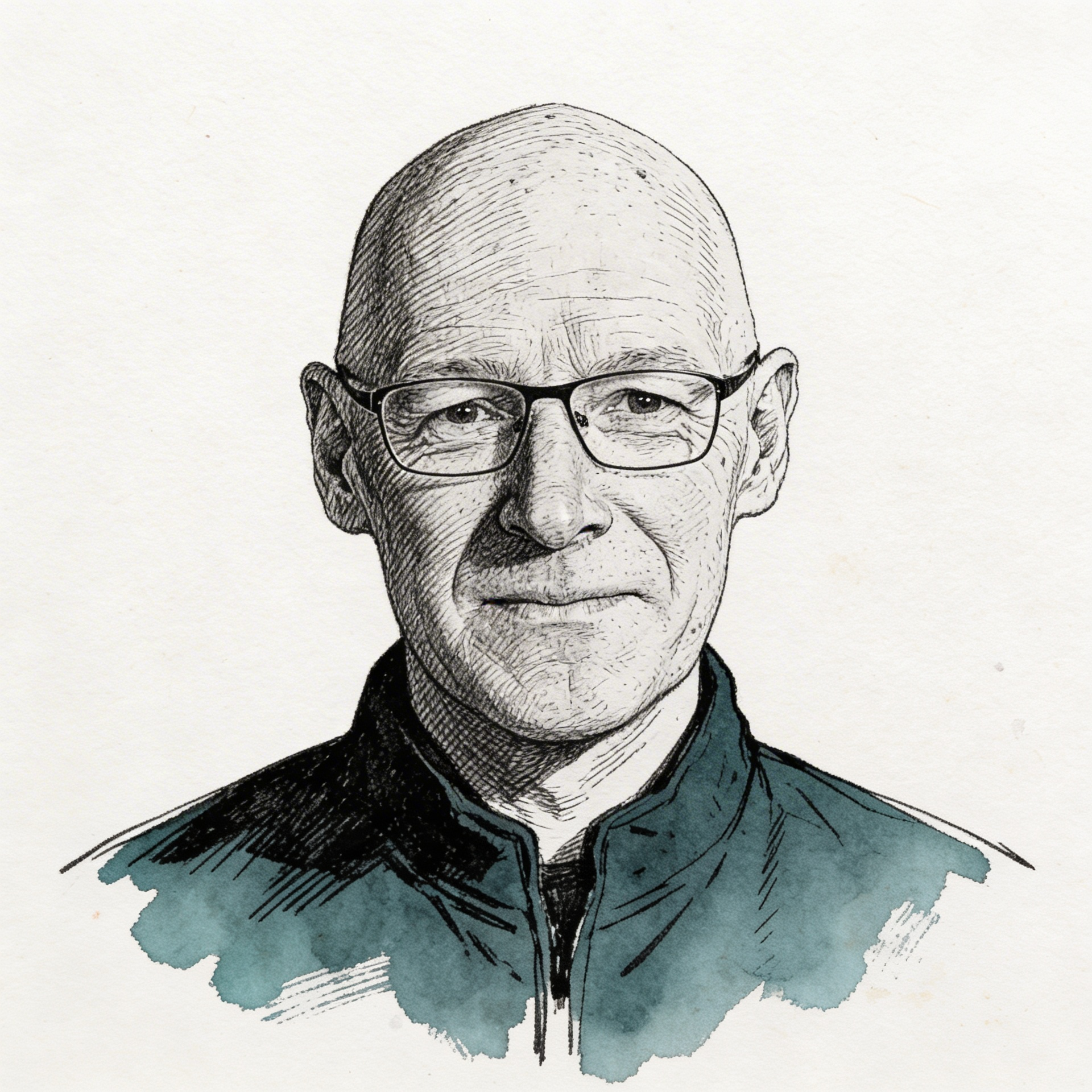
John Swinney
Scottish First Minister; SNP leader seeking independence referendum despite missing his own 65-seat trigger.
On 22 September 2026 Holyrood backed John Swinney's right-to-decide motion 84 to 18; all 17 Scottish Labour MSPs supported it once Labour had added its own child-poverty wording.
Last refreshed: 7 October 2026 · Appears in 1 active topic
Can Swinney assemble a working government without an independence mandate?
Timeline for John Swinney
Moved the right-to-decide motion
UK Local Elections 2026: Marra's MSPs vote for right to decideBurnham rules out a Scottish vote
UK Local Elections 2026Tabled motion citing largest-ever pro-independence Holyrood majority; conceded no secret plan if Westminster refuses
UK Local Elections 2026: Holyrood demands a vote it cannot forceSwinney's Section 30 ask, trigger missed
UK Local Elections 2026Mentioned in: Findlay refuses to quit Tory leadership
UK Local Elections 2026Background
John Swinney has been First Minister of Scotland and leader of the Scottish National Party since May 2024, when he succeeded Humza Yousaf. He served as Deputy First Minister under Nicola Sturgeon and as Finance Secretary for over a decade. He represents Perthshire North.
The SNP won 58 seats at the Holyrood election of 7 May 2026 and governs with 58 of 129 seats. Swinney's referendum plan depends on a Section 30 order, which only the UK Government can make under the Scotland Act 1998. Downing Street refused one on 26 May 2026, and Andy Burnham ruled one out on 7 July.
Swinney wins Labour votes for self-determination
Swinney's motion of 22 September 2026 asserted Scotland's right to choose its own future. Before the main vote Michael Marra, Scottish Labour's new leader, amended it to make child poverty "an immediate national priority", and MSPs accepted that change 91 to 12. They then approved the motion 84 to 18: SNP, Labour and Green members in FAVOUR, Scottish Conservatives and Scottish Liberal Democrats opposed. None of Reform UK's 17 MSPs took part in any of the five divisions.
The wording echoes the Claim of Right and does not commit Labour to an independence referendum. Burnham told Scottish Labour MPs in July that a Section 30 order would not be granted under him, and offered enhanced devolution.
Swinney seeks a Section 30 order
On 7 May 2026 the SNP won 58 of Holyrood's 129 seats, seven below the 65-seat threshold Swinney had named as his trigger for a 2028 independence referendum. Sworn in on 14 May, he confirmed a Section 30 request and a draft referendum bill within 100 days.
On 26 May Holyrood voted 72 to 55 for his motion demanding the order. It rested on "the largest pro-independence majority ever elected", the combined SNP and Green bloc. Downing Street rejected it the same day through a spokesperson, saying its focus was "delivery, not division". Swinney has conceded he has no "secret plan" if Westminster refuses.