Skip to content
Briefings are running a touch slower this week while we rebuild the foundations.See roadmap
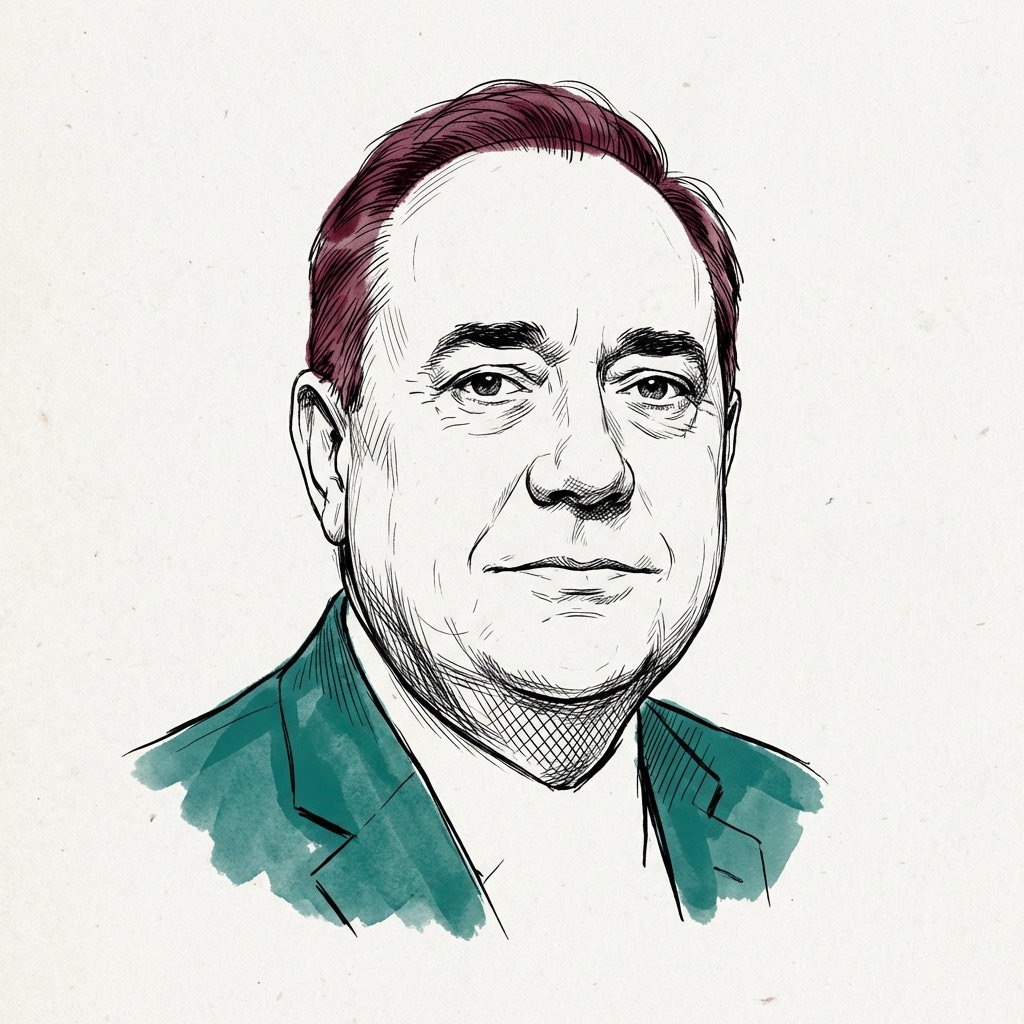
Alex Salmond
PersonGB

Alex Salmond

Former Scottish First Minister (2007-2014); delivered 2011 SNP majority and 2014 independence referendum; died 2024.

Last refreshed: 22 May 2026 · Appears in 1 active topic

Key Question

Why does Alex Salmond's 2011 majority matter to Scotland's 2026 election?

Timeline for Alex Salmond

View full timeline →
Common Questions
When did Alex Salmond die?
Alex Salmond died in October 2024 while in North Macedonia. He was 69 years old.Source: Multiple news sources, October 2024
How many seats did the SNP win in the 2011 Holyrood election under Alex Salmond?
In the 2011 Holyrood election, Salmond led the SNP to 69 seats — an outright majority widely considered impossible under the Additional Member System. It was the first SNP outright majority.Source: Scottish Parliament
Did Alex Salmond lead the 2014 Scottish independence referendum?
Yes. Salmond led the campaign for Scottish independence in the 2014 referendum, which resulted in a 55.3% No vote. He resigned as First Minister and SNP leader the following day.Source: Scottish Government / Electoral Commission
Why is Alex Salmond referenced in 2026 Scottish election coverage?
Salmond's 2011 SNP outright majority is the closest historical parallel to what Electoral Calculus projects for 2026, where the SNP is forecast to win 67 seats. Both majorities, if achieved, create pressure for an independence referendum.Source: Electoral Calculus MRP, April 2026
Why is Alex Salmond referenced in 2026 Scottish politics if he is dead?
Salmond is referenced as the historical precedent for SNP majority government. His 2011 Holyrood majority was the last time the SNP won outright, and that majority produced the 2014 independence referendum that Swinney is now trying to replicate via a Section 30 order.
What did Alex Salmond achieve for Scottish independence?
Salmond won the SNP's first and only outright Holyrood majority in 2011 with 69 seats, negotiated the Edinburgh Agreement with David Cameron, and delivered the 2014 independence referendum, which returned 55.3% No.
How did the 2011 SNP majority happen under a proportional system?
The Additional Member System uses both constituency FPTP and regional-list seats. In 2011 the SNP swept constituency seats so decisively that the compensatory regional-list mechanism could not prevent an outright majority; analysts describe it as structurally improbable rather than impossible.
What was the Edinburgh Agreement in Scottish independence history?
The Edinburgh Agreement, signed in October 2012 by Salmond and David Cameron, was the legal framework under which Westminster granted a Section 30 order, giving the Scottish Parliament authority to legislate for the 2014 referendum.

Background

Alex Salmond served as First Minister of Scotland from 2007 to 2014, leading two SNP governments. In 2011 he won the SNP's first and only outright Holyrood majority under the Additional Member System, securing 69 seats in a result widely considered structurally impossible. That majority enabled the 2014 Scottish independence referendum, which returned a 55.3% No vote under the Edinburgh Agreement. He resigned as First Minister and SNP leader following the result. Salmond died in October 2024 while in North Macedonia; he is referenced in Lowdown coverage as a historical figure.

After his 2014 resignation Salmond returned to Westminster as MP for Gordon (2015-2017), then founded the Alba Party in 2021 following a highly publicised falling-out with his successor Nicola Sturgeon. He is referenced in 2026 coverage as the historical parallel for John Swinney's independence strategy: the 2026 Electoral Calculus MRP projects the SNP at 67 seats, recalling, though not matching, the 2011 achievement that produced the independence referendum. Swinney has since submitted a Section 30 request to Downing Street despite falling seven seats short of his own stated 65-seat trigger.

Salmond's significance lies in establishing that majority government within a proportional Holyrood system is achievable and can unlock constitutional change. His 2014 referendum set the template that Swinney now follows, making the Edinburgh Agreement negotiation of 2012 the precedent for any future Section 30 discussion.

Source Material