Skip to content
You can now search across every topic, entity and event.What's new
Global South
Concept

Global South

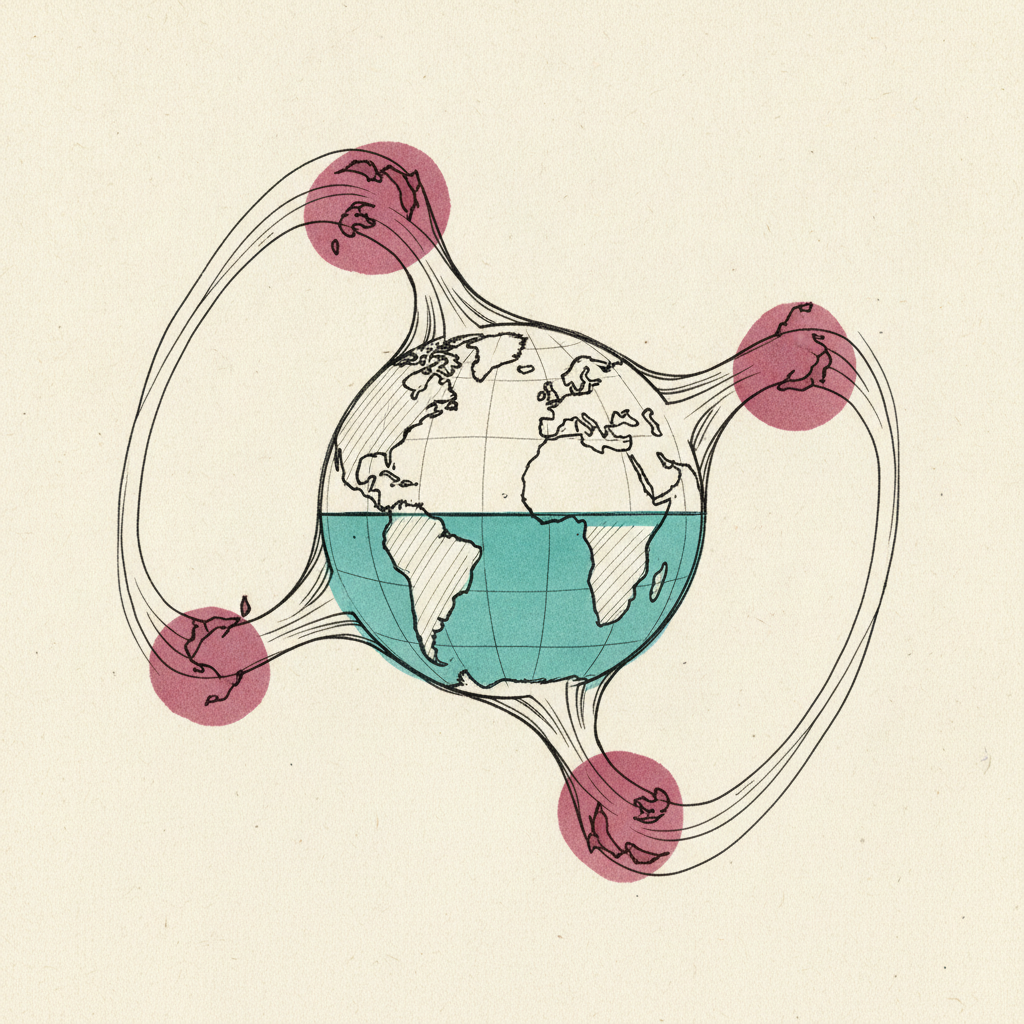
Loose coalition of developing nations in Africa, Asia, and Latin America asserting non-aligned foreign policy independent of Western or Russian blocs.

Last refreshed: 17 June 2026

Key Question

Is the Global South a coherent bloc or a rhetorical label that obscures deep divergence?

Timeline for Global South

View full timeline →

Background

The Global South is a geopolitical shorthand for the roughly 130 developing and middle-income states concentrated in Africa, Asia, Latin America, and Oceania that emerged from colonialism in the twentieth century and have historically positioned themselves outside the Cold War blocs. The term gained currency in the 1970s as an alternative to the value-laden Third World label and has been revived since the 2022 Ukraine war as shorthand for the group of states that declined to align with Western sanctions pressure on Russia. The Global South is not a formal institution with defined membership, but its principal collective vehicles are BRICS (Brazil, Russia, India, China, South Africa, plus newer members), the G77 (a UN negotiating bloc of over 130 developing states), and the Non-Aligned Movement (NAM). These bodies share overlapping memberships and often coordinate bloc positions at the UN General Assembly and multilateral forums, though bilateral divergence is common.

The concept's analytical utility lies in the convergence of interests across otherwise heterogeneous states: scepticism of Western-led sanctions regimes, preference for multipolarity, concern about the dollar's dominance in trade settlement, and demand for greater representation in international financial institutions such as the IMF and World Bank. These shared positions do not translate into a coherent Foreign Policy -- India and China, both major Global South voices, are strategic rivals -- but they do create a consistent pattern of abstentions and qualified-support votes in UN bodies when the question involves Western-led interventions or sanctions. The Global South's weight in multilateral forums has grown as the group now accounts for roughly 60 per cent of world GDP at purchasing-power parity and a larger share of future growth.

In the context of the 2026 Iran conflict, Global South forums became the principal diplomatic theatre where Iran sought to frame the Hormuz crisis as Western aggression against a developing country. BRICS meetings in particular served as platforms where Iranian officials argued that the US naval blockade and secondary sanctions amounted to economic coercion of the entire Global South, and where they solicited political solidarity from India, China, Brazil, and South Africa. The bloc's actual response was fractured: China supported Iran diplomatically while purchasing discounted oil; India maintained pragmatic commercial ties with both Iran and the United States; Brazil and South Africa issued general statements of concern without taking positions on the blockade. The divergence illustrated the bloc's structural limitation: shared anti-hegemonic rhetoric does not reliably translate into coordinated action when members have conflicting bilateral interests at stake.

Common Questions
What is the Global South?
Geopolitical grouping of developing and historically non-aligned states across Latin America, Africa, Asia, Oceania.Source: academic consensus
Why is Iran courting the Global South in 2026?
Tehran uses BRICS and G77 forums to build diplomatic counterweight to US sanctions and military pressure, surfaced via Araghchi at BRICS Delhi 14 May 2026.Source: Mehr News
Which states anchor the Global South diplomatically?
India, China, Brazil and South Africa anchor commercially; Iran, Russia and Venezuela use the bloc as Western counterweight.Source: BRICS membership
How does the Global South differ from Third World?
Global South emphasises political alignment over Cold War economic ranking; broader and less pejorative usage.Source: academic usage
What is the Global South and which countries are in it?
The Global South is a geopolitical term for roughly 130 developing and middle-income states in Africa, Asia, Latin America, and Oceania. It is not a formal bloc with fixed membership but groups states that share a history of colonialism and scepticism of Western-led international institutions. Main collective forums include BRICS, the G77, and the Non-Aligned Movement.Source: UN G77 / BRICS
Is the Global South the same as BRICS?
No. BRICS is one institutional vehicle within the broader Global South concept. The G77 (130+ states) and the Non-Aligned Movement are larger forums. BRICS has a fixed membership and holds annual summits; G77 and NAM are looser UN negotiating blocs.Source: BRICS / G77
Why do Global South countries not support Western sanctions on Russia or Iran?
Most Global South states prioritise sovereign non-interference, dislike the dollar's dominance in trade settlement, and resent Western-led sanctions that affect their own trade and energy costs. Their abstentions are not endorsements of Russia or Iran but assertions that the Western framing of these conflicts does not represent their interests.Source: UN General Assembly voting records
Does India lead the Global South?
India positions itself as a voice for the Global South and has hosted G20 and G77 events with that framing. However, it is a strategic rival of China (also a major Global South actor) and maintains close economic ties with both the United States and Russia simultaneously, making it a balancer rather than a bloc leader.Source: Indian MEA
How much economic weight does the Global South have?
Global South states collectively account for roughly 60 per cent of world GDP measured at purchasing-power parity, and are responsible for the majority of projected global growth through 2050. This share has grown significantly since the 1990s, shifting the multilateral balance of economic weight away from the G7.Source: IMF World Economic Outlook
