First past the post
Plurality voting system for Westminster and English elections: most votes in each seat wins.
Labour will fight the next general election promising to replace First past the post, Prime Minister Andy Burnham said on 29 September 2026. He named no successor system, and Kemi Badenoch rejected the plan on 2 October.
Last refreshed: 7 October 2026 · Appears in 1 active topic
Is first past the post on the way out after John Major questioned it?
Timeline for First past the post
Mentioned in: Burnham pledges to change voting system
UK Local Elections 2026Mentioned in: Craig wins Manchester in its first second round
UK Local Elections 2026Mentioned in: Clacton's ballot paper splits the right four ways
UK Local Elections 2026Right split may hand Burnham Makerfield
UK Local Elections 2026Mentioned in: Reform short 894 seats on MRP
UK Local Elections 2026Background
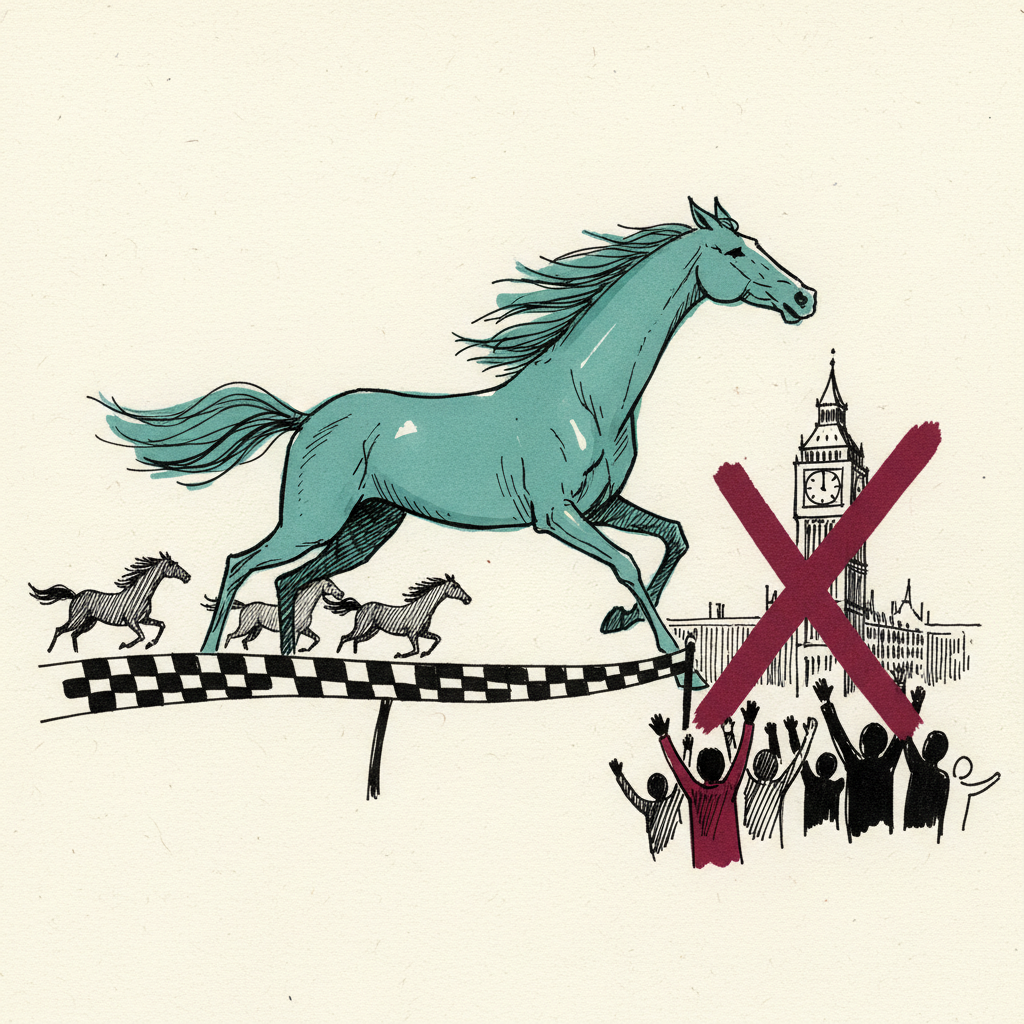
Under First past the post, each constituency elects one member, and the candidate with the most votes wins whether or not that is a majority. Voters mark a single cross. No preferences transfer and no seats are topped up, so a party's total depends on where its votes fall rather than how many it wins nationally.
It elects The House of Commons and most English councils. Other UK contests use other systems: the Additional Member System at Holyrood, the single transferable vote for Scottish councils and the Northern Ireland Assembly, Closed-list proportional representation for the Senedd since 2026, and the Supplementary Vote for English mayors and police commissioners from 18 June 2026. Voters rejected the Alternative Vote for Westminster in the 2011 referendum by 67.9% to 32.1%.
Supporters credit the system with clear local links and single-party governments. Critics point to large gaps between vote shares and seats, which widen as support splits between more parties, the argument Sir John Major took up in March 2026.
Labour commits to replacing plurality voting
Burnham told the Liverpool conference on 29 September 2026 that Labour's next manifesto would pledge a new voting system, one under which, he said, "everyone's vote counts and everyone's voice is heard". Delegates then backed, on a show of hands, a motion demanding proportional representation for general elections. Burnham set up a National Commission on Electoral Reform but gave it no chair or named alternative.
The system had served him personally. A Survation poll taken 18 to 22 May put him three points clear in the Makerfield by-election, with Restore Britain's 7% roughly the size of that gap; under plurality rules a divided right can lose a seat it would otherwise win. The Conservatives remain opposed.
A former Conservative premier questioned its validity
Delivering the Attlee Foundation Lecture on 18 March 2026, Sir John Major told his King's College London audience that recent results had "thrown into doubt" whether First past the post kept its "continuing validity". He did not endorse proportional representation.
The timing gave his doubts a test. On 7 May, England's councils voted under plurality rules while Scotland used the Additional Member System and Wales held its first Senedd election by Closed-list proportional representation. A week earlier, Parliament had already moved English mayoral and police commissioner contests off First past the post: Royal Assent for the English Devolution and Community Empowerment Act 2026 on 29 April restored the Supplementary Vote from 18 June, undoing the 2022 switch.
Fragmentation rewards the undivided side
Plurality voting punishes parties that share a pool of voters. Rupert Lowe launched Restore Britain on 13 February 2026 and stood it only around Great Yarmouth in May, where any overlap with Reform UK's vote risked handing seats to Labour or the Conservatives.
The same pressure ran on the left. By 7 April 2026 one poll had Labour and The Greens level on 16%, a split that under single-member seats can let a third party through on well under half the vote. With five or more parties competing in many seats, small swings decide WHO wins, and seat totals can drift FAR from national shares.