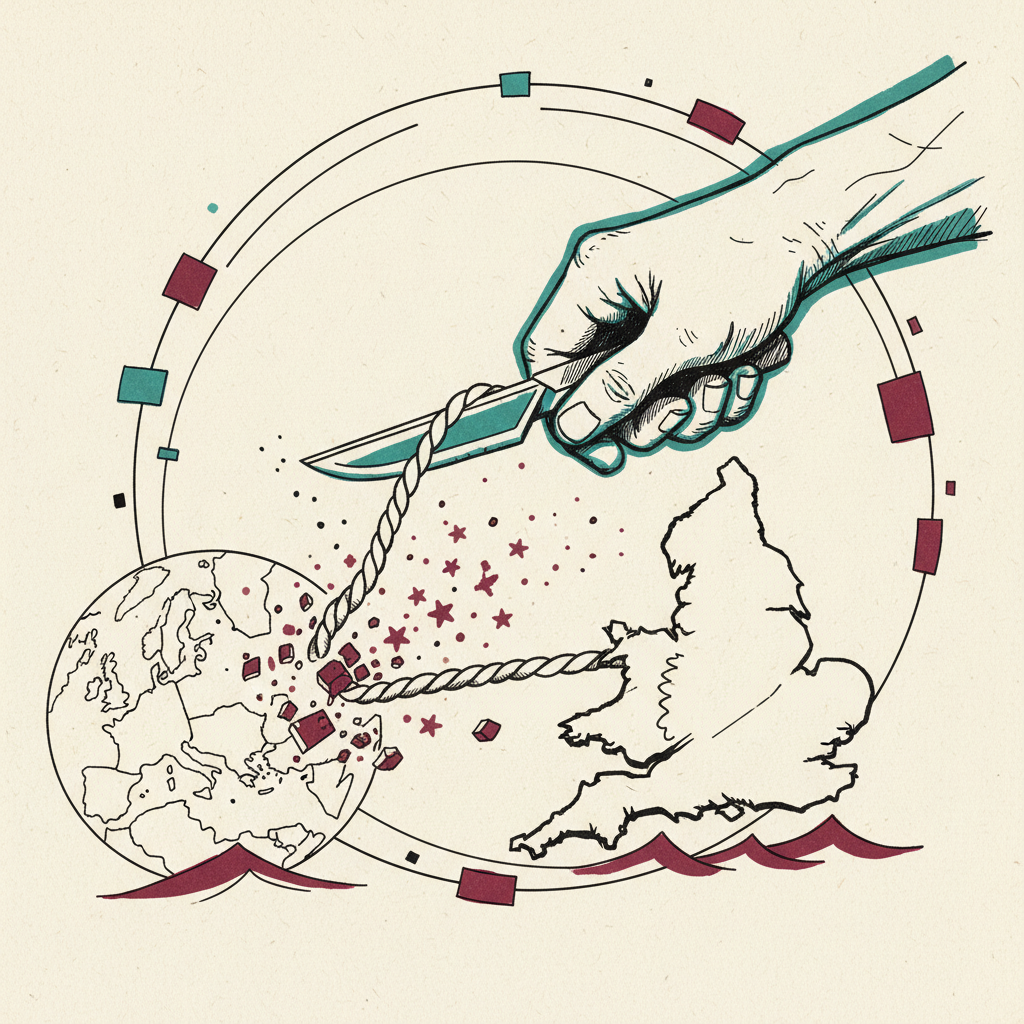
Brexit
UK's 2020 departure from the European Union after the 2016 referendum.
Six years after Brexit, the UK's share of Horizon Europe research funding rose to 9.3% in 2024, government figures showed on 5 June 2026, still below its 2018/19 level before the UK left the EU.
Last refreshed: 7 October 2026
How does Brexit explain the political lineage of Reform UK in 2026?
Timeline for Brexit
Mentioned in: Davey rules out a national Green pact
UK Local Elections 2026Mentioned in: Labour takes Hirst and Amble from Reform
UK Local Elections 2026Mentioned in: Open Cosmos raises €300m, no US name
UK Startups and InnovationMentioned in: UK Iran sanctions bite on 29 September
Iran Conflict 2026Mentioned in: Lib Dems take Almondbury off Reform
UK Local Elections 2026Background
Brexit is the United Kingdom's departure from the European Union. It followed the referendum of 23 June 2016 and was formally completed in January 2020, taking the UK out of the EU, its single market and its customs union.
Its political legacy runs from UKIP through the Brexit Party to Reform UK, with Nigel Farage at the centre of each. The Commons standards inquiry opened on 13 May 2026 into an undeclared £5m personal gift to Farage concerned a donor who had funded both the Brexit Party and Reform.
When ministers scrapped DSIT, the Science department, on 20 July 2026, Whitehall comparisons returned to the Department for Exiting the European Union, created for a single withdrawal task and later wound down.
Science ties with Europe partly recover
Figures published on 5 June 2026 showed the UK's share of Horizon Europe funding rising from 5.8% in 2023 to 9.3% in 2024, worth €994m. Its share of the programme's Pillar 2 grew from 3.7% to 6.2%. The recovery remains partial: the share is still below its 2018/19 peak, before the UK left the EU.
On 29 May 2026, Science Secretary Liz Kendall signed a UK-France biomedical alliance, the first bilateral Science deal of its kind since Brexit, putting £894,000 into linking the Isambard-AI supercomputer in Bristol with France's national supercomputing centre.
Reference
When did the UK formally leave the European Union?
Recently resolved
Did Brexit cause Scottish independence to become more likely?
How does the abolition of DSIT compare to the old Brexit department?
What did Brexit do to Welsh politics?
How has Brexit affected the 2026 UK elections?
How did Scotland and Wales vote differently in the Brexit referendum?
What is the connection between Brexit and Reform UK?
Written with AI from Lowdown's published reporting. Not individually reviewed by an editor. Updated 7 October 2026. Editorial standards.