Skip to content
You can now search across every topic, entity and event.What's new
Beirut
Nation / PlaceLB

Beirut

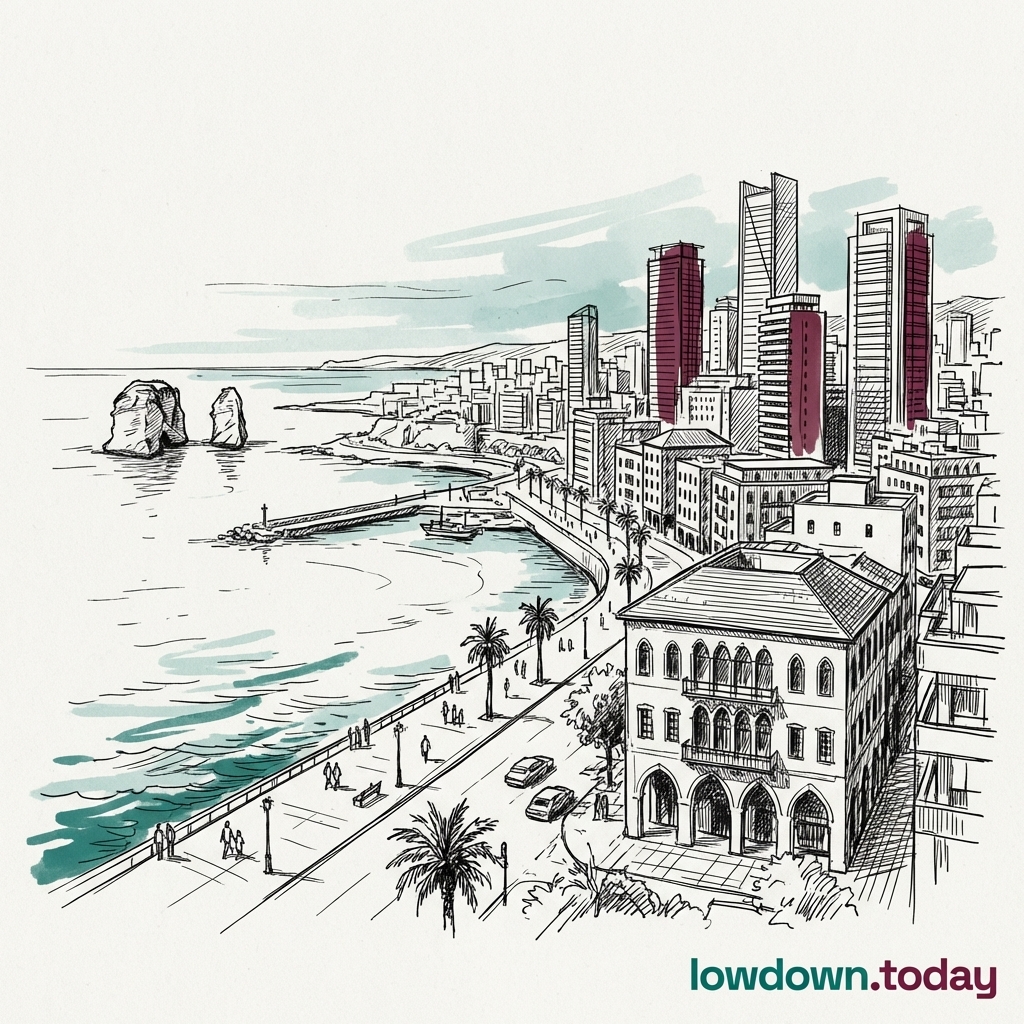
Lebanon's capital and principal port city; the city Trump's 1 June phone call to Netanyahu spared from planned Israeli strikes.

Last refreshed: 30 June 2026 · Appears in 1 active topic

Key Question

Trump's call stopped the strikes on 1 June; what did Israel plan to hit in Beirut?

Timeline for Beirut

View full timeline →
Common Questions
What is Beirut?
Beirut is Lebanon's capital and largest city, home to roughly 2.4 million people in the greater metropolitan area. Since 2 March 2026 it has been struck by Israeli forces, including central districts previously considered separate from the conflict.
Has Israel bombed central Beirut?
Yes. Since 2 March 2026, Israel struck central Beirut three times in five days: the Ramada hotel (7 March), the Aisha Bakkar neighbourhood (10 March), and the Ramlet al-Baida seafront (11 March).
What is Dahiyeh?
Dahiyeh is Beirut's southern suburb and has been Hezbollah's political and military command centre since the 1980s. It was the primary target of Israel's 2006 war and has been repeatedly struck in the current 2026 campaign.

Background

Founded by Phoenicians and shaped by Ottoman rule, the French mandate, and a 15-year civil war, Beirut has 2.4 million people in its metropolitan area. The 2020 port explosion killed over 200 people and destroyed much of the commercial waterfront; the World Bank estimated damage at $3.8-4.6 billion. Lebanon's financial collapse, which began in 2019, wiped out middle-class savings and drove emigration at a scale not seen since the civil war era. The rest of the city functioned on an informal understanding that conflict was contained to Dahiyeh, Hezbollah's southern suburb. That understanding has now ended.

From 2 March 2026, Israel struck not only Dahiyeh but central Beirut: the Ramada hotel, the Aisha Bakkar neighbourhood, and the Ramlet al-Baida seafront. On 28 March, an IDF strike killed two senior Hezbollah commanders after a record 600-projectile barrage. Over 850 people were killed and 831,000 displaced from the greater city before the 16 April 2026 Ceasefire, which frayed from day one as IDF troops held their buffer zone and strikes continued in the south. On 7 May, IDF killed Radwan Force commander Ahmed Ali Balout in Dahiyeh, the first airstrike on the Lebanese capital since the truce. On 1 June, Trump phoned Netanyahu and halted planned strikes on Beirut itself, the first documented Israeli military reversal under US pressure in 95 days; Lebanon announced a partial Ceasefire under which Hezbollah pledged to stop attacking Israel.

Beirut is the city Trump's phone call spared. Its trajectory encapsulates the Lebanon dynamic in Lowdown's coverage: a state that cannot control the armed actors on its soil, a civilian population absorbing the consequences of conflicts it did not start, and a government under PM Nawaf Salam attempting to reassert sovereignty by expelling Iran's ambassador-designate, banning Hezbollah's military operations, and ordering IRGC arrests. Israel-Lebanon talks were set for Washington on 3 June 2026.

More questions
Why did Lebanon expel Iran's ambassador?
Lebanon's PM Nawaf Salam expelled Iranian Ambassador-Designate Mohammad Reza Sheibani on 25 March 2026, part of a broader assertion of sovereignty including banning Hezbollah's military operations and ordering IRGC arrests. Hezbollah condemned the move as reckless.
What is Dahiyeh in Beirut?
Dahiyeh is Beirut's southern suburb and Hezbollah's primary command and logistics centre since the 1980s. It was the principal IDF strike target in both the 2006 war and the 2026 conflict. The 2020 Beirut port explosion damaged much of the surrounding area.
Is there a ceasefire in Lebanon?
A 10-day Israel-Lebanon ceasefire took effect on 16 April 2026, extended to approximately 15-16 May by Trump on 23 April. However, Israel struck Dahiyeh on 7 May killing a senior Hezbollah commander — the first airstrike on Beirut since the truce — raising questions about whether the Ceasefire is holding.Source: Lowdown
Who was killed in the Beirut IDF strike on 7 May 2026?
Ahmed Ali Balout, commander of Hezbollah's Radwan Force elite commando unit, was killed when IDF struck Dahiyeh, the southern Beirut suburb, on 7 May 2026. It was the first Israeli airstrike on the Lebanese capital since the Trump Ceasefire of 16 April.Source: Lowdown
Why did Lebanon expel Iran's ambassador in 2026?
Lebanon's PM Nawaf Salam expelled Iranian Ambassador-Designate Mohammad Reza Sheibani in March 2026 as part of a broader assertion of Lebanese sovereignty: the government also banned Hezbollah's military operations and ordered IRGC arrests. It was the sharpest assertion of independence from Iran in 36 years.Source: Lowdown
What happened to Beirut in the 2020 explosion?
On 4 August 2020, 2,750 tonnes of ammonium nitrate stored at Beirut port exploded, killing over 200 people, injuring 6,000, and causing $3.8-4.6 billion in damage. The port has not been fully rebuilt and no one has been held accountable. The disaster compounded Lebanon's 2019 financial collapse.
Why did Trump stop Israel bombing Beirut in June 2026?
On 1 June 2026, Trump phoned Netanyahu in an expletive-laden call and halted planned Israeli strikes on Beirut. A partial Lebanon Ceasefire followed under which Hezbollah pledged to stop attacking Israel. Trump said troops had turned around; Netanyahu confirmed IDF ground operations toward the Zaharani river would continue.Source: Lowdown Iran Conflict 2026
Has Beirut been bombed in 2026?
Yes. From 2 March 2026 Israel struck not only Dahiyeh but central Beirut, including the Ramada hotel, Aisha Bakkar neighbourhood, and Ramlet al-Baida seafront. Over 850 people were killed in the greater city. Strikes paused after the 16 April Ceasefire, then resumed on 7 May when IDF killed a Hezbollah commander in Dahiyeh. Planned strikes on 1 June were halted by Trump's direct call to Netanyahu.Source: Lowdown Iran Conflict 2026
What happened to Beirut after Trump stopped the Israeli strikes in June 2026?
Following Trump's 1 June phone call to Netanyahu halting planned strikes on Beirut, Lebanon announced a partial Ceasefire under which Hezbollah pledged to stop attacking Israel. Israel-Lebanon talks were set for Washington on 3 June. PM Nawaf Salam's government continued asserting sovereignty: it expelled Iran's ambassador-designate in March, banned Hezbollah's military operations, and ordered IRGC arrests.Source: Lowdown Iran Conflict 2026
Source Material

