Skip to content
Welcome, thoughtbot's Giant Robots listeners!Start here
US Midterms 2026
11NOV

SLF's final $43.9m: 7 of 10 targets won

3 min read
18:10UTC

The Senate Leadership Fund reported about $43.9m of spending from 27 October to 1 November, almost all against Democrats; seven of the ten it targeted won.

PoliticsAssessed
Key takeaway

SLF spent about $43.9m in its final week, and seven of its ten targets won.

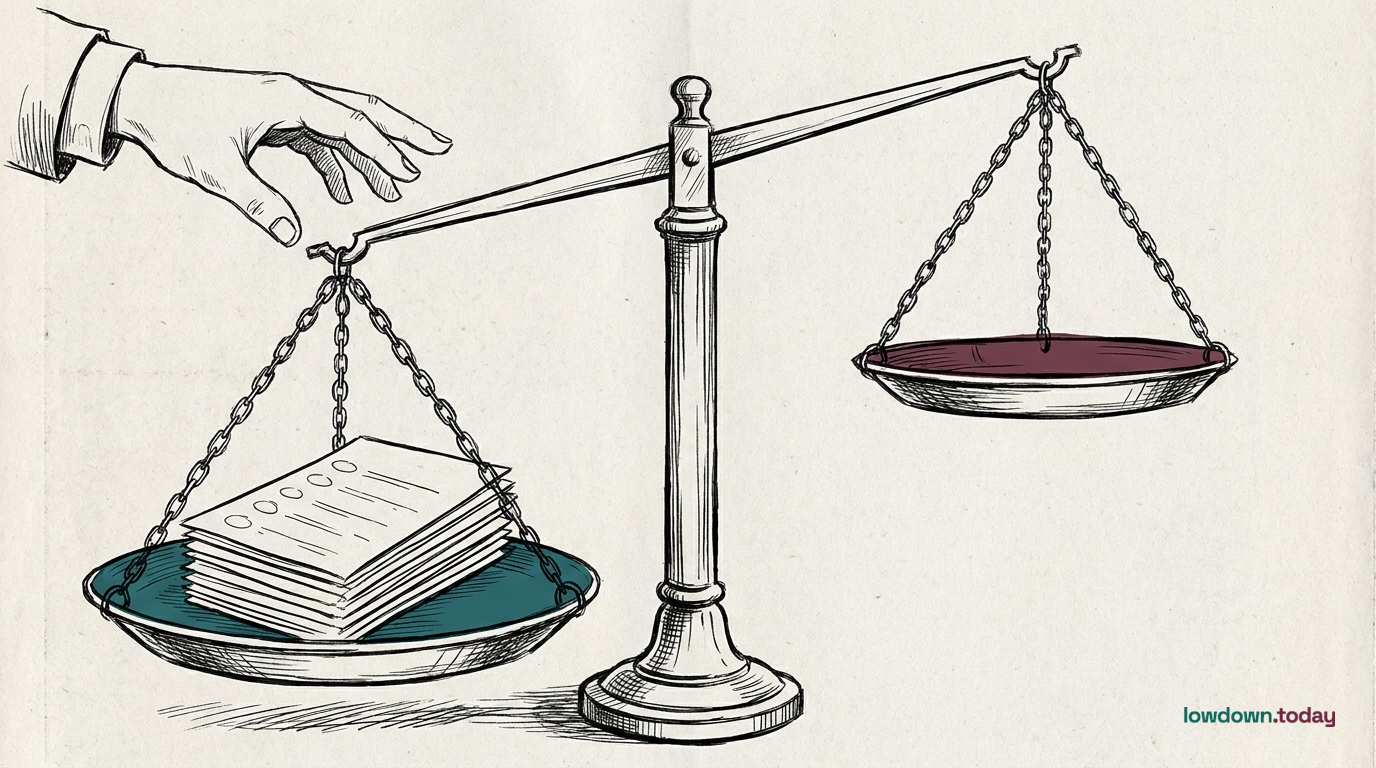
The Senate Leadership Fund (SLF), the super PAC aligned with Senate Republican leaders, reported about $43.9m of independent expenditures from 27 October to 1 November, on Lowdown's sum of its Federal Election Commission (FEC) filings⁠1. Independent expenditures are spending a group may not plan with any campaign. Almost all of it attacked Democrats. SLF had entered the final stretch with $88.42m in cash, 2.7 times that of Senate Majority PAC, its Democratic counterpart.

Seven of the ten Democrats it targeted that week won on network projections. Its largest line, $12.37m against Sherrod Brown in Ohio, followed $12.07m the week before. It added $7.65m against Josh Turek in Iowa from 27 to 30 October, $5.50m of it on media placed on 27 October alone⁠2, $4.91m against Adam Hamilton in Kansas, $4.85m against Troy Jackson in Maine, $4.60m against Annie Andrews in South Carolina after $4.06m earlier, $1.47m against Chris Pappas in New Hampshire and $1.20m against Abdul El-Sayed in Michigan.

The one target who lost was in Nebraska: SLF spent $2.40m against independent Dan Osborn, whom Senator Pete Ricketts beat 50.4% to 43.6%⁠3. Two targets remain uncalled, Mary Peltola ($1.80m) and Scott Colom ($0.67m). Lines supporting Republicans were small: $0.59m for Jon Husted and $0.45m for Ashley Hinson.

Spending against a winner does not prove the money moved nothing. In a swing this size, nobody can show what the margins would have been without it. The totals may also rise as 24-hour reports for 1 to 3 November are processed.

Deep Analysis

In plain English

A super PAC is a US political group that can raise and spend unlimited money on elections, as long as it does not plan its spending with a candidate's campaign. The Senate Leadership Fund is the largest such group on the Republican side of Senate races. In the last week before polling day it reported about $43.9m of spending, nearly all on adverts against Democratic candidates. Most of those Democrats won anyway. That does not prove the money had no effect: nobody can say what the margins would have been without it.

Deep Analysis
Root Causes

Republican Senate strategy in 2026 ran through outside groups rather than the party committee. The NRSC spent nothing with its nominees in seven Senate races in early October, leaving SLF and its state-named affiliates to carry those seats.

SLF put its largest sums into the final fortnight. Its biggest single target, Sherrod Brown, drew $12.07m in the week to 26 October and $12.37m more in the final week, against a candidate who had outraised his opponent six to one.

What could happen next?
  • Meaning

    The Republican super PAC's cash advantage sat alongside defeats for its side in seven of its ten final-week target races; the filings cannot show what the margins would have been without the spending.

  • Risk

    Totals may rise when 24-hour reports for 1 to 3 November are processed.

First Reported In

Update #23 · Democrats take the Senate and the House

NBC News· 5 Nov 2026
Read original →
Different Perspectives
University of Florida Election Lab
The lab, run by Michael McDonald, estimates about 124.3 million ballots, a raw midterm record, and turnout of about 49.4% of eligible voters, second to 2018's 50.05%. The raw record reflects population growth more than a record rate, so the late count is working through a near-2018 electorate.
Thune's critics on the right, including Senator Ron Johnson
Ron Johnson backed the failed 31-15 motion to delay Thune's re-election, after activists such as Mike Cernovich blamed the leader for the defeat. Their complaint is that Republicans could have passed the SAVE Act; in January it meets a Democratic Senate instead.
Senator John Thune
Senator John Thune
Thune was re-elected Senate Republican leader by acclamation on 10 November after a motion to delay failed 31-15. He kept the filibuster that stopped the SAVE Act, the choice his critics on the right blame for the defeat.
House Republicans under Jim Jordan
House Republicans elected Jordan minority leader by 106 votes to 73 over Steve Scalise on 10 November, after Speaker Mike Johnson declined to run. They replaced the leadership that lost the majority, while Senate Republicans kept theirs.
Donald Trump
Donald Trump
Trump asked on Truth Social on 9 November whether anybody believed the election "was honest" and blamed the machines, having told The New York Times on polling night he would accept the results. No Republican campaign had sued over a 2026 result by 10 November, so the claim has no case behind it.
Judge David O. Carter
Carter closed the Justice Department's suit over about 20,000 California mail ballots on 10 November after the department withdrew it, writing that the suit "attempted to disrupt an ongoing election". The closure leaves the department with no court order touching a 2026 California ballot.

Written with AI from Lowdown's published reporting. Not individually reviewed by an editor. Editorial standards.