Skip to content
Welcome, thoughtbot's Giant Robots listeners!Start here
US Midterms 2026
7SEP

Colorado shuts last Democratic map route

2 min read
13:32UTC

Colorado's Supreme Court struck down the Initiative 240 ballot package on 29 June, closing the final Democratic route to redraw a congressional map before November.

PoliticsDeveloping
Key takeaway

Colorado's ruling ends the last Democratic attempt to redraw a congressional map before November.

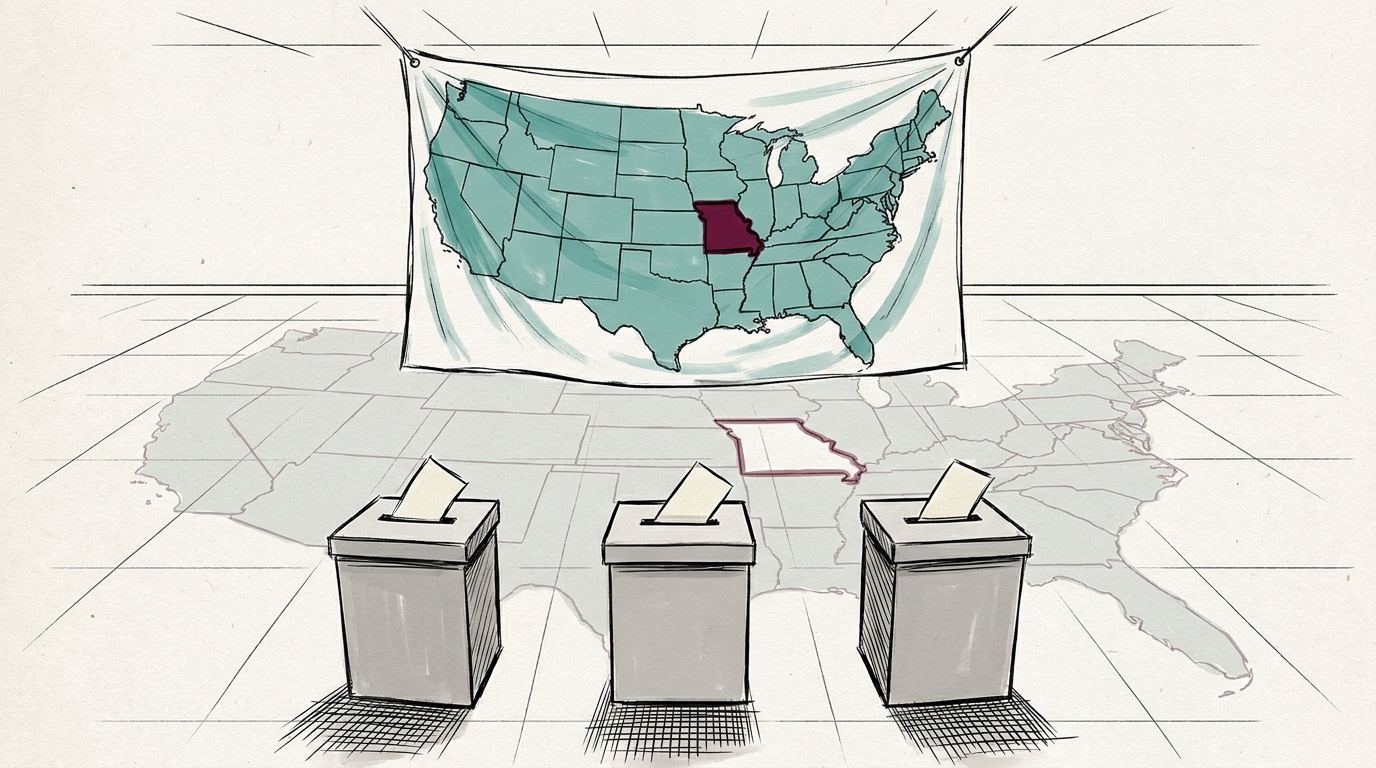
The Colorado Supreme Court unanimously blocked the Initiative 240 ballot-measure package on 29 June, ruling it breached the state's single-subject rule by trying to change the constitutionally mandated redistricting cycle. Initiative 240 would have let voters redraw Colorado's eight congressional districts. Chief Justice Monica Marquez wrote that the proposed maps would have favoured Democrats in seven of eight seats, up from four; the delegation stays split 4-4.

The ruling closes the last live Democratic redistricting track anywhere in the country for 2026. Maryland, Virginia, New York and California had already lost their mid-decade routes to a Senate veto, a court strike-down and constitutional bars, which left the Colorado ballot initiative as the only exotic path still open.

This block came on a procedural doctrine, the single-subject rule, rather than the Voting Rights Act or Callais reasoning that decided the Republican-drawn maps. The same run of summer rulings that turned away the DOJ subpoena also shut this Democratic counter-move. No mid-decade map for 2026 now remains in play.

Deep Analysis

In plain English

Colorado's constitution says a single ballot measure can only cover one subject at a time, to stop drafters from bundling unpopular changes alongside popular ones. The state's Supreme Court ruled that a Democratic-backed measure to redraw the state's congressional map broke that rule by combining several different changes into one question. Because this is a state constitutional issue, there is no route to appeal it to the US Supreme Court. Colorado's congressional delegation stays split 4-4.

Deep Analysis
Root Causes

Single-subject rules are matters of state constitutional law, which places them outside the US Supreme Court's jurisdiction over federal questions like the Voting Rights Act track running through Louisiana v. Callais. A state court's single-subject ruling has no federal appellate escape route.

Initiative 240 bundled several distinct changes, redistricting criteria, commission composition and a new appeals process, into one ballot question. Chief Justice Monica Marquez's opinion found the maps would have favoured Democrats in seven of eight seats, which gave the Court a substantive reason to enforce the procedural bar rather than overlook it.

What could happen next?
  • Precedent

    The ruling forecloses the last active Democratic mid-decade redistricting track with no federal appeal available, matching the pattern in Maryland, Virginia and New York.

First Reported In

Update #12 · Voter-data drive stalls; jobs turn soft

Colorado Public Radio· 9 Jul 2026
Read original →
Different Perspectives
Judge Adolf Zeman, Alaska Superior Court
Zeman refused to dismiss the League of Women Voters, Alaska Black Caucus and ACLU of Alaska suit over the state giving DOJ its unredacted voter list. The privacy claims now go to evidence-gathering under the Alaska Constitution.
Judge Thomas Schroeder, US District Court for the Middle District of North Carolina
Schroeder refused on 19 October to block the State Board of Elections rule that rejects mail ballots with an unsealed or missing inner envelope. He found the challengers had delayed and that relief was infeasible with voting under way, and pointed to notice-and-cure provisions as a safeguard.
Stephen Richer, Republican former Maricopa County recorder
Richer submitted a brief on 20 October supporting the voting groups on documentary proof of citizenship at registration. He takes no position on the separate 90-day voter-removal question.
Senate Leadership Fund
The Senate Leadership Fund began spending for interim Senator Darline Graham Nordone on 19 October, taking its South Carolina total to $4.06m, including $2.25m against Democrat Annie Andrews. Republicans are now paying to defend a seat in a state Donald Trump carried in 2024.
WinSenate, the ad-buying affiliate of Senate Majority PAC
WinSenate began buying Kansas airtime against Roger Marshall on 10 October and had reported $8.14m there by 20 October. Marshall held $922,088 in cash on 30 September and the NRSC gave him no party money in September, so the Democratic side is spending where the Republican committee has not.
County Board of Arlington County
Arlington says federal Polling Place Policies allowing armed agents at polling sites breach 18 USC 592, the 1865 ban on troops or armed men at an election. It reads Markwayne Mullin's 1 September remarks as confirming such a policy, and asks Judge Brinkema to keep armed federal staff from its polls and drop boxes.

Written with AI from Lowdown's published reporting. Not individually reviewed by an editor. Editorial standards.
