Skip to content
Briefings are running a touch slower this week while we rebuild the foundations.See roadmap
Russia-Ukraine War 2026
15MAR

Lockheed locks in $4.76bn Patriot run

2 min read
06:46UTC

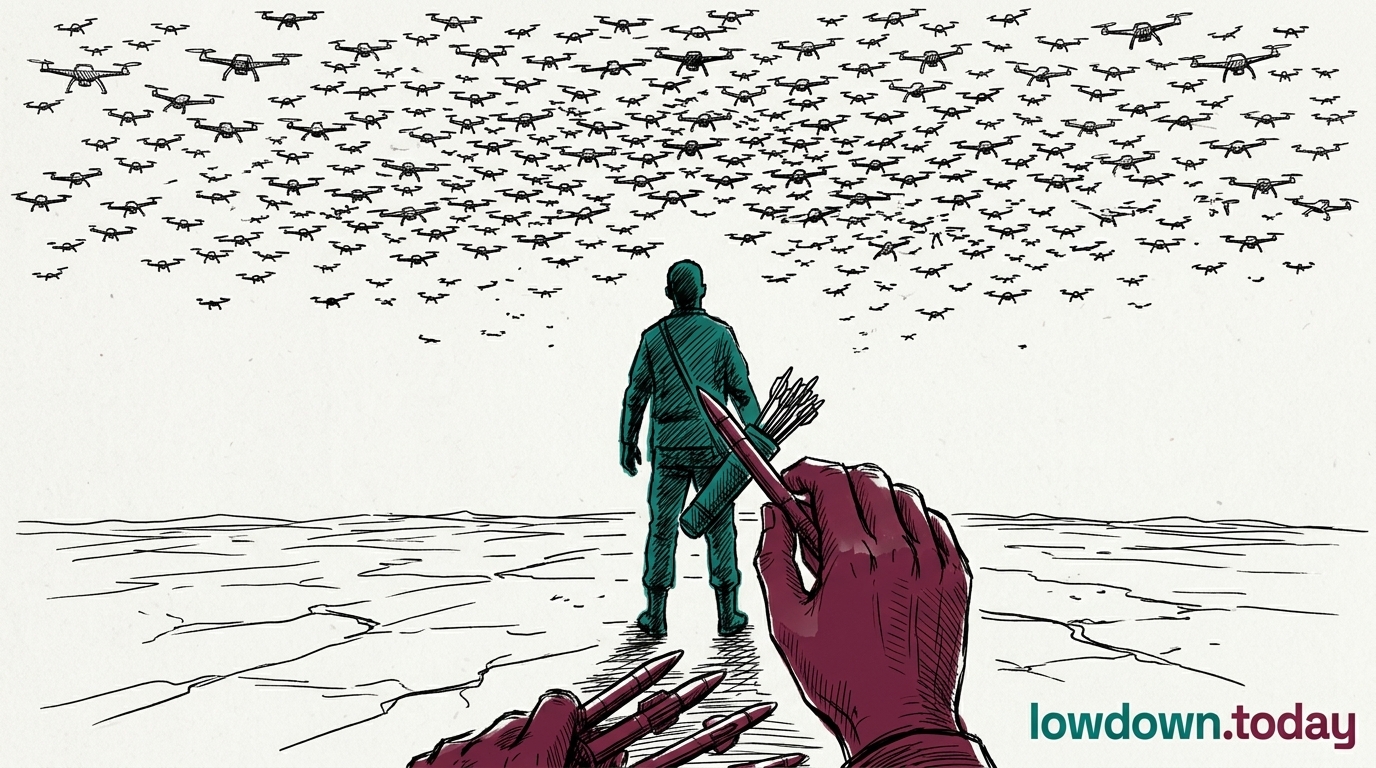
The Pentagon's four-year Patriot production contract routes 94% of the missile run to foreign buyers before the first round leaves the factory, locking Ukraine's mid-May shortfall in as a structural condition rather than a temporary shortage.

ConflictDeveloping
Key takeaway

Ukraine's Patriot shortfall is now a four-year structural condition, not a temporary shortage.

On 9 April the US Army awarded Lockheed Martin a $4.76 billion firm-fixed-price contract for PAC-3 MSE (Patriot Advanced Capability-3 Missile Segment Enhancement) interceptor production, with a completion date of 30 June 2030 1. The headline number looks generous, but the delivery calendar does not close Ukraine's mid-May gap.

Ninety-four percent of the run is already committed to FMS (foreign military sales programmes), the inter-government route that gets weapons to allies ahead of the domestic queue. That implies roughly 36 Patriot rounds a year reaching Ukraine under current foreign-sales weighting, against the 60 to 65 Volodymyr Zelenskyy told the BBC Kyiv needs each month. The fast assembly lines are building missiles for Saudi Arabia and the UAE before the Ukrainian allocation is even on the schedule.

Zelenskyy's figure covers ballistic and cruise missiles, not Shaheds. Ukraine's own STING interceptor drone, which destroyed two Shahed-type targets from 500 km on 4 April , covers the Shahed half of the air-defence problem but not the ballistic half. Contract arithmetic and Ukraine's mid-May stockpile deadline do not meet in the same calendar year.

Deep Analysis

In plain English

The US military has signed a long-term deal with defence contractor Lockheed Martin to make Patriot missiles, the type used to shoot down Russian rockets and drones. The problem: 94 out of every 100 missiles made under the deal are already promised to other countries, leaving almost none for Ukraine. Patriot missiles are expensive precision weapons that can intercept ballistic missiles mid-flight. Ukraine needs roughly 60-65 per month just to maintain its current defence. The new contract does not change that shortage.

Deep Analysis
Root Causes

The production ceiling stems from two structural constraints the Iran war made acute. First, the PAC-3 MSE seeker assembly relies on a single-source supplier in Tucson with a 36-month expansion lead time. Second, the US Army mothballed its interceptor surge capacity after 2014 to fund longer-range missile programmes, and no congressional authority for emergency production expansion has been sought.

The 94% FMS pre-commitment is itself a product of the post-2022 rearmament cycle: European NATO members ordered at scale after the full-scale invasion, locking production slots that would otherwise have been available for replenishment.

What could happen next?
  • Consequence

    Ukraine's mid-May interceptor stockpile deadline will not be resolved by this contract; alternative supply routes or emergency presidential authority will be required.

    Immediate · 0.85
  • Risk

    If the 6% domestic allocation is not expanded, the US Army's own air defence reserve will remain below wartime replenishment levels through at least mid-2028.

    Medium term · 0.72
  • Precedent

    The contract establishes that the post-Iran war rearmament cycle will be served by FMS agreements ahead of wartime partner resupply, a reversal of Cold War emergency-transfer doctrine.

    Long term · 0.68
First Reported In

Update #12 · Three narrowings of US support for Kyiv

Defense News· 11 Apr 2026
Read original
Different Perspectives
North Korea / DPRK
North Korea / DPRK
ISW confirmed the first mounting of DPRK Type-75 MLRS on Russian autonomous UGVs near Kharkiv on 7 June, the latest step in a supply axis that escalated from shells in 2023 to troops in 2024. Pyongyang gains live battlefield data on its ordnance and on Russia's uncrewed-systems programme.
IAEA / Rafael Grossi
Grossi confirmed Chornobyl structural damage with nuclear material metres away and could not attribute the ZNPP 15-hour blackout during the agreed repair window. Six ceasefires brokered and broken at ZNPP, compounded by Rosatom's May attack on IAEA neutrality, have eroded his ability to enforce the windows he negotiates.
Emmanuel Macron / France
Macron co-signed the E3 framework whose line-of-contact baseline marks Europe's first formal acceptance that 1991 borders are not the opening position. France's role carries weight because Macron had previously proposed a European force for Ukraine, and the framework's multinational force point is the vehicle for that.
Keir Starmer / E3
Keir Starmer / E3
Starmer, Macron and Merz met Zelenskyy on 7 June and backed a five-point framework taking the line of contact as the talks baseline, conceding roughly one fifth of Ukraine in exchange for a multinational force and frozen assets. With US mediation ended, the NATO Ankara summit on 7-8 July is the next test.
Vladimir Putin / Kremlin
Putin used SPIEF to reject Zelenskyy's summit letter, citing 'elements of rudeness', and repeated the pre-agreed treaty precondition that has frozen every diplomatic round since May. The SPIEF platform's message of investor confidence was punctured by naval fires visible from St Petersburg, which Moscow declined to dispute in scale.
Ukraine / Unmanned Systems Forces
Commander Brovdi confirmed USF units tracked and set fire to Boikyi at Kronstadt, while Code 9.2 struck the Chonhar Bridge the following day. Ukraine is sequencing strikes for rear-area interdiction and political timing rather than ground gains, trading the Baltic Fleet's home base for the logistics squeeze Russia cannot absorb without rationing its own occupied territory.
